Why a Structured Approach Matters
Chronic pain affects more than one‑fifth of U.S. adults—over 50 million people—and a third of those experience high‑impact pain that limits daily activities. Such prevalence makes a systematic, patient‑centered approach essential. When clinicians prioritize individualized assessment, shared decision‑making, and measurable functional goals, patients feel validated and are more likely to adhere to treatment plans. This collaborative model also enables the integration of evidence‑based non‑opioid therapies—exercise, mindfulness, cognitive‑behavioral techniques—before considering high‑risk medications. Regenerative medicine, especially platelet‑rich plasma (PRP) injections, fits naturally into this framework. PRP delivers autologous growth factors that promote tissue repair and reduce inflammation, offering a minimally invasive alternative to surgery and opioid reliance. By sequencing PRP with targeted physical therapy and behavioral interventions, clinicians address both the biological source of pain and the psychosocial components that amplify it. The result is a multimodal, biopsychosocial strategy that improves pain scores, restores function, and mitigates the societal burden of chronic pain.
Rule 1 – Start with a Comprehensive, Patient‑Centered Assessment
| Framework | Components | Purpose |
|---|---|---|
| 5 A’s | Analgesia, Activities of daily living, Adverse effects, Affect, Aberrant drug‑related behaviors | Evaluate physical & psychosocial impacts of chronic pain |
| 4 P’s | Pain, Purpose, Pacing, Positivity | Guide patients to recognize pain, set goals, pace activity, maintain optimism |
| Assessment Tools | PROMIS Physical Function, Brief Pain Inventory, VAS | Baseline and follow‑up measurement of pain intensity & functional outcomes |
| Non‑pharmacologic Options | PRP, Physical therapy, CBT, Mindfulness, Acupuncture, Yoga | Provide evidence‑based, patient‑centered therapies to reduce reliance on medication |
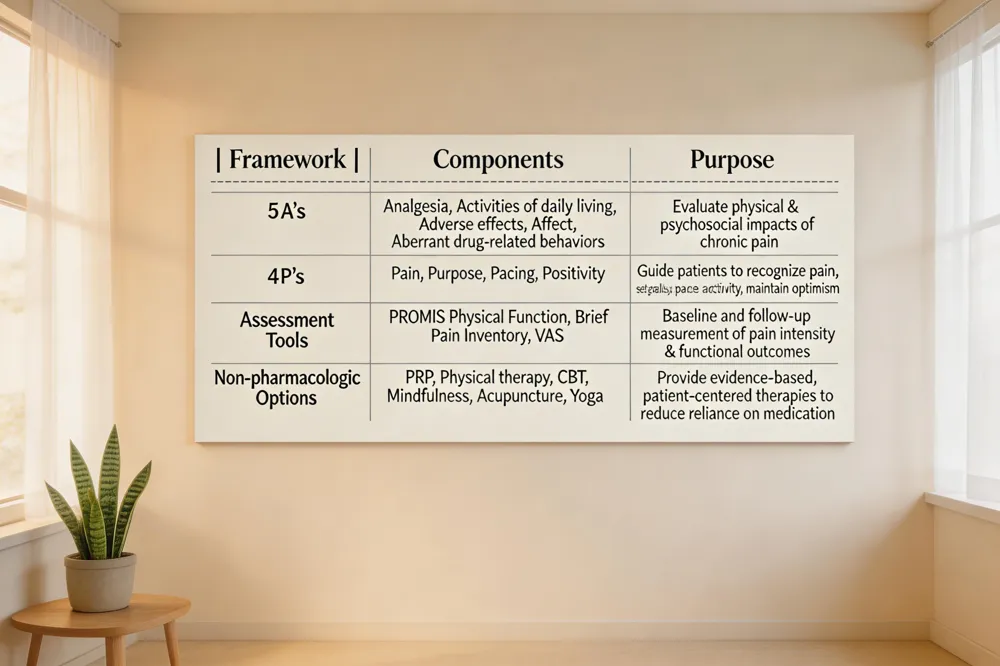 A thorough, patient‑centered assessment begins with understanding the underlying pain mechanisms—nociceptive, neuropathic, or central sensitization—so that treatment can be targeted appropriately. Clinicians should apply the 5 A’s framework (Analgesia, Activities of daily living, Adverse effects, Affect, Aberrant drug‑related behaviors) to evaluate both physical and psychosocial impacts of chronic pain. Complementary to this, the 4 P’s (Pain, Purpose, Pacing, Positivity) guide patients in recognizing their pain, setting meaningful goals, pacing activity, and maintaining an optimistic mindset.
Evidence‑based alternative pain management emphasizes non‑surgical, patient‑centered therapies with proven efficacy. Platelet‑Rich Plasma (PRP) injections use autologous growth factors to reduce inflammation and promote tissue repair in conditions such as back pain, sports injuries, and carpal tunnel syndrome, offering a biologic alternative to surgery. Physical‑therapy programs and therapeutic exercise improve strength, flexibility, and functional outcomes while minimizing medication side‑effects. Mind‑body approaches—including cognitive‑behavioral therapy, mindfulness‑based stress reduction, acupuncture, and yoga—have been shown to lower pain intensity and enhance quality of life for chronic low‑back and musculoskeletal pain. Integrating these modalities within a multidisciplinary pain‑management plan provides a comprehensive, evidence‑driven strategy for sustainable pain relief.
Rule 2 – Integrate Regenerative Medicine Early
| Aspect | Details |
|---|---|
| Therapy | Platelet‑Rich Plasma (PRP) – autologous growth factors for tissue repair |
| Indications | Back pain, sports injuries, carpal tunnel, tendonitis, early‑stage osteoarthritis |
| Recovery Timeline | Mild soreness 1‑3 days; light activities 24‑48 h; normal tasks by week 1; sports/ heavy lifting 1‑2 weeks; pain relief 4‑12 weeks; remodeling up to 6 months |
| Safety & Discomfort | Brief sting/pressure; mild‑moderate pain; optional lidocaine (may affect platelets) |
| Cost & Access | $500‑$2,500 (US); often cash‑based; payment plans, HSA/FSA, bundled discounts |
| Provider Example | Advanced Integrative Medicine (Dr. Jaimal Sangha) – MN locations, 30‑40 min in‑office PRP |
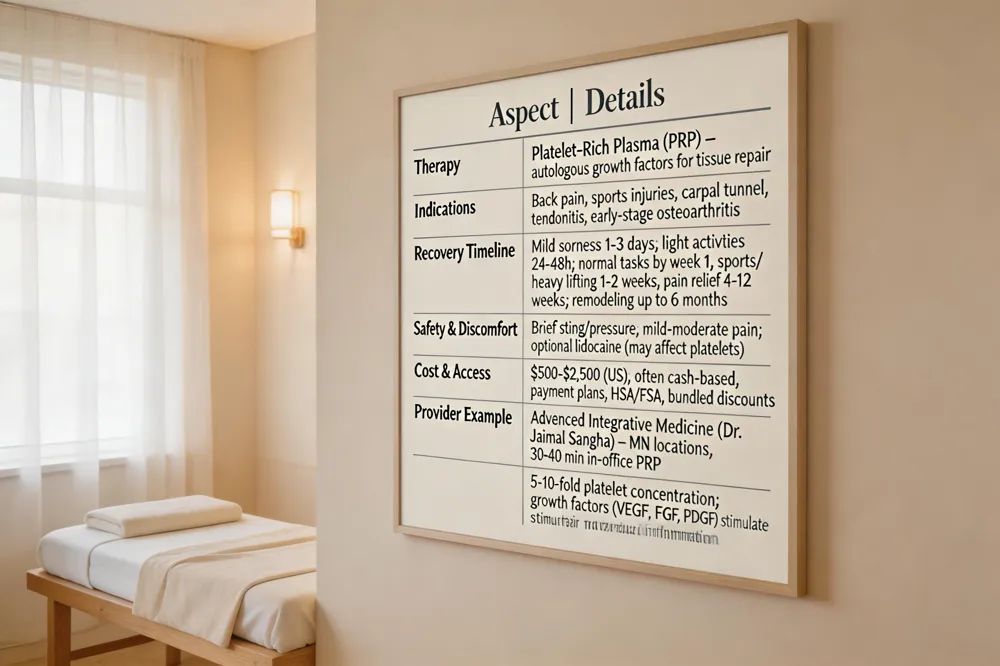 Platelet‑rich plasma (PRP) therapy uses a patient’s own centrifuged blood to concentrate platelets 5‑10‑fold, delivering growth factors that stimulate tissue repair and reduce inflammation. It is a minimally invasive, autologous option for back pain, sports injuries, carpal tunnel, tendonitis, and early‑stage osteoarthritis.
Recovery timeline – Most patients feel mild soreness for the first 1–3 days and can resume light activities within 24–48 hours. A gradual return to normal daily tasks is typical by the end of the first week, while more demanding activities such as sports or heavy lifting often require 1–2 weeks of cautious progression. Noticeable pain relief usually appears between 4 and 12 weeks, with maximal tissue remodeling taking up to 6 months.
Safety and discomfort – The injection may cause a brief sting or pressure similar to a standard needle stick; discomfort is generally mild to moderate. Some clinicians use a small amount of lidocaine to lessen the initial sensation, though many avoid it to preserve platelet activity. Post‑injection soreness or pressure resolves within a week for most patients.
Cost and access – In the United States a PRP injection typically costs $500–$2,500, with most clinics charging $600–$1,500 per treatment. Because insurers often label PRP as investigational, it is usually a cash‑based expense, though many offices offer payment plans, HSA/FSA cards, or bundled series discounts. Certified providers can be found by searching professional societies or contacting Advanced Integrative Medicine, led by Dr. Jaimal Sangha, which serves multiple Minnesota locations and offers in‑office PRP within 30–40 minutes.
Rule 3 – Maximize Non‑Pharmacologic and Mind‑Body Strategies
| Modality | Benefits |
|---|---|
| Physical Therapy & Exercise | Improves strength, flexibility, mobility; reduces pain intensity |
| Manual Therapies (massage, spinal manipulation, acupuncture, TENS) | Decreases muscle tension, enhances circulation, modulates pain pathways |
| Mind‑Body Practices (deep‑breathing, guided imagery, mindfulness, progressive muscle relaxation) | Activates parasympathetic response, lowers stress‑induced inflammation |
| Psychological Support (CBT, Acceptance‑and‑Commitment) | Reduces catastrophizing, reframes pain thoughts, builds adaptive coping |
| Lifestyle Adjustments (sleep, nutrition, hydration, weight management, smoking/alcohol avoidance) | Creates supportive environment for healing and function |
| Pacing & Goal Setting | Prevents over‑exertion, sustains function, aligns activities with realistic expectations |
| Education & Empowerment | Increases patient control, encourages active participation in rehabilitation |
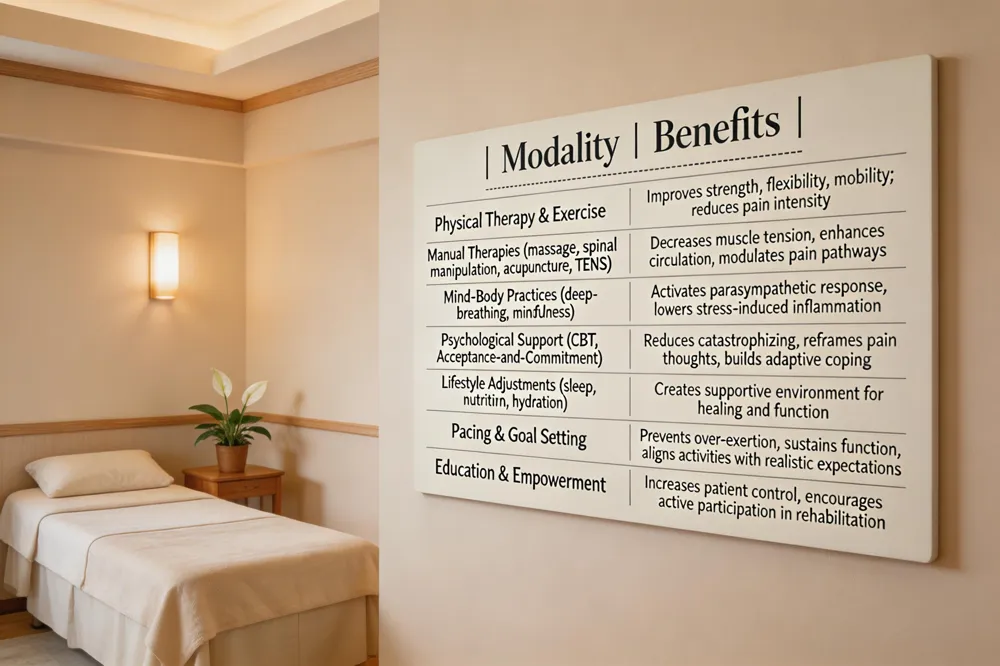 Physical and occupational therapies form the backbone of a conservative pain plan. Structured exercise programs—aerobic, resistance, aquatic, and low‑impact options such as yoga or tai‑chi—improve strength, mobility, and nerve signaling. Manual treatments like massage, spinal manipulation, acupuncture, and transcutaneous electrical nerve stimulation (TENS) reduce muscle tension, enhance circulation, and modulate pain pathways.
Mind‑body interventions further calm the nervous system. Deep‑breathing, guided imagery, mindfulness‑based stress reduction and progressive muscle relaxation activate the parasympathetic response, lowering stress‑induced inflammation and the brain’s pain‑amplifying signals. Regular daily practice of these techniques prevents flare‑ups more effectively than using them only during severe pain episodes.
Psychological support, especially cognitive‑behavioral therapy (CBT) and acceptance‑and‑commitment approaches, helps patients reframe unhelpful thoughts, reduce catastrophizing, and develop adaptive coping statements. Biofeedback and patient education empower individuals to understand pain neurobiology, fostering a sense of control and encouraging active participation in rehabilitation.
Lifestyle adjustments—adequate sleep, balanced nutrition, hydration, weight management, and avoidance of smoking and excessive alcohol—create a supportive environment for healing. Pacing activities, setting realistic goals, and incorporating gentle movement sustain function while preventing over‑exertion. Together, these non‑pharmacologic and mind‑body strategies provide a patient‑centered, multimodal pathway that complements regenerative therapies such as platelet‑rich plasma, reduces reliance on opioids, and enhances overall quality of life.
Rule 4 – Monitor Outcomes, Adjust, and Taper When Needed
| Tool | Frequency | Notes |
|---|---|---|
| PROMIS Physical Function | Baseline & every 1‑4 weeks after therapy change | Tracks functional improvement |
| Brief Pain Inventory | Baseline & regular intervals | Captures pain intensity & interference |
| Visual‑Analog Scale (VAS) | Baseline & follow‑up | Simple pain rating |
| Prescription‑Drug‑Monitoring Programs | Ongoing when opioids used | Ensures safe opioid prescribing |
| Opioid Tapering Schedule | As needed based on functional plateau or side‑effects | Gradual reduction to minimize withdrawal |
| Emerging Non‑Opioid Options (PRP, COX‑2‑selective NSAIDs, high‑dose ibuprofen) | Consider when opioid benefits plateau | Provides alternatives with lower addiction risk |
| Shared Decision‑Making Goals | Set at each visit | Measurable targets (e.g., “walk 30 min 3×/wk”) guide treatment adjustments |
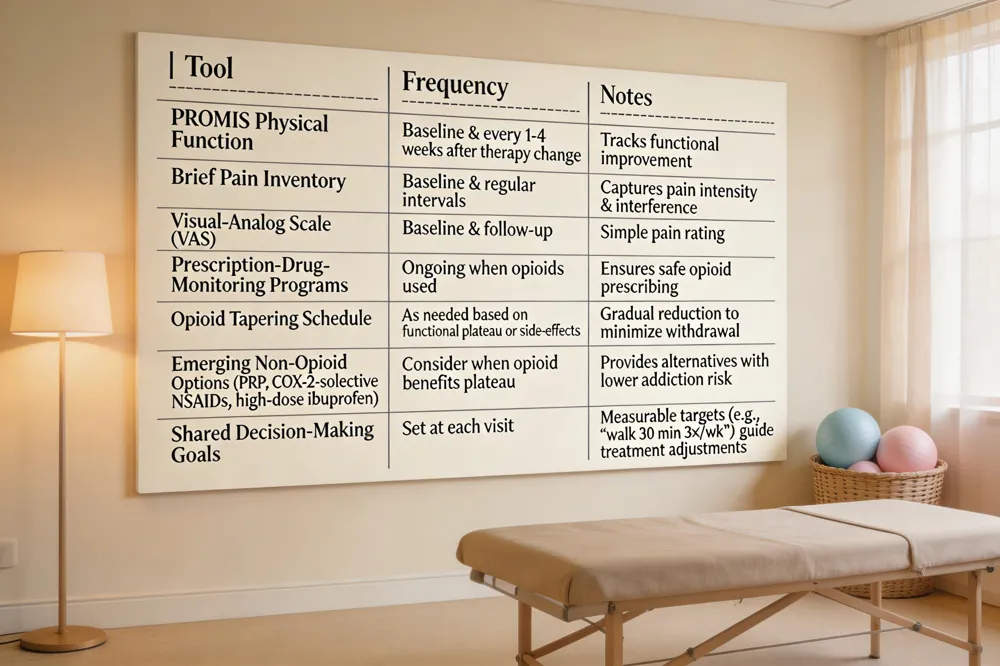 Effective chronic‑pain care hinges on systematic monitoring and flexible adjustment of the treatment plan.
Functional assessment tools – Validated instruments such as the PROMIS Physical Function questionnaire, the Brief Pain Inventory, and visual‑analog scales should be administered at baseline and at regular intervals (often every 1–4 weeks after a change in therapy). Tracking both pain intensity and functional outcomes (e.g., sleep quality, daily activity levels) provides a more complete picture than pain scores alone and guides when to intensify, maintain, or de‑escalate therapy.
Opioid risk mitigation – When opioids are part of the regimen, clinicians must reassess benefits versus harms frequently, consult prescription‑drug‑monitoring programs, and consider tapering if functional improvement plateaus or side‑effects emerge. The CDC recommends the lowest effective dose, immediate‑release formulations for opioid‑naïve patients, and a gradual reduction schedule to minimize withdrawal.
Emerging non‑opioid treatments – Regenerative options such as platelet‑rich plasma (PRP) are increasingly used as conservative, patient‑centered alternatives. PRP delivers autologous growth factors that promote tissue repair and reduce inflammation, offering pain relief for back pain, tendinopathies, and even hair loss without the addiction risk of opioids. Other novel agents—including COX‑2‑selective NSAIDs, high‑dose ibuprofen, and acetaminophen combinations—remain the most potent non‑opioid analgesics after surgery.
Patient‑centered goal setting – Shared decision‑making should establish clear, measurable goals (e.g., “walk 30 minutes three times weekly” or “reduce pain‑related interference on work by 50 %”). Regular review of progress against these goals reinforces adherence and supports timely adjustments, including tapering opioids or adding adjunctive therapies such as cognitive‑behavioral therapy, mindfulness, or PRP.
Key Q&A
- Strongest non‑opioid painkiller after surgery: COX‑2‑selective NSAIDs (celecoxib) and high‑dose ibuprofen or naproxen, often paired with acetaminophen for synergistic effect.
- Chronic pain relief new treatments: PRP and stem‑cell injections, novel ENT1‑inhibitors, sodium‑channel blockers (e.g., Journavx), and peptide‑based nerve‑block vectors represent promising non‑surgical options.
- Can PRP trigger autoimmune disease?: Rare case reports link PRP to autoimmune phenomena, but overall risk is low when performed by qualified clinicians.
- Platelet‑rich plasma for hair loss: PRP injections into the scalp stimulate growth factors (VEGF, FGF, EGF) that prolong the anagen phase, modestly increasing hair density in early‑stage androgenic alopecia.
By consistently applying functional assessments, mitigating opioid risks, embracing emerging non‑opioid modalities, and aligning treatment with patient‑defined goals, clinicians can dynamically optimize chronic‑pain management while minimizing reliance on high‑risk medications.
Rule 5 – Empower Lifestyle and Self‑Management for Long‑Term Success
| Lifestyle Element | Recommendation |
|---|---|
| Exercise & Pacing | Low‑impact aerobic (walking, swimming, chair‑based); break tasks into steps, schedule rest breaks |
| Nutrition | Omega‑3 rich foods, fruits, vegetables, lean protein; anti‑inflammatory diet |
| Sleep Hygiene | 7‑9 hours, consistent schedule, limit screens before bed |
| Stress‑Reduction | Daily deep‑breathing, mindfulness meditation, yoga, tai‑chi, guided imagery |
| Patient Education & Shared Decision‑Making | Explain biopsychosocial pain model, realistic goals, evidence behind options (PRP, acupuncture, CBT) |
| Coping Skills | Use pacing, gentle exercise, balanced nutrition, CBT techniques |
| catastroph Mental Pain Control | Deep‑breathing, mindfulness, guided imagery, CBT reframing |
| Long‑Term Mindset | Accept persistence, maintain social support, prioritize enjoyable movement and sleep |
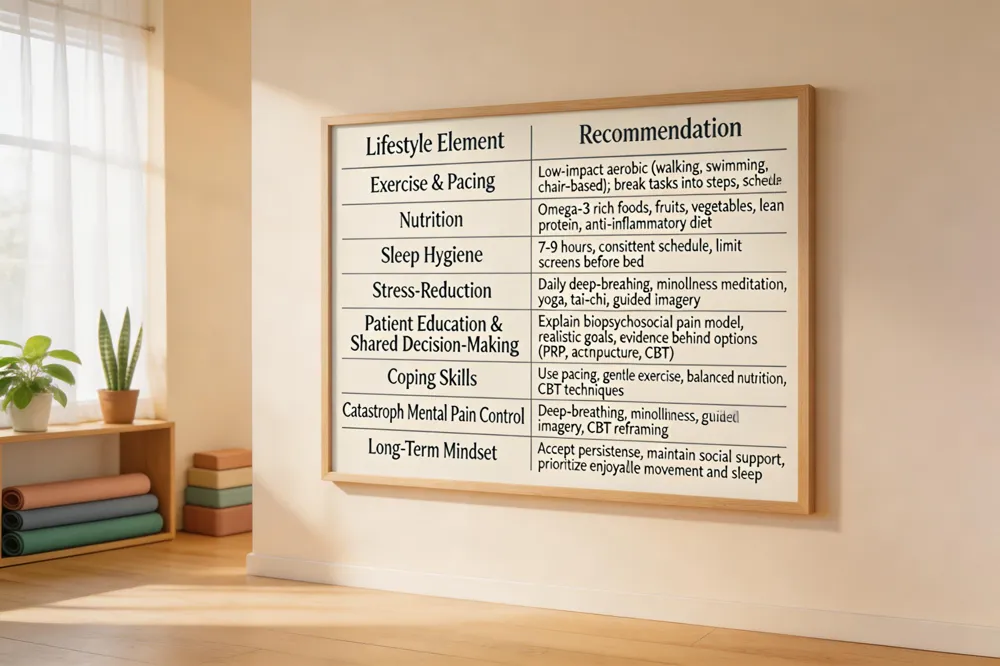 Adopting a patient‑centered, lifestyle‑focused plan is essential for durable chronic‑pain relief.
Exercise and pacing – Regular, low‑impact aerobic activity (walking, swimming, or chair‑based workouts) improves circulation and releases endorphins, while pacing—breaking tasks into smaller steps, rotating activities, and scheduling rest breaks—prevents over‑exertion and reduces flare‑ups.
Nutrition and sleep hygiene – A diet rich in omega‑3 fatty acids, fruits, vegetables, and lean protein supports tissue healing and lowers systemic inflammation. Adequate, high‑quality sleep (7‑9 hours, consistent schedule, limited screens) restores pain‑modulating pathways and curbs fatigue‑driven pain amplification.
Stress‑reduction techniques – Mind‑body practices such as deep‑breathing, mindfulness meditation, yoga, tai‑chi, and guided imagery activate the parasympathetic nervous system, decreasing cortisol and the brain’s pain‑amplifying response. Consistent daily practice is more effective than intermittent use during severe pain.
Patient education and shared decision‑making – Educating patients about the biopsychosocial nature of pain, realistic treatment goals, and the evidence behind options—regenerative therapies like PRP, acupuncture, massage, and cognitive‑behavioral therapy—fosters confidence and adherence. Collaborative goal‑setting ensures that interventions align with personal values and functional priorities.
Answering key questions –
- Alternative methods of pain relief: PRP injections promote tissue repair without surgery; acupuncture, chiropractic, massage, yoga, tai‑chi, and anti‑inflammatory herbs such as turmeric offer non‑pharmacologic relief.
- Coping skills: Understanding the condition, using pacing, gentle exercise, balanced nutrition, and active CBT techniques reduce catastrophizing and improve function.
- Mental pain control: Deep‑breathing, mindfulness, guided imagery, and CBT reframe pain thoughts, lowering perceived intensity.
- Dealing with chronic pain mentally: Accept persistence, practice regular relaxation, set realistic activity goals, maintain social support, and prioritize sleep and enjoyable movement to reinforce a hopeful, patient‑centered mindset.
Putting the Five Rules into Practice
An integrated care pathway begins with a comprehensive biopsychosocial assessment that identifies pain generators, functional goals, and psychosocial barriers. Clinicians then sequence evidence‑based, non‑opioid modalities—targeted physical therapy, mindfulness‑based stress reduction, and cognitive‑behavioral techniques—while offering regenerative options such as platelet‑rich plasma (PRP) injections when tissue healing is indicated. Coordination among physicians, physical therapists, pain psychologists, and regenerative‑medicine specialists ensures that each intervention is timed for maximal synergistic effect, for example, delivering PRP to reduce inflammation before initiating an intensive exercise program.
Patient empowerment is achieved through shared decision‑making and transparent education about the pain‑gate theory, realistic expectations for PRP, and the self‑management skills of understanding, accepting, calming, balancing, and coping. Regular pain‑journals, goal‑setting, and skill‑building (deep breathing, activity pacing, guided imagery) keep patients actively engaged in their recovery and reduce reliance on opioids.
Future directions include expanding tele‑health platforms for remote coaching of coping skills, integrating genetic and biomarker testing to personalize PRP protocols, and further standardizing regenerative‑medicine guidelines. Ongoing research on multimodal synergy and policy support for insurance coverage of integrative therapies will solidify this patient‑centered, low‑risk model as the new standard for chronic pain management.