Setting the Stage: A New Era of Non‑Surgical Rejuvenation
Advanced Integrative Medicine places the patient at the center of every rejuvenation plan, beginning each visit with a thorough health history, skin‑type analysis, and individualized goals. This patient‑centered philosophy drives the clinic’s adoption of regenerative medicine as the cornerstone of aesthetic care: autologous platelet‑rich plasma, exosome‑rich serums, and mesenchymal‑stem‑cell‑derived biostimulators are used to awaken the body’s own collagen‑producing pathways, reducing reliance on foreign fillers and long‑lasting neuromodulators. The result is a shift toward natural‑looking, subtle enhancements—micro‑dosed Botox, low‑volume hyaluronic fillers, and laser‑plus‑PRP combos—that preserve facial expression while smoothing fine lines and improving texture. By integrating AI‑guided skin imaging and evidence‑based, minimally invasive modalities, the practice delivers gentle, sustainable rejuvenation that aligns with today’s demand for understated, authentic beauty.
Neuromodulators and the Longevity Revolution
 In 2025, Botox remains the most sought‑after cosmetic treatment in the United States for smoothing dynamic facial wrinkles, with millions of procedures performed annually. smoothing dynamic wrinkles such as crow’s feet and frown lines for millions of patients.
The FDA‑approved neuromodulator Daxxify, introduced in 2023, can provide wrinkle‑relaxing effects lasting 6‑9 months, longer than traditional Botox.
Micro‑dosing of injectables (low‑dose Botox, small‑volume fillers) is a growing trend, often called “micro‑Botox,” uses smaller volumes of Botox or Daxxify to achieve subtle, natural‑looking results while preserving facial expression. Ideal candidates are adults with mild‑to‑moderate dynamic lines, realistic expectations, and no contraindications such as neuromuscular disorders, pregnancy, or certain medications. Safety considerations include proper injection technique, dosing accuracy, and post‑procedure monitoring for transient eyelid droop or localized bruising. When performed by board‑certified clinicians, these neuromodulators offer a low‑downtime, reversible option that aligns with the patient‑centered, conservative aesthetic philosophy prevalent across U.S. practices.
Laser Resurfacing: Precision, Speed, and AI Integration
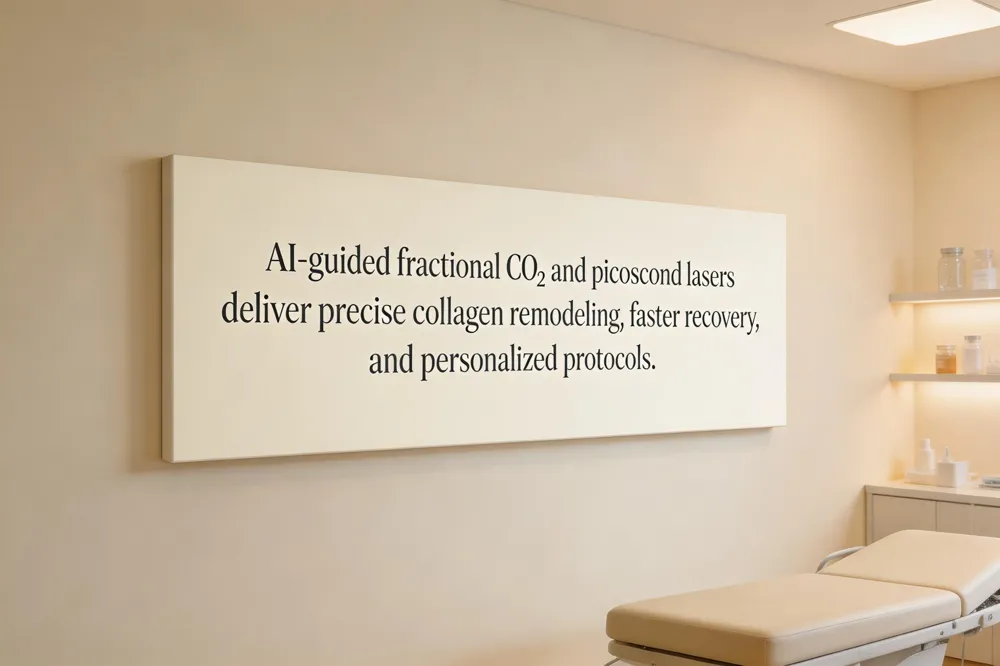 Fractional CO₂ and picosecond lasers dominate U.S. dermatology clinics for skin renewal, delivering microscopic treatment zones that trigger deep collagen and elastin synthesis while minimizing downtime compared with older ablative systems. The next‑generation Acclaro platform pushes this precision further, penetrating deeper to remodel collagen around the mouth and large pores, yet it preserves rapid recovery thanks to its refined fractional columns. UltraClear laser coring adds versatility, allowing clinicians to switch between no‑downtime peels (such as the 3D Miracle protocol) and more aggressive resurfacing in a single device, expanding options for diverse skin types. Artificial‑intelligence integration is exemplified by the AVAVA laser, which uses AI‑driven pulse spacing to ensure evenly spaced micro‑thermal zones, improving predictability and simplifying treatment planning. Together, these advances create a fast, precise, and personalized resurfacing experience that aligns with the 2025‑2026 trend toward natural‑looking, minimally invasive rejuvenation.
Biostimulatory Injectables and Emerging Exosome Therapies
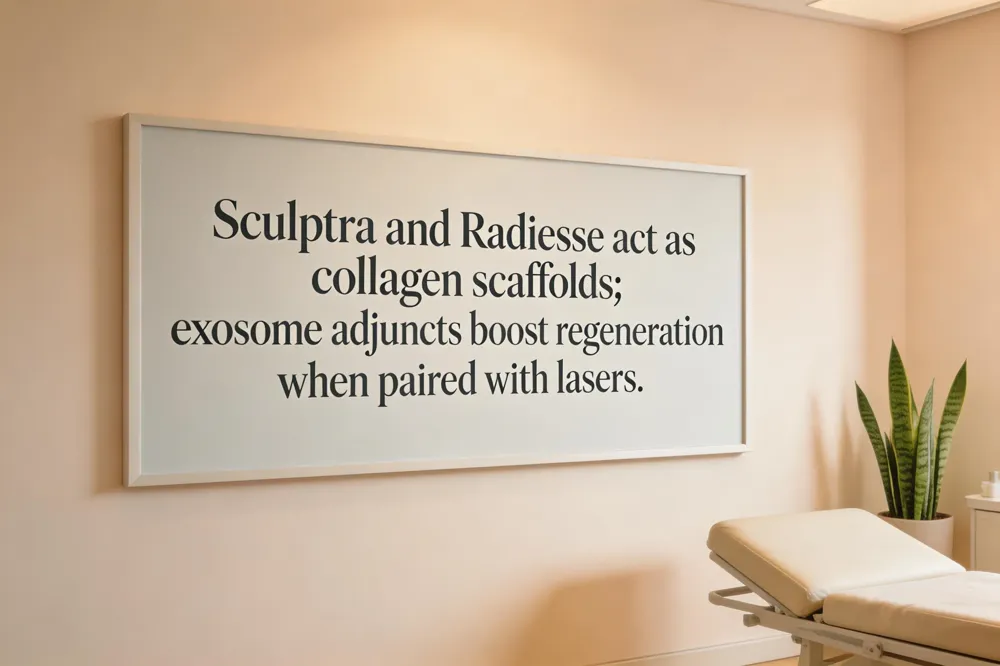 Sculptra (poly‑L‑lactic acid) and Radiesse (calcium hydroxylapatite) are FDA‑cleared biostimulatory injectables that act as scaffolds for gradual collagen production, providing natural‑looking volume restoration over 12‑18 months. Exosome‑based therapies—both topical serums and injectable suspensions—are emerging adjuncts that deliver cell‑derived vesicles rich in micro‑RNA and proteins to activate Wnt/β‑catenin and AKT pathways, accelerating dermal regeneration and enhancing elasticity. When combined with laser resurfacing (fractional CO₂, picosecond) or RF microneedling, exosomes amplify collagen remodeling, shorten downtime, and improve texture outcomes, creating a synergistic effect noted in early clinical reports. Both biostimulators and exosome products are FDA‑cleared for safety in the United States, with exosome therapies currently classified as cell‑free biologics; ongoing trials in 2025 are expanding safety data and refining preparation standards. This integrated approach aligns with the 2025 trend toward regenerative, natural‑result‑oriented skin rejuvenation.
Platelet‑Rich Plasma: The Regenerative Engine
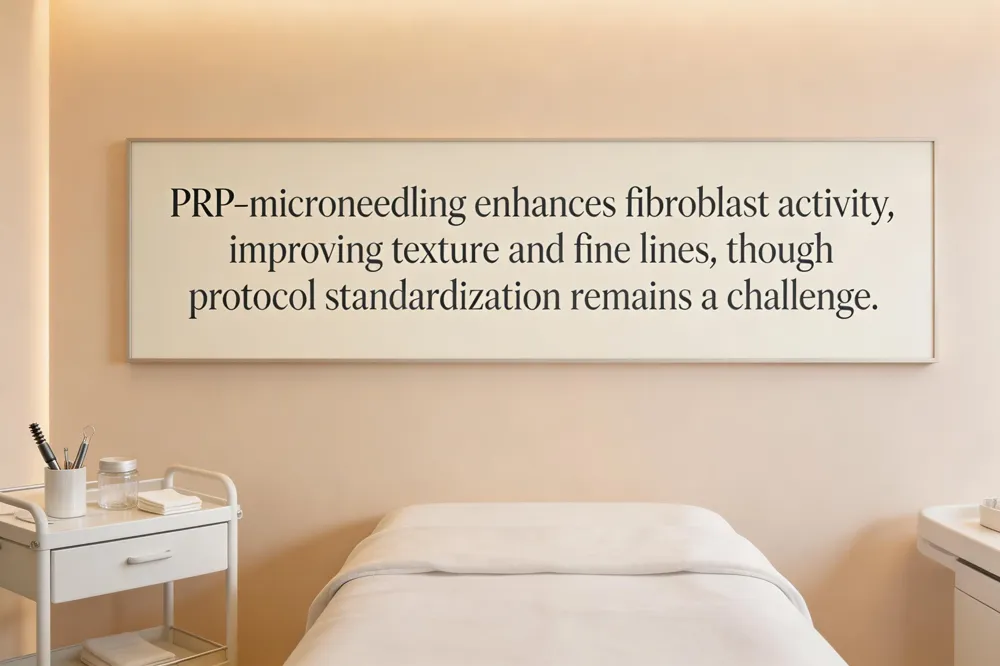 Platelet‑Rich Plasma (PRP) is an autologous concentrate of platelets that releases growth factors such as PDGF, TGF‑β, VEGF, and IGF‑1 to jump‑start collagen synthesis and tissue repair. When combined with microneedling, the micro‑channels created by the needles allow PRP to infiltrate deeper dermal layers, amplifying fibroblast activity and accelerating neocollagenesis. Clinical studies in 2025‑2026 show that PRP‑microneedling protocols improve skin texture, tone, and fine‑line depth more than microneedling alone, with patients reporting smoother, more radiant skin after 2‑3 sessions. However, the field faces standardization challenges: variations in centrifugation speed, platelet concentration, and leukocyte content (pure PRP vs. leukocyte‑rich PRP) lead to inconsistent outcomes.
What are the 4 types of regenerative medicine?
The four primary categories are viscosupplementation, platelet‑rich plasma (PRP), stem‑cell‑based treatments, and prolotherapy. Viscosupplementation restores joint visco‑elasticity with hyaluronic acid; PRP delivers autologous growth factors; stem‑cell therapies introduce progenitor cells for tissue regeneration; and prolotherapy uses irritant solutions, typically hypertonic dextrose, to provoke a controlled inflammatory response that promotes fibroblast activity and tissue strengthening.
Non‑Surgical Skin Tightening: Energy‑Based Devices
 Ultherapy® uses focused ultrasound to create micro‑wounds in the deep dermis and SMAS layer, stimulating neocollagenesis with a typical 30‑90 minute session and minimal downtime; results appear in 2‑3 months and can last up to 12 months when combined with proper skin‑care. Radiofrequency microneedling, exemplified by devices such as Morpheus8 and RF‑HIFEM platforms, delivers controlled thermal injury through microscopic columns, achieving deeper collagen remodeling and simultaneous skin tightening; a series of 2‑6 treatments spaced 4‑6 weeks apart is common, with mild erythema lasting 1‑3 days and durability of 9‑12 months. Thermage® and Profound® employ bipolar or monopolar RF to heat the mid‑dermis, causing immediate collagen contraction and progressive neocollagenesis; treatment times range from 30‑45 minutes, downtime is limited to transient redness, and results persist for up to a year. Venus Versa® (IPL‑RF) blends intense pulsed light with RF energy to address texture and laxity in a single session, offering a quick 15‑30 minute protocol, negligible recovery, and gradual firmness improvements lasting 6‑9 months. Across these modalities, the conservative, patient‑centered approach emphasizes minimal downtime, predictable outcomes, and long‑term collagen‑based skin firmness.
AI‑Driven Personalization and Predictive Planning
 In 2026, aesthetic clinics are leveraging digital facial mapping and 3‑D imaging to craft truly custom treatment regimens. High‑resolution scanners capture each patient's anatomy, quantifying wrinkle depth, pore size, and skin elasticity, which feeds directly into AI‑driven skin‑analysis platforms such as L’Oréal Perso and Skin360. These tools evaluate moisture levels, pigment irregularities, and fine‑line severity, then generate a personalized scorecard that guides the choice of neuromodulators, fillers, laser settings, and regenerative adjuncts like PRP or exosomes. Predictive aging models further refine injector expertise by simulating how current skin will evolve over 12‑24 months, allowing clinicians to anticipate future volume loss or laxity and intervene proactively. To enhance patient understanding, clinics now use augmented‑reality visualizers that overlay projected outcomes onto the live camera feed, empowering patients to see realistic, natural‑looking results before any injection or energy‑based procedure. This data‑driven workflow not only improves safety and efficacy but also aligns with the growing demand for subtle, individualized rejuvenation.
Future Horizons: Regenerative Longevity and Whole‑Body Wellness
 In 2026 the aesthetic field is expanding beyond surface‑level fixes to address the biology of aging at a systemic level. Stem‑cell‑derived exosome and secretome platforms are being used as adjuncts to laser resurfacing and microneedling, delivering micro‑RNA and growth‑factor cargo that boost collagen synthesis and modulate inflammation, and accelerate wound healing without the need for live cells. Parallel research into cellular‑senescence reversal—particularly through rapamycin‑mediated mTOR inhibition—aims to restore fibroblast activity and prolong the skin’s intrinsic repair capacity. Clinics are also integrating whole‑body wellness metrics, such as hormone panels, NAD⁺ levels, and GLP‑1‑based weight‑loss data, to personalize rejuvenation protocols and counteract "Ozempic‑face" laxity. Finally, advances in 3‑D bioprinting enable patient‑specific skin grafts that embed autologous fibroblasts and keratinocytes, offering a minimally invasive route to replace lost volume and improve texture while maintaining natural‑look results. Together, these innovations signal a shift toward regenerative longevity that treats the skin as an extension of overall health.
Putting It All Together: A Holistic, Conservative Path to Youthful Skin
A truly lasting rejuvenation plan in 2025‑2026 weaves together several minimally invasive modalities, each amplifying the other’s benefits. The most efficient "stack" begins with a fractional laser resurfacing—either CO₂ or picosecond technology—to create microscopic treatment columns that jump‑start collagen and elastin synthesis while preserving surrounding tissue. Immediately after laser treatment, autologous platelet‑rich plasma (PRP) is applied or injected; the growth‑factor cocktail (PDGF, TGF‑β, VEGF, IGF‑1) accelerates dermal repair, reduces erythema, and deepens the remodeling response. To sustain and extend these gains, a biostimulatory injectable such as Sculptra (poly‑L‑lactic acid) or a diluted calcium hydroxylapatite filler is introduced a few weeks later. These agents act as scaffolds, prompting new collagen deposition over months and gradually restoring volume without the “over‑filled” look of traditional hyaluronic‑acid fillers.
Patients increasingly demand results that are indistinguishable from their natural baseline. Clinicians therefore employ micro‑dosing techniques—low‑volume hyaluronic fillers, micro‑Botox, and precise laser settings—to smooth fine lines while preserving expression. AI‑driven imaging platforms quantify wrinkle depth, pore size, and skin elasticity, allowing providers to tailor energy delivery and filler placement for undetectable, symmetric outcomes.
A patient‑centered follow‑up protocol is essential. After the initial stack, patients receive a regimen of medical‑grade topical antioxidants (vitamin C serums, retinoids) and broad‑spectrum SPF, supplemented by quarterly low‑energy laser or RF sessions to maintain collagen turnover. Periodic PRP or exosome topicals can be added to boost healing and keep the dermal matrix supple.
Research continues to push the envelope. Emerging technologies such as AI‑optimized pulse spacing (AVAVA laser), next‑generation resurfacing platforms (Acclaro, UltraClear), and stem‑cell‑derived exosome therapies promise deeper remodeling with minimal downtime. As clinical trials validate safety and efficacy, these innovations will likely become integral components of the conservative, holistic rejuvenation roadmap, ensuring patients enjoy natural, long‑lasting youthful skin.