Setting the Stage: Regenerative Medicine Meets Autoimmunity
Regenerative medicine now offers a spectrum of stem‑cell interventions that range from FDA‑approved hematopoietic transplantation for refractory multiple sclerosis to experimental mesenchymal stromal cell infusions for rheumatoid arthritis, lupus, and systemic sclerosis. These approaches aim to reset or modulate the immune system rather than merely suppress it, providing the potential for durable remission and reduced reliance on chronic steroids. Central to this paradigm is a patient‑centered care model that integrates hematology, rheumatology, neurology, and primary care, allowing individualized eligibility assessments, coordinated trial enrollment, and shared decision‑making. By emphasizing minimally invasive delivery, rigorous safety standards such as FACT accreditation, and lifestyle support, clinics empower patients to pursue biologically‑driven healing while preserving quality of life and lasting functional independence each day.
Understanding Who Can Benefit—and Who Cannot
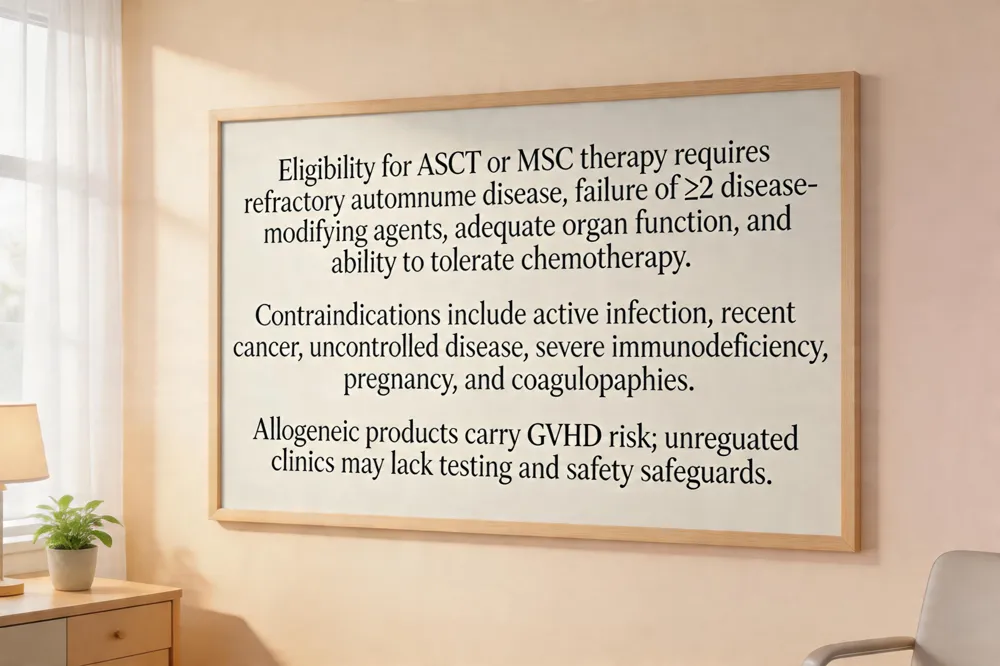 Eligibility for autologous hematopoietic stem cell transplantation (ASCT) or mesenchymal stem cell (MSC) therapy generally requires a diagnosis of a treatment‑refractory autoimmune disease (e.g., multiple sclerosis, systemic sclerosis, lupus, rheumatoid arthritis) and failure of at least two disease‑modifying agents. Candidates should have adequate organ function (cardiac, hepatic, renal), a stable performance status, and be able to tolerate a short course of chemotherapy or immuno‑ablation. A comprehensive evaluation by a multidisciplinary team—including rheumatology, neurology, and transplant specialists—helps confirm candidacy and identifies appropriate clinical trials.
Contraindications and safety concerns include active systemic infections, recent or ongoing cancer, uncontrolled autoimmune activity, severe immunodeficiency, and decompensated organ disease. Pregnant or breastfeeding women, patients with significant coagulopathies, and those on non‑interruptible anticoagulation are typically excluded. Allogeneic cell products carry a risk of graft‑versus‑host disease, while both autologous and allogeneic therapies can trigger infusion‑related infections, immune reactions, and, rarely, tumor formation if cells proliferate aberrantly. Unregulated clinics may lack rigorous testing, increasing the likelihood of contamination, ineffective dosing, and substantial out‑of‑pocket costs.
Finding and Accessing Stem Cell Treatments Across the U.S.
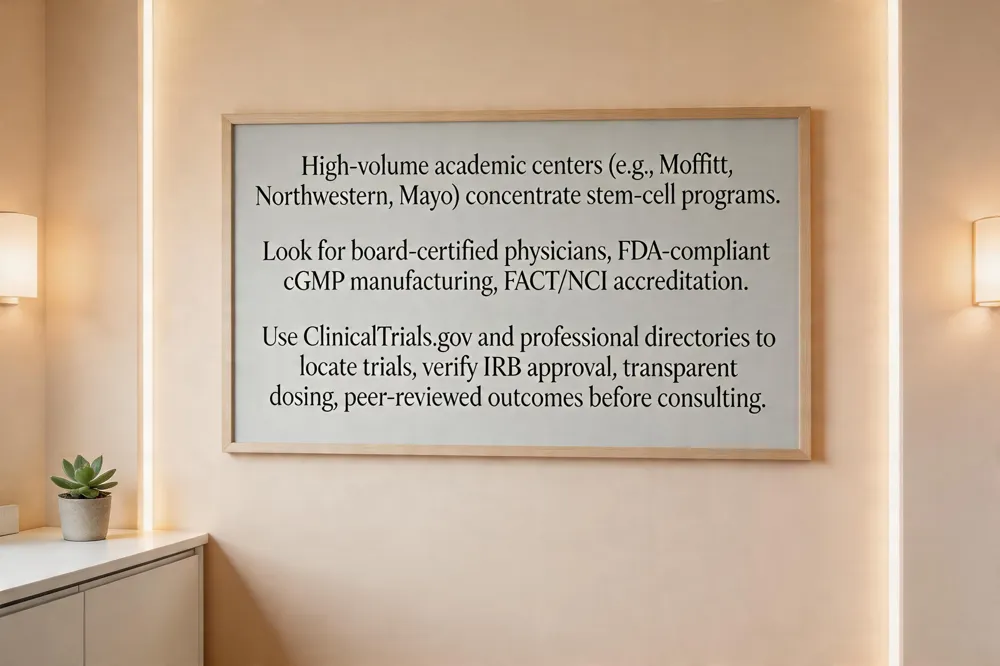 Geographic availability: Stem‑cell programs are concentrated at high‑volume academic centers and specialized clinics. In Florida, Moffitt Cancer Center (a FACT‑accredited, NCI‑Designated Comprehensive Cancer Center performs >10,000 blood‑and‑marrow transplants annually and offers autologous hematopoietic stem‑cell transplant (ASCT) for multiple sclerosis and systemic sclerosis. Northwestern Medicine in Illinois provides both ASCT and CAR‑T‑cell trials for lupus and myasthenia gravis, while the Mayo Clinic runs numerous MSC and HSCT trials for autoimmune and gastrointestinal disorders. Reputable providers: Look for board‑certified physicians, FDA‑compliant manufacturing (cGMP), and affiliation with accredited hospitals (FACT, NCI). Examples include Moffitt, Northwestern, Mayo, and private integrative practices such as Dr. Jaimal Sangha’s Advanced Integrative Medicine in Virginia. Patient search strategies: Start with ClinicalTrials.gov to filter by condition and cell type; supplement with directories like the American Academy of Regenerative Medicine and state medical board listings. Verify credentials, IRB approval, transparent dosing, and peer‑reviewed outcomes before scheduling a consultation.
Cost Landscape of Stem Cell Therapies
 What is the typical cost of stem cell therapy in the United States?
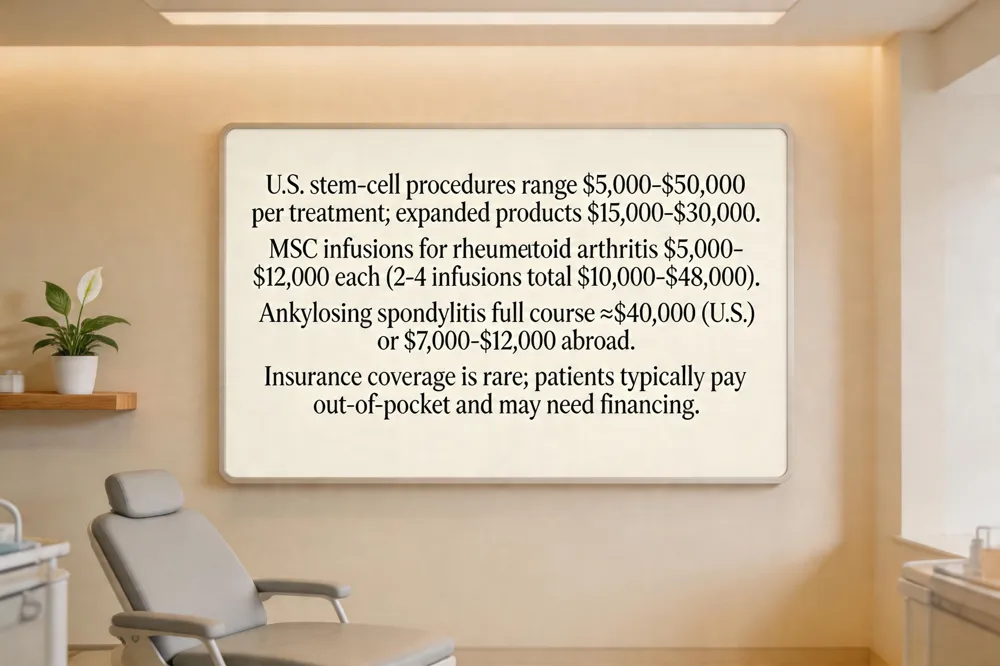
In the U.S., stem‑cell procedures generally range from $5,000 to $50,000 per treatment. Most expanded‑cell products fall between $15,000 and $30,000. Orthopedic indications such as knee or hip osteoarthritis are on the lower end ($5,000–$8,000 per joint), while multi‑area or more complex protocols can exceed $20,000. Autologous platelet‑rich plasma (PRP) injections cost $1,500–$3,500 per site. Because insurers treat these therapies as investigational, patients usually pay out‑of‑pocket and must explore financing options.
What is the typical cost of stem cell therapy in the United States?
In the U.S., stem‑cell procedures generally range from $5,000 to $50,000 per treatment. Most expanded‑cell products fall between $15,000 and $30,000. Orthopedic indications such as knee or hip osteoarthritis are on the lower end ($5,000–$8,000 per joint), while multi‑area or more complex protocols can exceed $20,000. Autologous platelet‑rich plasma (PRP) injections cost $1,500–$3,500 per site. Because insurers treat these therapies as investigational, patients usually pay out‑of‑pocket and must explore financing options.
What is the cost of stem cell therapy for rheumatoid arthritis? U.S. clinics typically charge $5,000–$12,000 per MSC infusion for rheumatoid arthritis, with most protocols requiring 2–4 infusions. Total cost therefore ranges from $10,000 to $48,000. International centers may bundle the full course for $15,000–$30,000, often including travel and ancillary care. Insurance coverage is rare; patients often use health‑savings accounts or payment plans. Additional expenses such as follow‑up labs, physical therapy, and possible repeat treatments can add several thousand dollars.
What is the cost of stem cell therapy for ankylosing spondylitis? Because the approach remains experimental, U.S. pricing averages around $40,000 for a complete course. Clinics abroad (e.g., Mexico) may charge $7,000–$12,000. Base fees are roughly $4,000 for a single injection, with joint‑specific injections as low as $800 each. Patients should verify accreditation, ensure follow‑up care is included, and understand that no FDA‑approved indication exists for this condition.
Best Stem Cell Options for Pain Management
 What is considered the best stem cell treatment in the USA for pain management?
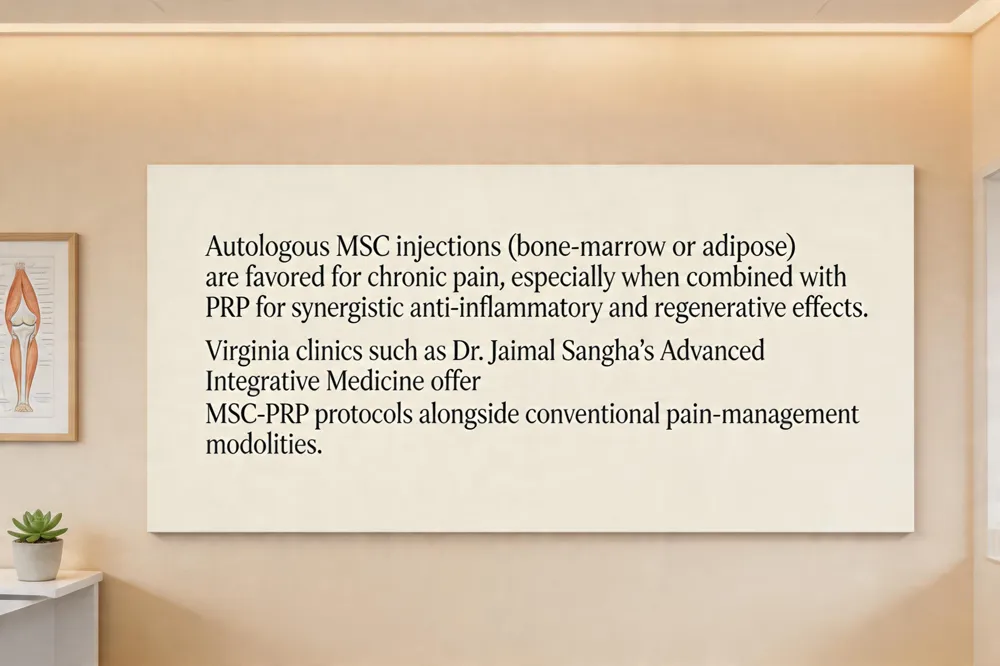
Current evidence favors autologous mesenchymal stem‑cell (MSC) injections, especially those derived from a patient’s own bone‑marrow or adipose tissue. Autologous MSCs provide anti‑inflammatory cytokines (IL‑10, TGF‑β), promote regulatory T‑cell expansion, and support tissue repair without the risk of graft‑versus‑host disease. When combined with platelet‑rich plasma (PRP), MSCs benefit a synergistic environment: PRP supplies growth factors that enhance MSC engraftment, while MSCs modulate immune activity. This combo has shown short‑term pain relief and functional improvement in chronic back pain, osteoarthritis, and tendinopathy across multiple US clinics.
What advanced pain‑management options are available in Virginia?
Virginia clinics offer a spectrum of regenerative and conventional modalities: PRP injections, autologous MSC therapy, prolotherapy, epidural steroid injections, spinal‑cord stimulators, and pain‑pump implants. Practices such as Dr. Jaimal Sangha’s Advanced Integrative Medicine center integrate PRP‑MSC protocols with physical rehabilitation, delivering minimally invasive, patient‑centered care for back, neck, joint, and sports‑injury pain.
Who are the physicians at Advanced Pain Management?
The lead physician is Dr. Jaimal Sangha, MD, a board‑certified pain‑medicine specialist trained in regenerative therapies. He works with a multidisciplinary team of physiatrists, orthopedic surgeons, and licensed clinical staff, all focused on conservative, non‑surgical treatment pathways.
Stem Cell Therapies for Autoimmune Diseases
 HSCT and MSC modalities
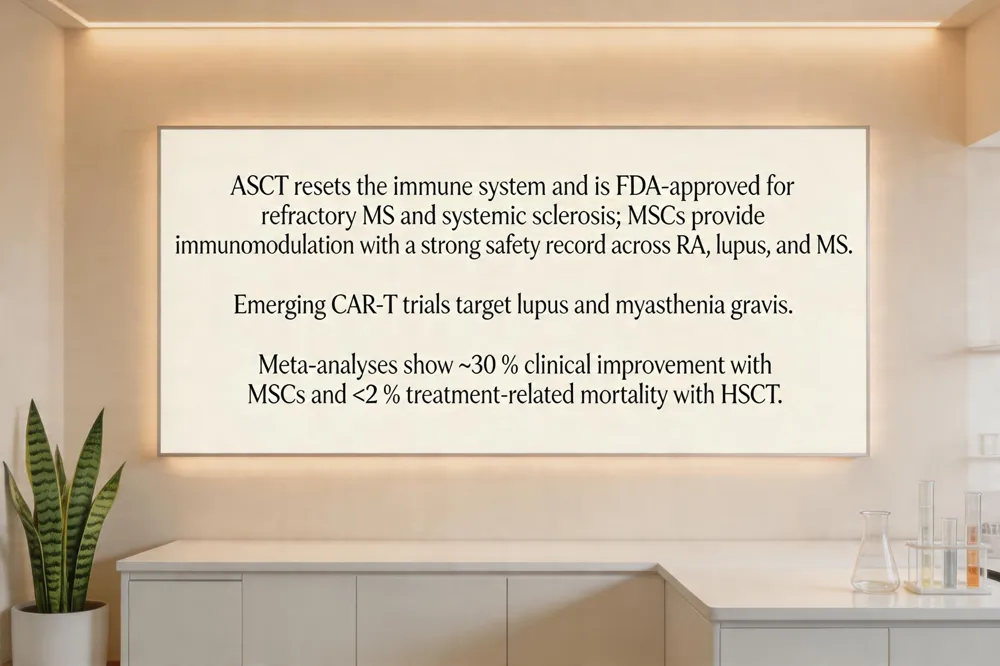
Autologous hematopoietic stem cell transplantation (HSCT) resets the immune system by ablating autoreactive lymphocytes and reinfusing CD34+ progenitors. It is FDA‑approved for refractory relapsing multiple sclerosis and systemic sclerosis, with long‑term remission reported in 60‑70 % of treated MS patients. Mesenchymal stromal cells (MSCs) act as immunomodulatory “peacekeepers,” secreting IL‑10, TGF‑β and IDO to suppress T‑cell activation and promote Tregs. MSCs derived from bone marrow, adipose tissue, or umbilical cord have shown modest disease‑activity reductions in rheumatoid arthritis, lupus, and MS, with a strong safety profile.
HSCT and MSC modalities
Autologous hematopoietic stem cell transplantation (HSCT) resets the immune system by ablating autoreactive lymphocytes and reinfusing CD34+ progenitors. It is FDA‑approved for refractory relapsing multiple sclerosis and systemic sclerosis, with long‑term remission reported in 60‑70 % of treated MS patients. Mesenchymal stromal cells (MSCs) act as immunomodulatory “peacekeepers,” secreting IL‑10, TGF‑β and IDO to suppress T‑cell activation and promote Tregs. MSCs derived from bone marrow, adipose tissue, or umbilical cord have shown modest disease‑activity reductions in rheumatoid arthritis, lupus, and MS, with a strong safety profile.
CAR‑T emerging role CAR‑T cells, originally oncology‑focused, are now entering autoimmune trials. Moffitt Cancer Center will launch CAR‑T studies for systemic lupus erythematosus and myasthenia gravis in 2026, while other centers test CD19‑targeted CAR‑T for lupus and scleroderma. Early data suggest an “immune reset” with B‑cell depletion and rapid reconstitution, offering a potential disease‑modifying option.
Clinical evidence Meta‑analyses of MSC trials (2022‑2024) report ~30 % improvement in clinical response rates for rheumatoid arthritis and a 30 % relapse‑rate reduction in MS. HSCT registries show <2 % treatment‑related mortality and 5‑year survival >80 % for systemic sclerosis. Ongoing phase‑III studies aim to clarify durability and optimal dosing.
Which diseases are commonly treated with stem cells? Beyond hematologic cancers, stem‑cell approaches target autoimmune disorders such as multiple sclerosis, systemic sclerosis, rheumatoid arthritis, systemic lupus erythematosus, and inflammatory bowel disease, as well as musculoskeletal injuries.
Can stem cells reverse autoimmune disease? HSCT can achieve durable remission in selected patients, while MSCs provide adjunctive immunomodulation. Neither constitutes a definitive cure, but they can reset immune tolerance and reduce reliance on chronic immunosuppression.
Is stem cell therapy used for vasculitis? Experimental HSCT and MSC protocols are under investigation for severe vasculitis, but no regulatory approval exists; treatment remains limited to clinical trials.
Recent Breakthroughs and Emerging Technologies
 What are some recent breakthroughs in stem cell research (2023‑2024)?
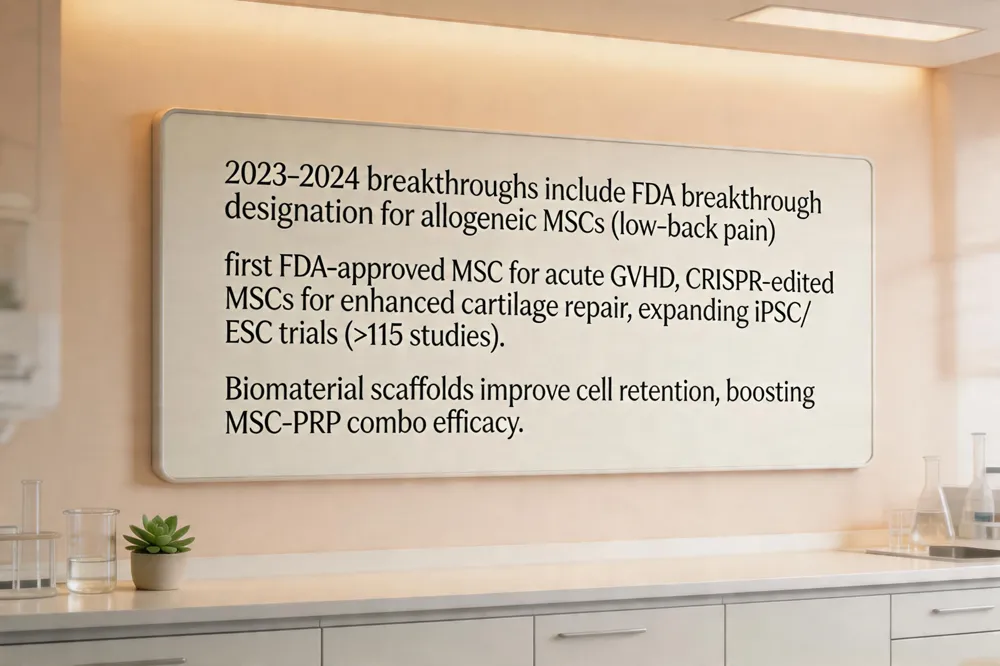
The past two years have seen several pivotal advances. The FDA granted Breakthrough Therapy Designation to allogeneic MSC products for chronic low‑back pain and sports‑related injuries, and the first FDA‑approved MSC therapy for acute graft‑versus‑host disease entered the market. CRISPR‑edited MSCs demonstrated markedly enhanced cartilage repair in pre‑clinical models, paving the way for gene‑augmented cell therapies. Large‑scale iPSC and ESC trials now exceed 115 global studies, especially in ophthalmology, neurology, and oncology, with a strong safety record across >1,200 patients. Innovative biomaterial scaffolds improve cell retention after injection, boosting efficacy of platelet‑rich plasma‑MSC combos.
What is the current status of CAR T‑cell therapy for autoimmune diseases in the United States?
CAR T‑cell therapy, originally approved for B‑cell lymphomas, is moving into autoimmunity. Moffitt Cancer Center, which has treated >2,000 CAR T patients, will launch trials for systemic lupus erythematosus and myasthenia gravis in 2026. Northwestern Medicine and Sylvester Comprehensive Cancer Center are evaluating CD19‑targeted CAR T for lupus and systemic sclerosis, reporting immunological reset and partial clinical responses. While still investigational, CAR T offers the possibility of durable remission without chronic immunosuppression.
How do top centers ensure quality and safety for stem‑cell therapies?
Leading programs such as Moffitt and Northwestern Medicine hold FACT accreditation; Moffitt also carries NCI‑Designated Comprehensive Cancer Center status. These certifications require cGMP‑compliant processing, sterility testing, validated potency assays, and strict FDA biologics compliance. Institutional review board oversight, transparent consent, and rigorous post‑treatment monitoring for infection, graft‑versus‑host disease, and tumorigenicity further safeguard patient safety.
Safety, Regulation, and Future Directions
 Stem‑cell therapies for autoimmune disease are advancing quickly, but safety and regulation remain central. Recent breakthroughs (2023‑2024) include FDA‑approved allogeneic MSC products for graft‑versus‑host disease and breakthrough‑therapy designation for MSCs targeting chronic pain, as well as CRISPR‑edited MSCs that markedly improve cartilage repair in pre‑clinical models. Large iPSC and ESC trials now span >115 studies worldwide, showing a strong safety record in >1,200 participants.
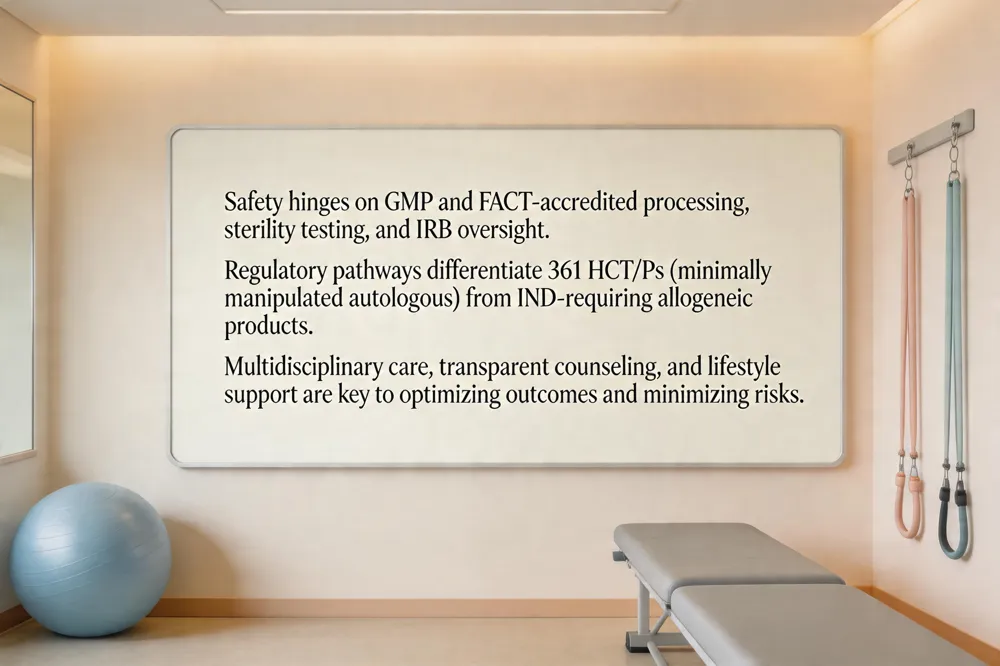
Risk mitigation focuses on infection control, strict sterile technique, and careful donor screening to avoid graft‑versus‑host disease. Cell‑manufacturing follows Good Manufacturing Practice (GMP) and FACT accreditation, as seen at Moffitt Cancer Center, which treats >2,000 CAR‑T patients and >10,000 hematopoietic transplants. Regulatory agencies classify minimally manipulated autologous cells as 361 HCT/Ps, while allogeneic or extensively manipulated products require IND applications and FDA biologics licensing. Accreditation by FACT and NCI‑Designated Comprehensive Cancer Center ensures compliance with high‑quality standards.
A patient‑centered outlook emphasizes multidisciplinary care, second‑opinion evaluations, and transparent counseling on eligibility, trial availability, and insurance coverage. Combining stem‑cell infusions with lifestyle interventions—nutrition, low‑impact exercise, and smoking cessation—may enhance engraftment and reduce reliance on long‑term immunosuppression, offering a conservative, non‑surgical pathway to disease remission.
Looking Ahead: Integrative, Evidence‑Based Care
Future research will expand engineered cellular products—CAR‑MSCs, iPSC‑derived regulatory T cells, and gene‑edited hematopoietic stem cells—to target disease‑specific pathways while improving safety and potency. Ongoing trials in lupus, multiple sclerosis, rheumatoid arthritis and type‑1 diabetes will generate biomarkers that guide personalized dosing. Patient empowerment will grow through shared‑decision platforms, second‑opinion services, and transparent registries that let individuals track outcomes and side‑effect profiles. Regulatory evolution, driven by FDA guidance on regenerative medicines and FACT accreditation standards, will streamline IND approvals, enforce GMP manufacturing, and promote post‑marketing surveillance, ensuring that innovative, conservative, patient‑centered therapies reach the clinic responsibly for patients worldwide.