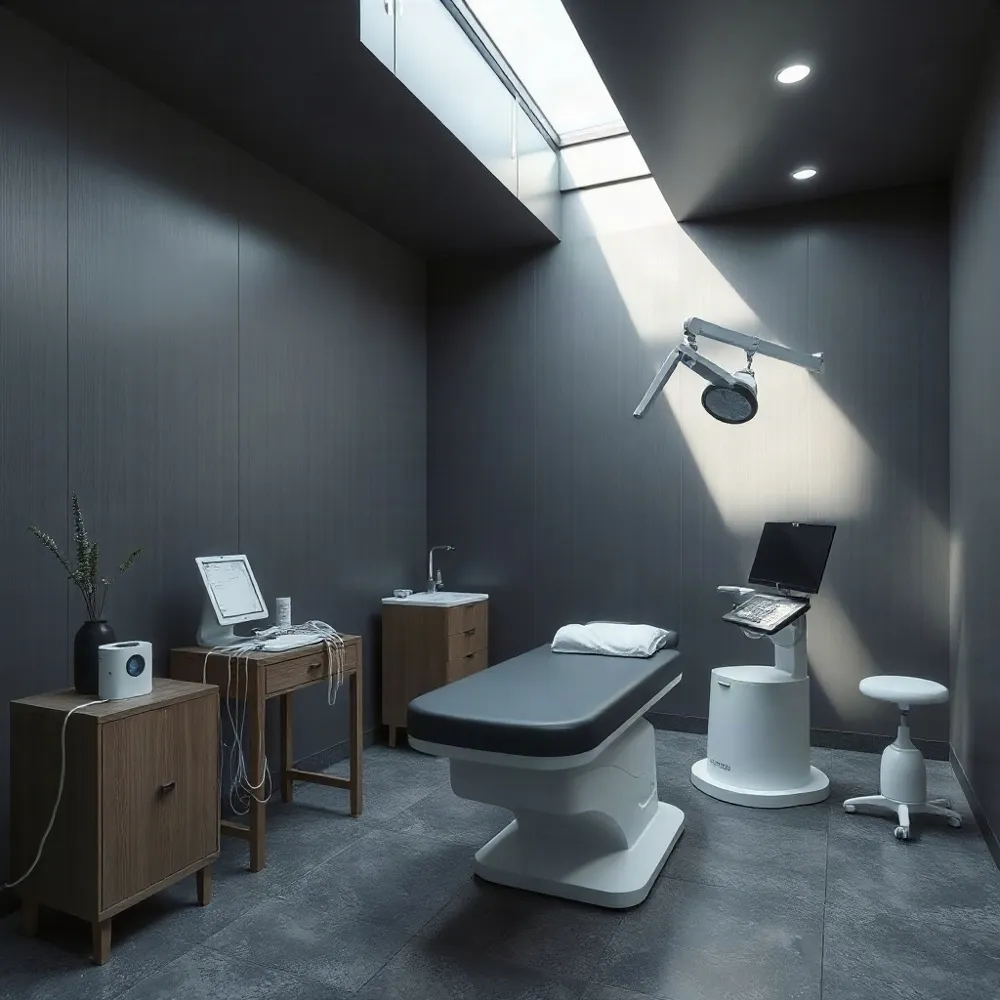
Setting the Stage: AI Meets Regenerative Aesthetics
The Growth of Non‑Surgical Aesthetic Medicine
Non‑surgical aesthetic procedures have seen a dramatic rise in popularity. In 2022 alone, over 25 million cosmetic procedures were performed in the United States. Patients increasingly seek minimally invasive options like injectables, laser treatments, and regenerative therapies such as platelet-rich plasma. These approaches offer effective results with minimal downtime, appealing to those who wish to avoid surgery.
AI Emerges as a Decision‑Support Tool
Artificial intelligence is emerging as a powerful decision‑support tool in this field. AI algorithms can analyze large datasets of patient outcomes and before‑and‑after images. They predict individual aesthetic results with up to 90% accuracy. This allows clinicians to forecast wrinkle reduction, volume restoration, and optimal filler placement. The technology moves beyond subjective assessments, providing objective, data-driven insights.
Alignment with Patient‑Centered Care
Predictive AI aligns directly with a patient‑centered, conservative treatment philosophy. By simulating potential outcomes, patients can visualize realistic results before any procedure. This reduces anxiety and sets clear expectations. For regenerative practices focused on natural healing, AI tools help identify the least invasive yet most effective options. This minimizes unnecessary procedures and supports the body's own recovery processes.
Understanding Non‑Surgical Aesthetic Procedures
What are non-surgical aesthetic procedures?
Non-surgical aesthetic procedures are minimally invasive cosmetic treatments that enhance appearance without the need for incisions or general anesthesia. These procedures fall into three main categories: injectables, energy‑based devices, and biostimulators. Neuromodulators (e.g., Botox) relax muscles to smooth dynamic wrinkles, while dermal fillers (e.g., Juvéderm) restore lost volume by injecting hyaluronic acid. Biostimulators like Sculptra trigger the body's own collagen production, gradually firming the skin.
Key technologies in non‑surgical aesthetics
Laser resurfacing and radiofrequency devices tighten skin by heating the dermis, which stimulates collagen remodeling and addresses uneven tone and texture. Microneedling creates controlled micro‑injuries to boost elastin and collagen synthesis, often combined with platelet‑rich plasma (PRP) for enhanced tissue repair. These technologies rely on the body's natural healing mechanisms rather than surgical excision.
Benefits over surgical alternatives
Compared with surgery, non‑surgical procedures offer quicker recovery, lower complication rates, and reduced downtime. They align with a conservative, patient‑centered approach by minimizing invasive intervention while still achieving measurable aesthetic improvements. The ability to combine multiple modalities (e.g., fillers and radiofrequency) allows personalized plans tailored to individual anatomy and aging patterns, supporting natural outcomes and gradual enhancement.
Botox: The Leading Non‑Surgical Treatment
Botox holds the top spot among non-surgical cosmetic procedures, driven by its proven efficacy and minimal downtime. In 2022, over 9 million treatments were administered globally, reflecting its widespread acceptance and the growing demand for minimally invasive aesthetic options.
Market dominance and procedural volume
The popularity of Botox is supported by significant market data. It is the most performed cosmetic procedure worldwide, with a 26.1% increase in treatments from the previous year. This growth is fueled by its accessibility, quick procedure time, and predictable results, making it a leading choice for patients seeking facial rejuvenation.
Mechanism of action and typical treatment areas
Botox uses botulinum toxin type A to temporarily relax facial muscles that cause dynamic wrinkles. It is commonly applied to forehead lines, crow's feet, and frown lines between the brows. The procedure is quick, often under 30 minutes, with results lasting 3-4 months, offering a temporary but effective solution for wrinkle reduction without surgery.
Demographic trends and patient motivations
The typical Botox patient is around 43 years old, with those aged 35-50 accounting for nearly half of all procedures. While 85.1% of recipients are women, male usage is rising. Patient motivations include addressing visible signs of aging, maintaining a refreshed appearance, and increasingly, using Botox preventatively among younger adults to delay wrinkle formation.
Key data on Botox treatments
| Metric | Data | Source |
|---|---|---|
| Global treatments (2022) | Over 9 million | Industry reports |
| Typical patient age | ~43 years | American Society of Plastic Surgeons |
| Gender distribution | 85.1% women | ASPS statistics |
| Results duration | 3-4 months | Clinical studies |
| Procedure time | Under 30 minutes | Practice data |
| Botox is a leading non-surgical treatment that aligns with patient-centered, conservative aesthetic goals by offering effective, temporary wrinkle reduction with minimal downtime and clear patient benefits. |
AI's Current Role in Aesthetic & Regenerative Medicine
Predictive analytics for outcome forecasting
Artificial intelligence algorithms analyze large datasets of before-and-after images, patient demographics, and treatment histories to forecast aesthetic results with up to 90% accuracy. These predictive models help clinicians select optimal injection volumes, depths, and product types for dermal fillers and neuromodulators, reducing trial-and-error and enhancing patient satisfaction.
AI‑driven imaging and 3D facial scanning
Platforms such as VISIA Skin Analysis, NEXA, and Crisalix use high-resolution 3D surface scans and machine learning to quantify skin texture, pigmentation, and facial asymmetries imperceptible to the human eye. These tools generate realistic before-and-after simulations, allowing patients to visualize expected changes during consultations.
Optimization of platelet‑rich plasma protocols
Machine learning models correlate variables like patient age, skin condition, and platelet concentration with healing trajectories to personalize PRP centrifugation parameters and injection schedules. This data‑driven approach improves tissue repair outcomes and aligns with conservative, patient‑centered regenerative strategies.
Regulatory guidance and data‑privacy considerations
The FDA requires AI‑based medical devices to demonstrate safety, efficacy, and performance across diverse populations through validated training data. Compliance with HIPAA is mandatory when handling patient health information, while ethical guidelines emphasize transparency and clinician oversight of AI‑generated recommendations.
Future Horizons: Personalized, Regenerative, AI‑Powered Care
The future of aesthetic medicine centers on personalized, minimally invasive care that integrates biotechnology and regenerative science. Advanced tools now enable precise customization, moving beyond surface changes to address underlying cellular health. Combination therapies, such as laser resurfacing with biotechnological products, maximize outcomes by tackling multiple concerns simultaneously. This shift toward authentic, sustainable beauty supports the body's own regenerative capacity, perfectly aligning with patient‑centered, surgery‑free medicine.
Integration of AI with Genetics, Lifestyle, and Biometric Data
AI algorithms can incorporate patient‑specific data, including age, skin type, and treatment history, to generate individualized outcome forecasts. Genetic profiling combined with AI can predict collagen remodeling capacity, helping clinicians tailor anti‑aging protocols to individual biological aging rates. Wearable health devices feed physiological data into AI platforms, allowing holistic, integrative aesthetic plans that consider overall wellness.
Generative AI Simulators for Realistic Before‑After Visualizations
Generative AI platforms create high‑resolution 3D facial models that simulate changes from dermal fillers, neurotoxins, or laser treatments. These virtual simulations bridge the gap between patient expectations and achievable results. Studies show that patients who view AI‑generated outcome projections are more likely to adhere to post‑procedure care regimens and report higher satisfaction compared to traditional consultation methods. consultation methods.
Combination Therapies Linking PRP, Fillers, and Energy‑Based Devices
Regenerative therapies like platelet‑rich plasma (PRP) are increasingly combined with AI‑driven imaging to monitor tissue healing and forecast long‑term results. AI can optimize PRP centrifugation parameters and exosome concentration by analyzing patient age, skin condition, and recovery rates. Real‑time AI feedback during laser resurfacing or radiofrequency treatments can adjust energy delivery, reducing the risk of overtreatment and post‑procedure complications.
Ethical Safeguards: Bias Mitigation, Transparency, Clinician Oversight
Regulatory bodies require AI tools used for clinical decision support to be validated for safety and efficacy. Clinicians must ensure AI models comply with data protection regulations. AI models can exhibit biases if trained on non‑representative datasets, highlighting the need for clinician oversight and bias mitigation strategies. Transparency requires clinicians to disclose when predictive modeling influences treatment decisions.
Addressing Common Concerns: Age, Safety, and the Human Touch
Is 70 too old for Botox and fillers?
Age is not a barrier to aesthetic treatments. For individuals over 65 and even 70, Botox and fillers remain viable options that can yield excellent, natural-looking results. The decision to proceed should be based on overall health, skin condition, and personal goals, not a numerical age. Many older patients find that these non-surgical treatments effectively address age-related volume loss and wrinkles, supporting a conservative approach to facial rejuvenation.
AI as an augmentative tool, not a replacement
Artificial intelligence will not replace aestheticians or doctors. The field relies on hands-on procedures, clinical intuition, and a patient-centered approach that AI cannot replicate. AI enhances efficiency and accuracy—such as predicting filler outcomes or optimizing PRP protocols—but it cannot substitute the manual skill and emotional reassurance provided by a provider. The practitioner remains responsible for final decisions and emotional reassurance.
Safety, data security, and regulatory compliance
Safety is paramount. AI tools used in the United States must comply with FDA guidance, HIPAA for data security, and validation standards. These safeguards ensure that predictive analytics support, rather than compromise, patient safety. Continuous monitoring and transparent protocols protect patient information and maintain trust.
Maintaining empathy and shared decision-making
AI enhances shared decision-making by providing visual simulations and data-driven insights. This empowers patients to set realistic expectations, while the clinician guides the conversation with empathy. Technology supports, but does not replace, the human dialogue that defines personalized care.
A Vision of Conservative, AI‑Enhanced Healing
A Vision of Conservative, AI‑Enhanced Healing
Artificial intelligence now enables clinicians to predict aesthetic outcomes with 80‑up‑to‑90‑percent accuracy, personalizing treatment plans and reducing unnecessary procedures. This predictive power supports a conservative, patient‑centered approach by identifying the least invasive yet most effective options for each individual.
Advanced Integrative Medicine remains committed to non‑surgical, regenerative solutions that harness the body’s natural healing processes. AI augments this philosophy by optimizing protocols for therapies like platelet‑rich plasma and monitoring tissue recovery, minimizing trial‑and‑error.
The future of aesthetic care lies in informed collaboration. Embrace a partnership where data‑driven insights meet clinical expertise. Discover how personalized, non‑surgical treatments can align with your goals.