Introduction
Regenerative medicine is reshaping sports injury care by leveraging the body’s own healing mechanisms rather than relying on invasive surgery. Biologic therapies such as platelet‑rich plasma (PRP) and mesenchymal stem‑ (MSC) injections deliver concentrated growth factors and multipotent cells directly to damaged tendons, ligaments, cartilage, and muscle, accelerating tissue repair and reducing inflammation. Clinical evidence across multiple orthopedic societies and leading institutions—including Mayo Clinic, Yale Medicine, and the American Orthopaedic Society for Sports Medicine—demonstrates that PRP and stem‑cell treatments can shorten recovery timelines, lower pain scores, and enable athletes to return to play 30‑50 % faster than conventional rehabilitation alone. This shift toward biologic interventions aligns with a patient‑centered, conservative care model that prioritizes minimally invasive, outpatient procedures, personalized rehabilitation protocols, and the preservation of native tissue, offering a safer, cost‑effective alternative to traditional surgical routes.
Regenerative Therapies in Sports Medicine
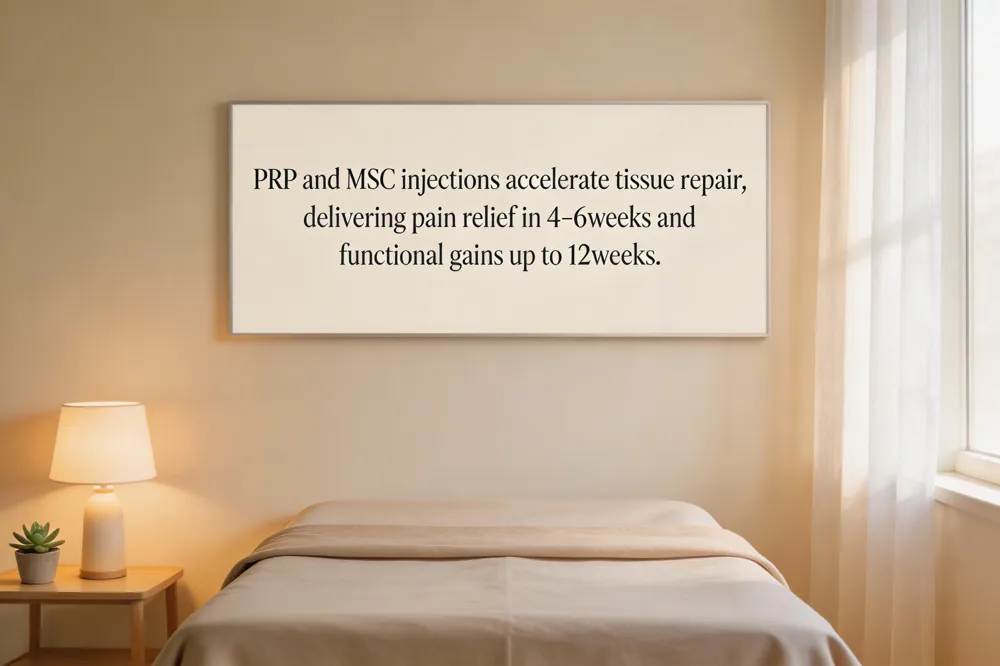 Platelet‑rich plasma (PRP) PRP is prepared by centrifuging a patient’s own blood to concentrate platelets 2–5‑fold, delivering growth factors (PDGF, TGF‑β, VEGF, IGF‑1) that stimulate collagen synthesis, angiogenesis, and inflammation resolution. Typical PRP protocols involve a single ultrasound‑guided injection, followed by 48‑72 hours of light activity and avoidance of NSAIDs for two weeks to preserve platelet function. Most athletes report pain relief within 4‑6 weeks, with functional gains continuing through 6‑12 weeks.
Mesenchymal stem cell (MSC) injections use autologous cells harvested from bone marrow or adipose tissue. MSCs can differentiate into cartilage, tendon, and ligament cells, secrete anti‑inflammatory cytokines and exosomes, and have shown pain reduction and functional improvement in knee osteoarthritis, meniscal tears, and partial muscle injuries. They are performed outpatient under ultrasound guidance and are minimally invasive.
Is regenerative therapy covered by Medicare? Medicare generally does not cover PRP or most stem‑cell injections because they are considered experimental and lack FDA approval for orthopedic use. Coverage is limited to FDA‑approved hematopoietic stem‑cell transplants for serious blood disorders. Private Medicare Advantage plans may offer limited benefits, but most patients pay out‑of‑pocket.
PRP injection recovery time Mild soreness and swelling occur in the first 0‑7 days. Light activity can resume after 48‑72 hours; heavy lifting and high‑impact sports should be avoided for 1‑2 weeks. Pain relief typically appears by week 2‑4, with significant functional recovery by 6 weeks and continued tissue remodeling through 12‑16 weeks. Recovery varies by injury severity and individual health.
PRP for Specific Conditions
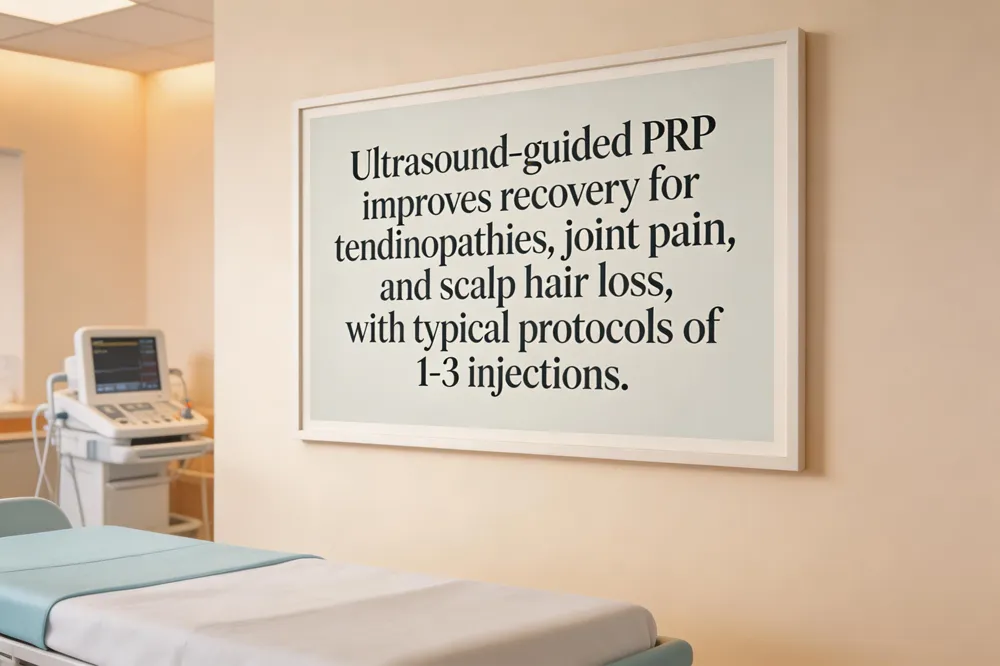 Platelet‑rich plasma (PRP) has become a cornerstone of regenerative sports medicine, especially for tendinopathies and joint pain. Ultrasound‑guided PRP injections deliver a concentrated mix of growth factors (PDGF, TGF‑β, VEGF, IGF‑1) directly to injured tendons, ligaments, and cartilage, accelerating collagen synthesis and reducing inflammation. Clinical studies report faster recovery and earlier return to play for lateral epicondylitis, rotator‑cuff tears, Achilles tendinopathy, and early‑stage knee osteoarthritis, with many athletes resuming activity within 4–8 weeks.
PRP for hair‑loss treatment
PRP therapy uses a patient’s own blood, centrifuged to concentrate platelets and growth factors, which are then injected superficially into the scalp. The released factors—particularly FGF, VEGF, and EGF—prolong the anagen phase and increase shaft thickness, producing thicker, darker hair. Typical protocols involve three to six monthly sessions, with visible improvements after 3–6 months and maintenance injections every 6–12 months. Early‑stage thinning responds best, and the procedure is well‑tolerated because it is autologous.
Cost considerations for patients
A single PRP injection in the U.S. generally costs $500‑$2,500, most often $600‑$1,200. Knee injections are slightly higher, $800‑$1,500 per session, and a series of 1–3 injections can total $1,500‑$4,500. Insurance coverage is rare; many clinics charge cash‑only fees but offer financing, HSA/FSA payment, or bundled discounts. Patients should discuss exact pricing and financing options during the initial consultation.
Patient‑Centered Care and Technology
 Regenerative sports medicine patient portal – The regenerative sports‑medicine patient portal offers a secure, HIPAA‑compliant gateway where patients can view their full health record, book in‑person or telehealth visits, receive visit summaries, and request prescription refills. Integrated secure messaging lets users communicate directly with Dr. Jaimal Sangha’s team, while wellness tools such as vitals tracking, fitness planners, and supplement logs support holistic recovery. Data can be shared on a need‑to‑know basis for seamless coordination with other providers.
Does PRP work for injuries? – Clinical studies show PRP delivers concentrated growth factors that reduce inflammation and stimulate tissue regeneration, accelerating healing of tendons, ligaments, muscles, and joints. Evidence is strongest for chronic tendinopathies (e.g., tennis elbow, jumper’s knee) and early‑stage osteoarthritis, where patients report pain reduction and improved function within weeks to months. Results vary by injury type, PRP preparation, and individual biology; some acute injuries show limited benefit. Overall, PRP provides a safe, autologous, non‑surgical option that can enhance recovery when combined with rehabilitation.
How long after PRP should I wait to play sports? – Avoid high‑impact or contact sports for at least two weeks. Light, low‑impact activity may resume after 48 hours if pain‑free. Most patients are cleared for a gradual return to full‑intensity sport between three and six weeks, depending on the injection site and individual healing response. A structured physical‑therapy program focusing on range‑of‑motion, strength, and neuromuscular control is essential before resuming competitive play.
Regenerative Options for Athletes
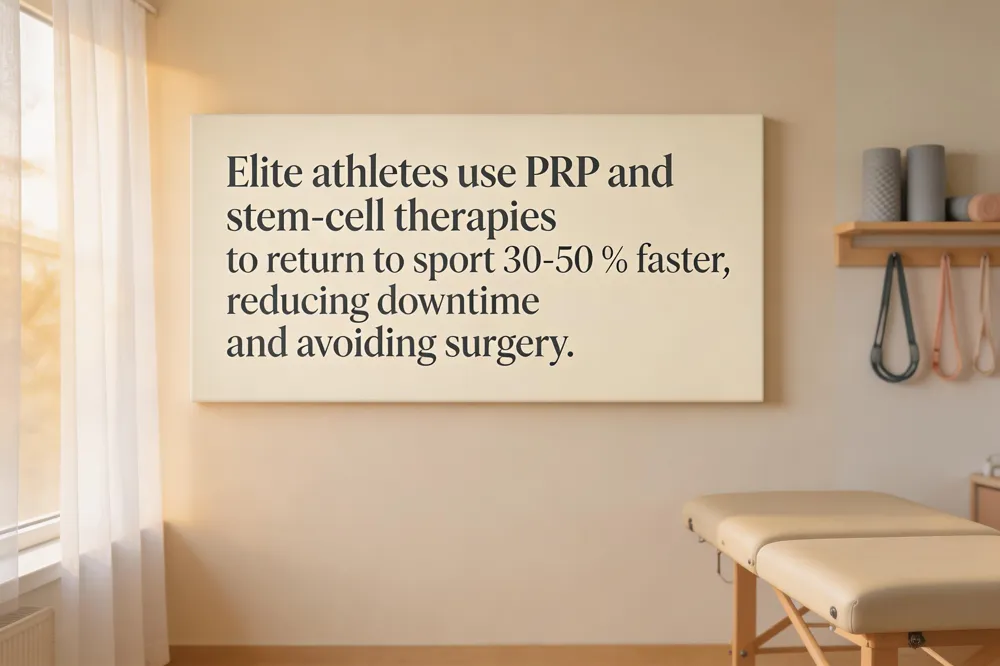 Regenerative medicine offers athletes a biologic boost that accelerates tissue repair and reduces downtime. Platelet‑rich plasma (PRP) delivers a concentrated mix of growth factors—PDGF, TGF‑β, VEGF, IGF‑1—directly to tendons, ligaments, muscles, or joints, stimulating collagen synthesis, angiogenesis and inflammation‑ reduction Clinical data show athletes can return to training 30‑50 % faster than with rest and physical therapy alone, often avoiding surgery and preserving performance.
High‑profile cases illustrate this impact. Tiger Woods has publicly confirmed he used PRP injections after back and knee injuries, a therapy he credited for accelerating healing and enabling his 2019 Masters win. His experience underscores how elite competitors turn to minimally invasive, autologous treatments instead of operative options.
Clinics such as Kinetix apply the same principles, offering PRP, Stem‑cell and prolotherapy to repair cartilage, tendons and ligaments. By harnessing the body’s own healing mechanisms, Kinetix reduces chronic musculoskeletal pain, restores range of motion, and speeds athletes’ return to sport while minimizing reliance on drugs or surgery.
Finding Regenerative Care Near You
 When you’re looking for regenerative joint therapy, start with a focused online search using keywords such as “PRP clinic near me,” “stem‑cell injection center,” or “orthobiologic joint treatment.” Review each practice’s website for a list of services (PRP, mesenchymal stem‑cell, bone‑marrow concentrate, prolotherapy) and confirm that they employ ultrasound‑guided delivery, which improves accuracy and safety.
Insurance coverage for these biologic injections varies widely; many clinics offer transparent financing options, including payment plans, health‑savings accounts, or third‑party financing, to offset out‑of‑pocket costs. Call the billing office to verify whether your plan covers PRP, stem‑cell, or viscosupplementation procedures.
Geographically, several reputable centers illustrate the national availability of care: in Southern California, Dr. Jaimal Sangha’s Santa Monica office provides patient‑centered PRP and stem‑cell therapies for joint pain. On the East Coast, the AOSMI network in New Jersey offers PRP injections and minimally invasive regenerative options for athletes. Colorado’s Advanced Regenerative Health and QC Kinetix in Colorado Springs specialize in non‑surgical biologic treatments, including PRP and viscosupplementation. Contact each clinic directly to confirm location, eligibility criteria, and financing details before scheduling an appointment.
Conclusion
Regenerative sports medicine is moving toward increasingly precise, biologically driven treatments. Emerging strategies combine platelet‑rich plasma, mesenchymal stem cells, and novel biomaterials such as 3‑D‑printed scaffolds, while wearable sensors and AI analytics tailor load‑management and rehabilitation protocols to each athlete’s physiology. Gene‑editing and exosome technologies promise to enhance tissue regeneration and reduce scarring. Across clinics, the focus remains on minimally invasive, office‑based injections that preserve native tissue and avoid the risks of surgery. This patient‑centered paradigm integrates personalized biologic therapy with evidence‑based rehab, delivering faster recovery, lower opioid use, and lasting functional improvement for athletes seeking peak performance and durability.