Opening Overview
Integrative medicine blends conventional Western care with evidence‑based complementary therapies to treat the whole person—body, mind, and spirit. Its patient‑centered philosophy places the individual’s goals, values, and lifestyle at the core of every plan, fostering shared decision‑making and personalized care pathways. Regenerative therapies such as platelet‑rich plasma (PRP) and stem‑cell injections are key components, using the body’s own cells and growth factors to repair damaged tissue, reduce inflammation, and restore function without surgery. By coupling these biologics with nutrition counseling, mindfulness, yoga, and targeted exercise, integrative programs address the underlying biological, psychological, and social drivers of chronic disease. This holistic, evidence‑driven model aims to improve long‑term health, lower medication reliance, and reduce overall healthcare costs. Patients report higher satisfaction and faster functional recovery when these modalities are integrated.
Regenerative Therapy for Back Pain and Cost
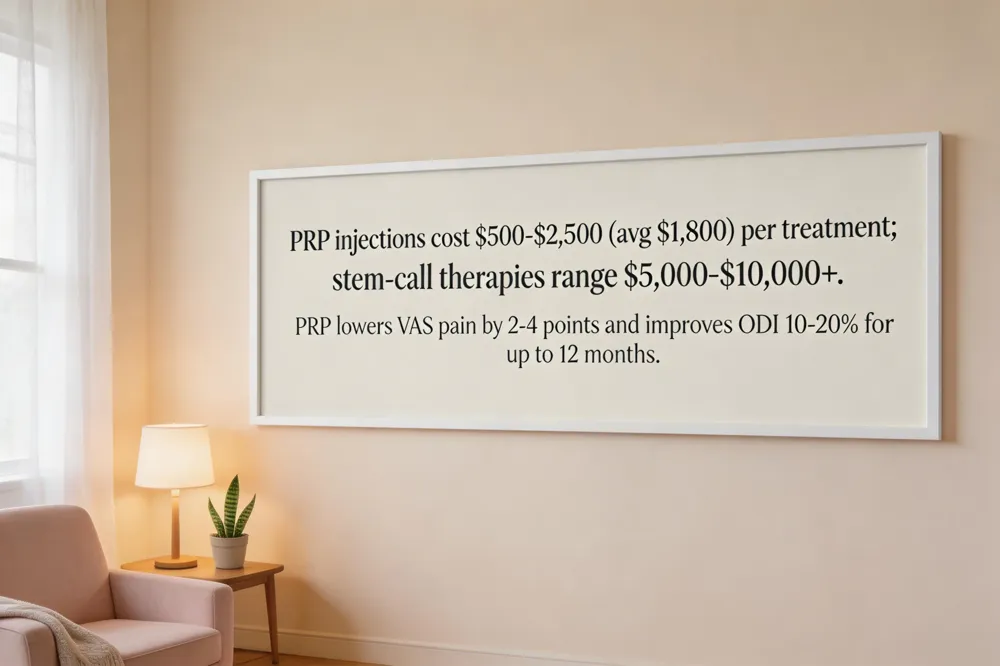 Regenerative therapy for back pain leverages the patient’s own healing mechanisms to repair damaged spinal tissues without surgery. Platelet‑rich plasma (PRP) injections concentrate a patient’s platelets, delivering growth factors such as PDGF, TGF‑β and VEGF that stimulate disc and joint regeneration while reducing inflammation. Stem‑cell options, typically autologous bone‑marrow aspirate or adipose‑derived cells, can differentiate into cartilage or disc cells, potentially restoring disc height and function. Clinical outcomes show PRP can lower pain scores by 2‑4 VAS points and improve Oswestry Disability Index by 10‑20 % for up to 12 months, and stem‑cell therapies demonstrate similar functional gains with minimal adverse events. A single PRP injection for back pain usually costs between $500 and $2,500, averaging about $1,800 nationally, and a typical three‑treatment series may total around $2,000. More advanced biologics such as stem‑cell or bone‑marrow aspirate therapies range from $5,000 to $8,000 per treatment, sometimes exceeding $10,000 with specialized imaging guidance. Because most insurers label PRP investigational, patients often pay out‑of‑pocket, though health‑savings accounts and financing options are common.
Insurance Landscape & Coverage Realities
 Medicare’s coverage of regenerative therapies is very limited. It reimburses FDA‑approved hematopoietic stem‑cell transplants for serious blood disorders and certain cancers, but most orthopedic‑focused treatments—such as platelet‑rich plasma (PRP) injections and stem‑cell procedures for joint, sports‑related, or back pain—are deemed investigational and are not paid for. Private insurers follow a similar pattern; the majority of major carriers classify PRP and stem‑cell injections as experimental, so routine reimbursement is rare. Limited exceptions exist—Tricare may provisionally cover PRP for specific knee and elbow conditions, and Medicare may fund PRP only within approved clinical trials for diabetic wounds. Integrative‑medicine services show mixed coverage. Acupuncture, chiropractic care, and massage often receive Medicare Part B or private‑plan payment when a referral or medical‑necessity justification is provided, whereas modalities like naturopathic consultations, nutritional counseling, and PRP are frequently out‑of‑pocket. Integrative medicine is considered legitimate when it blends evidence‑based conventional care with complementary therapies that have demonstrated efficacy in peer‑reviewed studies, as endorsed by the Mayo Clinic and Cleveland Clinic. After a PRP injection for back pain, patients typically notice pain reduction within two to four weeks, with the most pronounced improvement between six and twelve weeks and maximal tissue remodeling occurring over three to six months; clinicians usually recommend two to three injections spaced several weeks apart.
Clinical Evidence, Success Rates & Safety
 Systematic reviews of platelet‑rich plasma (PRP) for chronic low‑back pain consistently show strong benefits. Recent meta‑analyses report that PRP injections achieve significant pain reduction and functional gains compared with control or steroid injections, especially when delivered to facet joints, ligaments or fascia. Patient outcomes reveal that 50‑70 % of selected individuals experience clinically meaningful improvement (≥50 % pain relief) at 6–12 months, with higher success when platelet concentrations and multiple injection series are used. The side‑effects profile of regenerative injections is favorable: most patients report only transient soreness, swelling, bruising or low‑grade fever that resolves within days; serious complications such as infection or bleeding occur in less than 1 % of cases when performed under sterile, FDA‑compliant protocols. Compared with corticosteroid shots, PRP provides longer‑lasting relief, reduces reliance on NSAIDs, and avoids the systemic effects of steroids, although evidence quality remains moderate and optimal patient selection is crucial. Integrating PRP with rehabilitation further enhances outcomes, and its invasive approach lowers healthcare costs versus surgery.
Integrative Medicine Practice & Non‑Surgical Sports Medicine
 What is non‑surgical sports medicine?
Non‑surgical sports medicine focuses on diagnosing, treating, and preventing sports‑related injuries without operative procedures. Practitioners employ conservative strategies—physical therapy, targeted rehabilitation, biomechanical analysis, and regenerative injections—to promote natural healing while minimizing downtime.
What is non‑surgical sports medicine?
Non‑surgical sports medicine focuses on diagnosing, treating, and preventing sports‑related injuries without operative procedures. Practitioners employ conservative strategies—physical therapy, targeted rehabilitation, biomechanical analysis, and regenerative injections—to promote natural healing while minimizing downtime.
Integrative medicine examples Integrative medicine blends conventional care with evidence‑based complementary therapies such as acupuncture for pain relief, yoga or tai chi for flexibility and stress reduction, massage therapy, nutritional counseling, mindfulness meditation, and biologics like platelet‑rich plasma (PRP) injections.
What is an integrative medicine doctor? An integrative medicine doctor is an MD or DO who treats the whole person—mind, body, and spirit—by combining conventional evidence‑based medicine with complementary modalities (nutrition, mind‑body techniques, regenerative therapies). Many hold board certification in integrative medicine.
What is integrative health and functional medicine? Integrative health is a whole‑person approach that merges conventional and complementary therapies to address physical, emotional, mental, and spiritual well‑being. Functional medicine, a branch of integrative health, targets the underlying biological causes of chronic disease through personalized, biology‑driven interventions.
What conditions can integrative medicine treat? Chronic pain, arthritis, back pain, sports injuries, carpal tunnel syndrome, diabetes, hypertension, cardiovascular disease, cancer‑related side effects, fibromyalgia, anxiety, and depression.
What are common treatments for sports injuries? RICE, NSAIDs, immobilization, physical therapy, and when needed, regenerative options like PRP injections, followed by individualized rehabilitation, nutrition optimization, and mind‑body techniques.
Can sports hernias heal without surgery? They rarely resolve completely on their own, but many improve with rest, physical therapy, and anti‑inflammatory measures, avoiding surgery unless conservative care fails.
Is an integrative medicine specialist a doctor? Yes—an integrative medicine specialist is a physician (MD/DO) with additional training or board certification in integrative medicine, qualified to diagnose, prescribe, and coordinate comprehensive care.
What is regenerative medicine for pain? Regenerative medicine for pain uses autologous biologics—PRP, bone‑marrow, or fat‑derived stem cells—to deliver concentrated growth factors and progenitor cells to injured musculoskeletal tissues, reducing inflammation and promoting healing in conditions such as osteoarthritis, tendonitis, and degenerative disc disease.
Local Access, Patient Journey & Practical Considerations
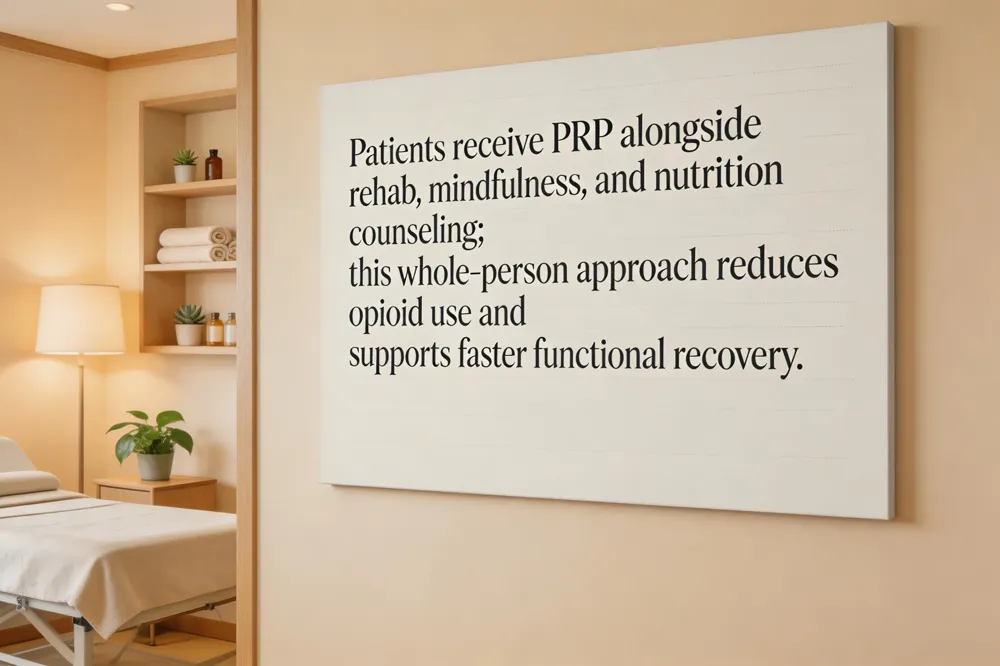 Integrative medicine blends conventional care with complementary therapies to treat the whole person—body, mind, and spirit. A cornerstone of this approach is regenerative medicine, especially Platelet‑Rich Plasma (PRP) therapy which concentrates a patient’s own platelets and injects them into injured tissue to release growth factors that accelerate healing. Clinical studies show PRP reduces pain and improves function in chronic lower back pain, tendinopathies, early osteoarthritis, and sports‑related injuries such as rotator cuff tears and Achilles tendinopathy. When combined with structured rehabilitation, mindfulness, acupuncture, yoga, outcomes are superior to PRP alone, supporting a conservative, patient‑centered model that minimizes opioid use and surgical intervention. Dr. Jaimal Sangha’s practice exemplifies this philosophy, offering PRP alongside lifestyle modification, nutrition counseling, and physical therapy to preserve joint function. The emerging evidence underscores PRP’s role as a safe, effective, and non‑invasive option within integrative pain‑management programs.
Final Thoughts
Integrative medicine unites conventional care with evidence‑based complementary therapies, delivering measurable benefits such as reduced pain, lower opioid use, and improved functional outcomes across chronic musculoskeletal conditions. By treating the whole person—body, mind, and spirit—holistic, patient‑centered models empower individuals to participate in lifestyle changes, nutrition, mindfulness, and regenerative options like PRP, fostering natural tissue repair and lasting relief. Looking ahead, expanding research, insurance coverage, and interdisciplinary collaboration will accelerate adoption, making integrative, regenerative strategies a mainstream, cost‑effective solution for chronic disease management. Patients will benefit from personalized care.