A New Paradigm for Healing
Regenerative medicine is redefining health care by moving away from merely masking symptoms toward actively repairing damaged tissues. Rather than relying on long‑term drug regimens or invasive operations, clinicians now target the underlying degeneration that causes pain and loss of function. This shift is grounded in the “3R’s” – rejuvenation, regeneration, and replacement – which guide therapies such as autologous platelet‑rich plasma, mesenchymal stem‑cell injections, and engineered scaffolds. Each approach seeks to revive cellular activity, rebuild native structures, or substitute lost tissue with biologically compatible material. Central to this model is a patient‑centered, non‑surgical philosophy that emphasizes minimally invasive biologics, personalized treatment plans, and integration with physical rehabilitation, allowing individuals to restore function while avoiding the risks of major surgery today.
The Science and Market Behind Regenerative Medicine
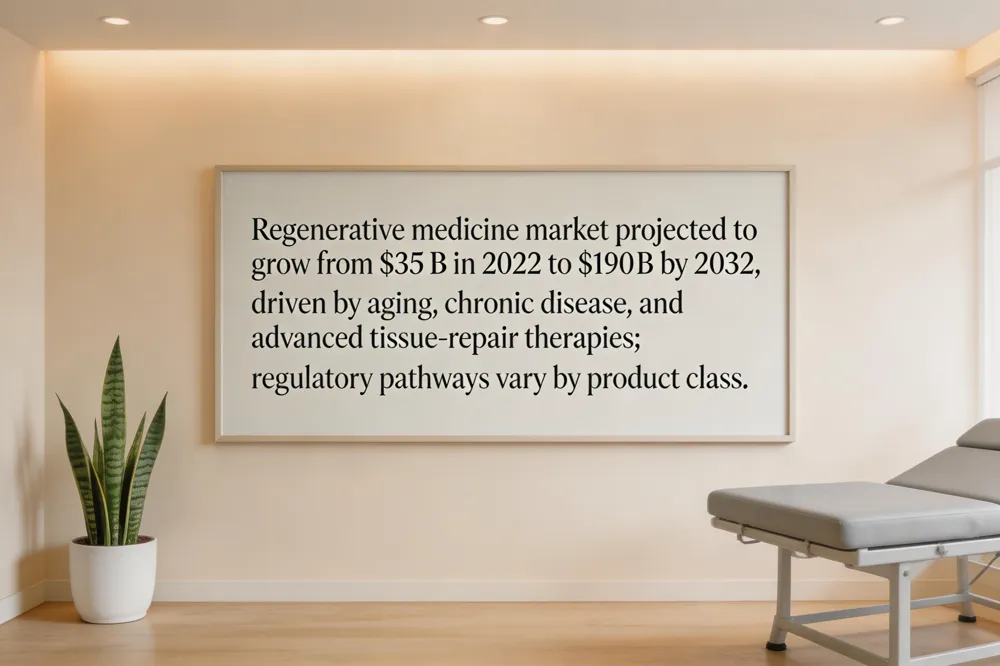 Regenerative medicine is rapidly expanding both scientifically and commercially. Global market forecasts show a surge from $35 billion in 2022 to $190 billion by 2032, with North America accounting for 47 % of sales and the United States leading in investment. This growth is driven by aging populations, chronic disease prevalence, and the promise of curative, tissue‑repair therapies.
Regulatory pathways differ by product class. The FDA and EMA treat cellular therapies, gene‑editing, and combination biologic‑device products as distinct categories, requiring rigorous testing for sterility, potency, stability, and safety. Autologous platelet‑rich plasma (PRP) is classified as a minimally manipulated autologous product, allowing office‑based use without extensive pre‑market approval, while stem‑cell and tissue‑engineered products undergo 7–12 years of clinical testing and costs of $800 million–$2.6 billion before approval.
Tissue engineering advances the field by integrating cells with biodegradable scaffolds or decellularized extracellular matrices. Natural scaffolds (collagen, alginate) and synthetic polymers (PLGA, PEG) mimic the extracellular environment, support cell attachment, and can be engineered for controlled release of growth factors such as VEGF and PDGF. Emerging 3‑D bioprinting and scaffold‑free cell‑sheet technologies enable precise spatial placement of cells and biomaterials, improving graft integration, vascularization, and functional outcomes. These innovations together underpin the shift from symptomatic treatment toward true tissue regeneration.
Regenerative Solutions for Back Pain
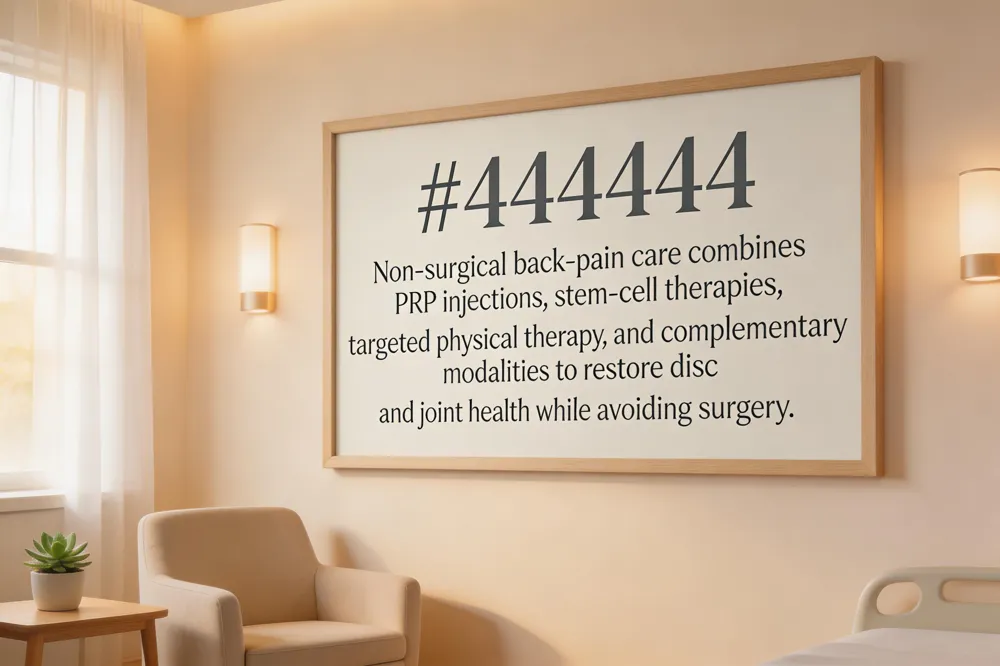 Female lower back pain treatment – Women with chronic lower‑back pain benefit from a conservative, regenerative plan that avoids surgery. Autologous platelet‑rich plasma (PRP) injections deliver a concentrated mix of growth factors to the affected disc or facet joint, stimulating repair and reducing inflammation. Complementary stem‑cell therapies—such as adipose‑derived or bone‑marrow‑derived mesenchymal stem cells—further regenerate disc material and modulate pain pathways. A tailored physical‑therapy program (core‑strengthening, flexibility, posture training) supports the biologic treatments, while gentle acupuncture , massage, and anti‑inflammatory nutrition round out a patient‑centered approach.
What can be done for back pain besides surgery? – Non‑surgical management starts with evidence‑based PRP injections that target inflammation and promote healing without surgical risks. Structured physical therapy stabilizes the spine, and OTC NSAIDs, topical analgesics, or short‑term muscle relaxants manage pain while activity continues. Complementary modalities—acupuncture, chiropractic adjustments, massage, low‑impact walking or swimming, yoga, and mindfulness‑based stress reduction—enhance recovery and quality of life. Our clinic prioritizes PRP combined with these individualized treatments as a safe alternative to surgery.
Regenerative therapy for back pain – Regenerative therapy harnesses autologous biologics—PRP and mesenchymal stem cells—to repair intervertebral discs, facet joints, ligaments, and surrounding soft tissue. PRP’s growth factors stimulate cellular proliferation, extracellular‑matrix synthesis, and inflammation modulation, while injected stem cells differentiate into nucleus‑pulposus‑like cells and secrete anti‑inflammatory cytokines. These minimally invasive, low‑risk procedures often allow patients to resume normal activities within days, providing durable pain relief and functional improvement as a non‑surgical option.
How to relieve severe lower back pain? – Begin with gentle mobility drills and low‑impact walking, apply heat or ice for 15‑minute intervals, and consider a short course of NSAIDs or muscle relaxants as approved. Schedule a PRP injection to deliver concentrated growth factors to the injured tissue, then follow with a personalized physical‑therapy program focused on core strengthening, flexibility, and posture retraining. Maintain an anti‑inflammatory diet and practice mindfulness to reduce stress‑related pain amplification.
How to relieve back pain fast at home – Start with a short walk, deep‑breathing, and heat or ice packs (15‑20 minutes). Perform low‑impact stretches—knee‑to‑chest, rotational, cat‑stretch, bridge—2‑3 times twice daily. Use OTC ibuprofen or acetaminophen if needed. If pain persists beyond a few days, consider a PRP injection for targeted, longer‑lasting relief without surgery.
Platelet‑Rich Plasma: Efficacy, Safety, Cost, and Access
 Clinical effectiveness across musculoskeletal conditions
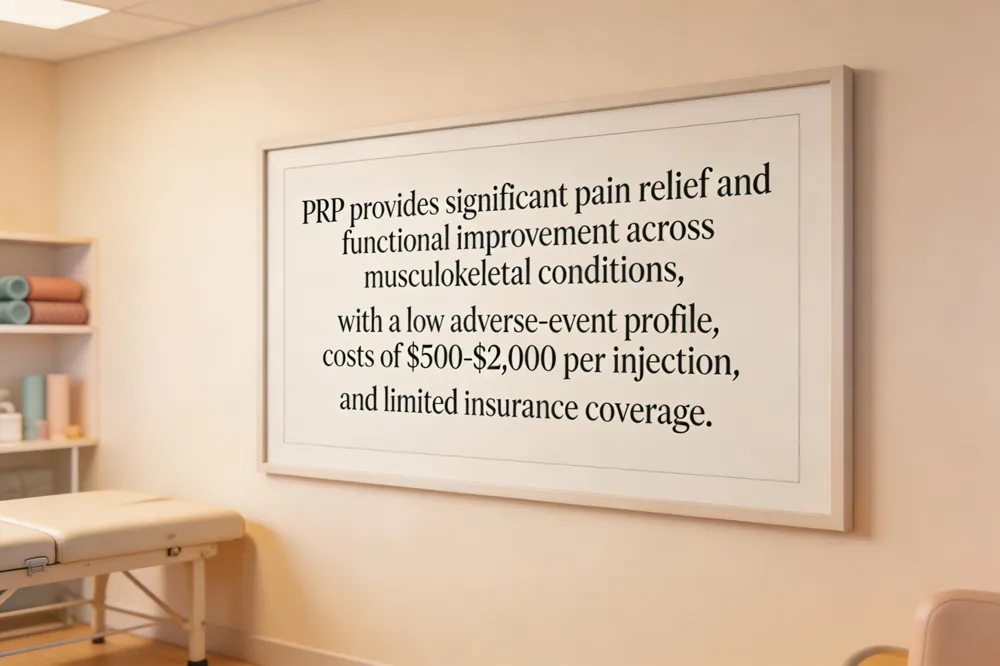
PRP injections have demonstrated meaningful pain relief and functional improvement in a range of conditions—including knee osteoarthritis, chronic tendon injuries, and low‑back pain. Meta‑analyses show a 44–45 % WOMAC score improvement for knee OA versus 12 % for hyaluronic acid, and a 91 % VAS reduction for lateral epicondylitis versus 42 % for corticosteroids. Patients typically notice benefits within 4‑6 weeks, with effects lasting 6‑12 months and sometimes up to two years.
Clinical effectiveness across musculoskeletal conditions
PRP injections have demonstrated meaningful pain relief and functional improvement in a range of conditions—including knee osteoarthritis, chronic tendon injuries, and low‑back pain. Meta‑analyses show a 44–45 % WOMAC score improvement for knee OA versus 12 % for hyaluronic acid, and a 91 % VAS reduction for lateral epicondylitis versus 42 % for corticosteroids. Patients typically notice benefits within 4‑6 weeks, with effects lasting 6‑12 months and sometimes up to two years.
Common adverse events and safety profile The therapy is minimally invasive and uses autologous blood, resulting in a low systemic‑reaction risk. The most frequent side effects are mild injection‑site soreness, bruising, swelling, or a brief pain flare that resolve in days. Rare complications—such as infection, nerve irritation, or vascular events—are preventable with sterile technique and ultrasound guidance.
Pricing and insurance considerations A single PRP injection costs $500‑$2,000; a typical three‑session series averages $2,000. [Stem‑cell] or BMAC procedures are higher ($5,000‑$8,000 and $3,000‑$5,000 respectively). Insurance coverage is limited; most patients pay out‑of‑pocket or use HSA/FSA funds. Some plans may cover a portion of integrative services when documented as medically necessary.
Patient suitability and expectations Ideal candidates are adults with chronic joint or tendon pain unresponsive to physical therapy, NSAIDs, or corticosteroids, especially those seeking a non‑surgical, patient‑centered option. PRP is well tolerated, and the brief injection discomfort is outweighed by potential long‑term relief. For personalized care, locate a qualified provider—such as Dr. Jaimal Sangha’s Advanced Integrative Medicine clinics—by searching “platelet‑rich plasma near me (USA)”.
Core Modalities and Benefits of Regenerative Medicine
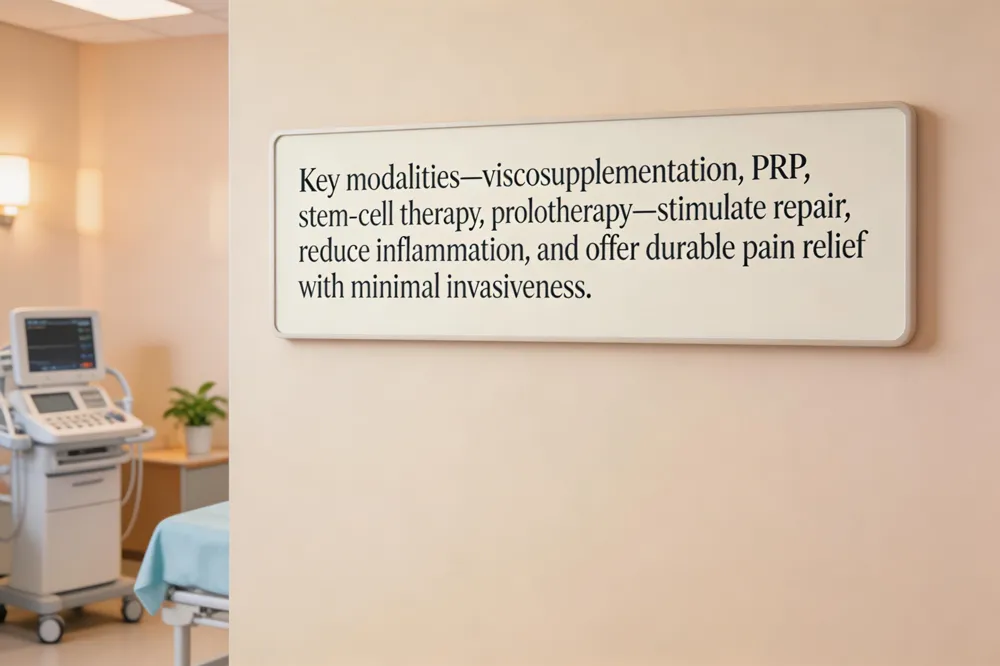 Regenerative medicine restores damaged tissues by stimulating the body’s own repair mechanisms, reducing the need for invasive surgery. The four main modalities are viscosupplementation, platelet‑rich plasma (PRP), stem‑cell therapy, and prolotherapy. Each delivers bioactive agents that promote cell proliferation, angiogenesis, and collagen synthesis while dampening inflammation. Clinical evidence shows PRP and stem‑cell injections provide statistically significant pain relief and functional gains in chronic back pain, osteoarthritis, and tendinopathies, often lasting 6–12 months with minimal adverse effects. Patients benefit from a patient‑centered, minimally invasive approach that shortens downtime, lowers complication rates, and decreases reliance on long‑term medications. The most common nonsurgical treatment for back pain remains physical therapy combined with a personalized home‑exercise program, which can be enhanced by regenerative injections when appropriate. Overall, regenerative therapies offer a natural, conservative alternative that supports lasting tissue health and improves quality of life.
Integrative, Patient‑Centered Care in Practice
 Modern regenerative clinics blend biologic injections—such as Platelet‑Rich Plasma (PRP) and mesenchymal stem‑cell therapies—with evidence‑based lifestyle, nutrition, and mind‑body interventions. Patients receive personalized plans that incorporate anti‑inflammatory diets, core‑strengthening exercises, yoga or meditation, smoking cessation, and weight‑management, all designed to enhance the body’s innate healing response. Shared decision‑making is central: clinicians use imaging and symptom‑duration data to discuss options, set realistic expectations, and tailor PRP dosing or scaffold‑based treatments to each individual’s anatomy and goals. When regenerative biologics are combined with structured physical‑therapy programs and counseling, studies report higher pain‑relief scores, faster functional recovery, and patient satisfaction rates exceeding 80 %, with many patients reporting 6‑ to 12‑month symptom‑free periods that often obviate the need for surgery.
Looking Ahead: Healing Without Surgery
Regenerative medicine is poised to deliver lasting relief by targeting the underlying biology of pain rather than merely masking symptoms. Clinical data on platelet‑rich plasma and mesenchymal stem‑cell injections show pain reduction that can persist for 6‑12 months, and emerging studies suggest benefits may extend beyond a year when combined with structured rehabilitation. Ongoing trials across orthopedics, neurology and cardiology are refining protocols, standardizing PRP preparation, and exploring pre‑vascularized scaffolds to improve graft survival. Regulatory agencies are updating guidance to balance safety with rapid access, while professional societies endorse evidence‑based, patient‑first pathways that prioritize minimally invasive, conservative care before surgical referral. Patients notice faster recovery and greater functional gains.