Regenerative Medicine: A New Era of Natural Healing
Regenerative medicine focuses on supporting the body's own repair system rather than overriding it. As people age or experience overuse and repeated injuries, natural healing responses can slow or become trapped in chronic inflammation. Regenerative treatments work by delivering healing signals directly to the area where the body needs them most.
Common therapies include Platelet-Rich Plasma (PRP) therapy, prolotherapy, ozone therapy, and shockwave therapy. PRP uses a patient's own blood to concentrate platelets and growth factors that help repair tissue and calm inflammation. The Hopkins Medicine guide explains that PRP injections are a low-risk procedure using the patient's own cells.
Prolotherapy uses a mild solution to encourage the body to strengthen ligaments and tendons, often helpful for unstable joints. Ozone therapy helps modulate inflammation and improve oxygen use in tissue, while shockwave therapy uses sound-wave energy to stimulate blood flow and tissue repair — both useful as complementary approaches for chronic pain or slow-healing injuries.
At Advanced Integrative Medicine in Merced, Dr. Jaimal Sangha offers these non-surgical treatments as part of a conservative, patient-centered approach to pain management and sports injury recovery.
Understanding Regenerative Medicine and Its Core Principles
 Regenerative medicine differs from conventional treatment by targeting the underlying cause of pain rather than just suppressing symptoms. Standard approaches often rely on anti-inflammatory medications or corticosteroids, which can temporarily relieve discomfort but may interfere with the body's natural healing processes. In contrast, regenerative methods use substances already present in the body, such as platelets and growth factors, to actively repair damaged tissue.
Tendons and ligaments have poor blood supply compared to muscles, which is why they heal slowly after injury. Regenerative treatments like Platelet-Rich Plasma (PRP) therapy concentrate the patient's own platelets and growth factors into an injectable solution that stimulates collagen production and tissue regeneration at the injury site. This approach supports long-term structural repair rather than temporary pain relief.
Clinical research published in journals such as Frontiers in Bioengineering and Biotechnology has shown consistent improvements in function and pain reduction for musculoskeletal conditions treated with regenerative methods. These techniques align with a conservative, patient-centered philosophy that prioritizes supporting the body's own recovery systems before considering more invasive options.
Providers like Advanced Integrative Medicine, led by Dr. Jaimal Sangha, exemplify this patient-centered model by offering non-surgical alternatives that emphasize natural healing. Their practice focuses on restoring tissue integrity through targeted biologic therapies, helping patients avoid the risks and downtime associated with surgery while achieving lasting functional improvement.
Platelet-Rich Plasma (PRP): A Closer Look
At the center of many modern regenerative protocols is Platelet-Rich Plasma therapy. The approach draws on your own blood, spins it to concentrate the platelets, and delivers the result back to the site of injury. Those platelets carry growth factors that signal local cells to begin repair work. PRP injections are one of the most studied nonsurgical options for tendon and ligament problems because the healing signal is natural and the risk of rejection is essentially nil.
For conditions like partial ligament tears or chronic tendon pain, the goal is to restart a healing process that has stalled, not to mask the symptom. That is why a practice like Advanced Integrative Medicine, which pairs PRP with ultrasound guidance and a conservative treatment plan, focuses on precise placement and realistic expectations. The treatment fits naturally into a strategy that emphasizes support for the body's own recovery rather than forcing a repair.
How PRP Compares With Other Conservative Options
Many knee problems, including early arthritis and ligament sprains, respond first to physical therapy, activity modification, and bracing. Nonsurgical treatments for ACL tears and conservative knee care are well documented. The advantage of adding PRP is that it delivers a concentrated dose of repair signals directly to the damaged tissue, potentially shortening recovery time. For a patient choosing between watchful waiting and a more active regenerative step, the choice often comes down to how much healing acceleration they want.
Regenerative approaches to tendon and ligament conditions have grown because they target the underlying biology rather than just the symptom. Regenerative approaches to tendon and ligament conditions are now a recognized clinical path. A practice that offers both PRP and stem cell options, like Advanced Integrative Medicine, can match the right biologic to the specific tissue and severity, something a one-size-fits-all program cannot do.
Scope. PRP addresses the local healing signal; it doesn't replace a full surgical reconstruction when the ligament is completely torn.
Integration. The best results come when PRP is added to a structured rehab program that strengthens the surrounding muscles and restores range of motion.
Stem cells. For more extensive damage, stem cell treatments may offer a broader regenerative response, which is why many practices now offer both therapies side by side.
| Treatment | Target | Recovery Focus |
|---|---|---|
| PRP | Localized signals | Short downtime, improved healing |
| Stem cells | Broad tissue repair | Longer process, structural change |
| Physical therapy | Strength and motion | Foundational, no injection |
For a partial tear or chronic tendon pain that hasn't responded to rest, PRP offers a middle path between doing nothing and undergoing surgery. PRP for torn ligaments can promote healing by delivering growth factors exactly where the tissue is weakest. When paired with a practice that plans around your specific anatomy, like the ultrasound-guided approach at Advanced Integrative Medicine, it becomes a reliable step in a conservative care plan.
Prolotherapy: Strengthening Ligaments and Tendons Naturally
If you or someone you know is struggling with a stubborn ligament or tendon injury, understanding the difference between managing pain and truly healing is the first step. Advanced Integrative Medicine offers regenerative treatments that focus on long-term recovery. To learn more about your options, consult a healthcare professional to see if this approach is right for you.
Ozone and Shockwave Therapies: Complementary Approaches
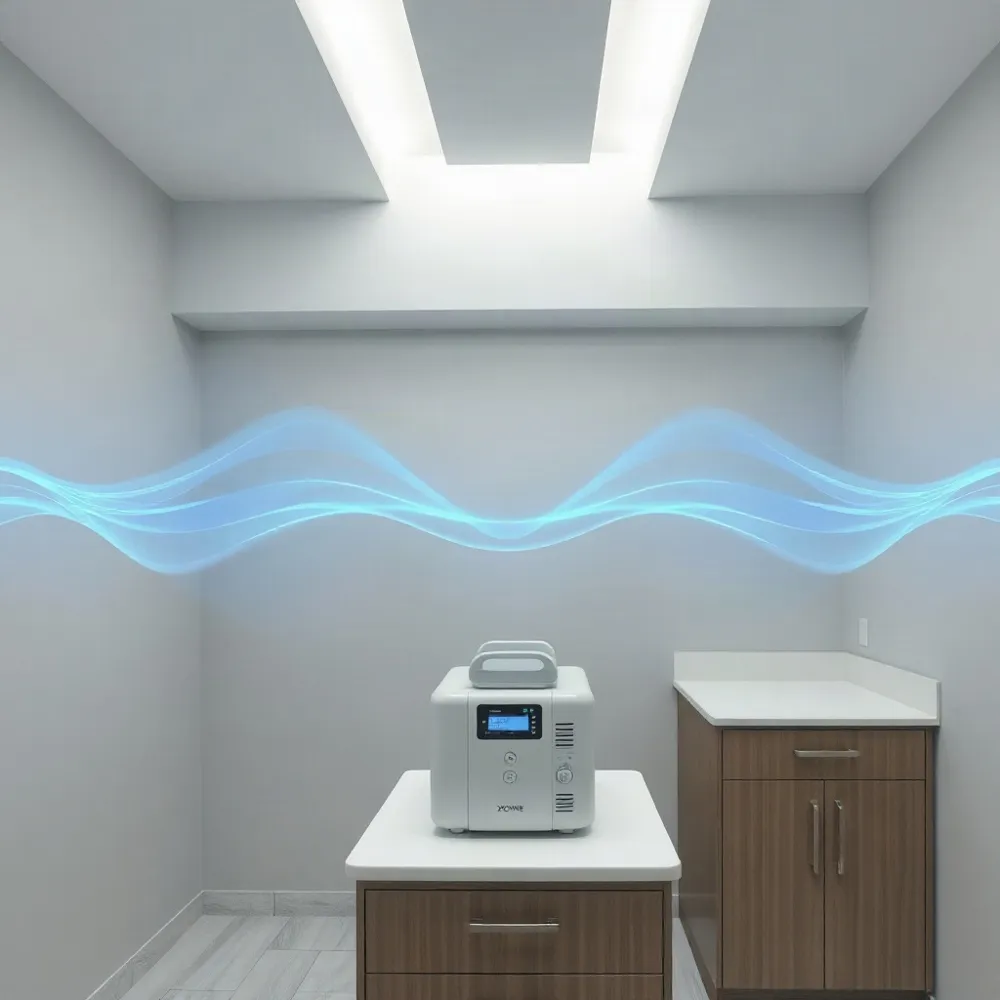 Choosing the right regenerative treatment starts with understanding what each therapy actually targets. While both ozone therapy and shockwave therapy support the body's repair mechanisms, they work through different pathways. Ozone therapy, often delivered as a medical gas, is used for its effects on circulation and immune modulation. Shockwave therapy uses acoustic waves to stimulate tissue repair. Because they act differently, they are frequently combined in a treatment plan rather than treated as direct substitutes.
How Ozone and Shockwave Compare
Mechanism. Ozone therapy relies on controlled oxidation to influence local blood flow and immune response. Shockwave therapy applies focused mechanical energy to the injured area, prompting cellular activity and remodeling.
Best suited for. Ozone is commonly selected for conditions involving poor circulation or lingering inflammation. Shockwave is often used for chronic tendon issues and calcific deposits, such as those seen in the shoulder or heel.
Treatment experience. Ozone is typically administered via injection or directed gas application. Shockwave sessions are non-invasive, with the handpiece moved over the skin, and usually take around 15 to 20 minutes.
Recovery profile. Both have minimal downtime. Patients commonly resume normal activities the same day, though some experience temporary soreness in the treated area.
The choice depends on the specific injury and the underlying tissue state. At Advanced Integrative Medicine, Dr. Jaimal Sangha begins with a functional assessment rather than applying a standard protocol. This matters because a partial ligament tear, for example, may respond better to platelet-rich plasma therapy than to shockwave alone. PRP delivers a concentrated dose of growth factors directly to the damaged fibers, which supports the body's natural healing process in a targeted way.
For patients weighing options like shockwave versus ozone, the deciding factors are usually the tissue type, chronicity, and the presence of scar tissue. Chronic tendinopathy often improves with shockwave's mechanical stimulus. Conditions involving compromised blood supply may favor ozone's circulatory effects. A correct diagnosis and classification of the injury, which is often the difference between a partial and complete tear, guides the therapy selection. Partial tears retain some intact fibers, making them candidates for regenerative approaches that avoid surgery.
Considering PRP and Other Options
Platelet-rich plasma often becomes the preferred route when the goal is to concentrate the body's own healing signals at the injury site. Unlike ozone or shockwave, PRP requires drawing the patient's blood and processing it to separate the platelets. The resulting solution is then injected precisely under imaging guidance when needed. This approach fits well with the emphasis on conservative, non-surgical care that considers the whole person, not just the symptomatic area.
| Feature | Ozone Therapy | Shockwave Therapy |
|---|---|---|
| Delivery | Injection or gas | Handpiece on skin |
| Main effect | Circulation, immune response | Mechanical tissue stimulation |
| Common use | Inflammation, poor blood flow | Chronic tendinopathy, calcification |
| Session length | Varies by protocol | 15-20 minutes typically |
PRP for Ligament Injuries: What to Expect
Regenerative medicine works with your body instead of replacing its work with surgery or medication. Unlike treatments that just mask symptoms, these approaches aim to support the tissue repair process at the cellular level. For ligament injuries, that means helping the body rebuild stronger, more resilient connective tissue rather than simply resting and hoping for the best.
Your ligaments have a limited blood supply, which is why they heal slowly and often incompletely. Treatments like Platelet-Rich Plasma (PRP) therapy concentrate your own growth factors and inject them directly into the injured area. Research shows these signaling proteins can help recruit healing cells and promote more organized collagen production. At Advanced Integrative Medicine, Dr. Jaimal Sangha uses this approach to address back pain, sports injuries, and carpal tunnel, always starting with the least invasive option that makes sense for your specific injury.
The Science of Natural Healing
Your body already has the instructions for repair; regenerative medicine simply delivers the materials more effectively. A 2025 review in Regenerative Medicine highlights how growth factors and cell-based therapies can accelerate tissue healing and reduce pain for musculoskeletal conditions. For partial ligament tears, this matters because the injury may heal without surgery when the right biological environment is created, as explained in this guide to nonsurgical ACL treatments.
PRP is the most researched regenerative option, but it's not the only one. Here's how the common treatments compare:
- PRP injections: Uses your own platelets to release growth factors; research shows promise for tendon and ligament healing.
- Prolotherapy: A dextrose solution irritates the tissue to trigger a controlled inflammatory response, often used for chronic ligament laxity.
- Stem cell therapy: Harvests cells from your own bone marrow or fat and injects them to modulate inflammation and support tissue regeneration.
Each works differently, and your provider should match the treatment to the ligament's location and the degree of the tear. That individualized matching is where a practice like Advanced Integrative Medicine stands apart. Rather than offering a single standard protocol, the clinic assesses your injury pattern and then selects the regenerative approach most likely to restore stability and function.
PRP. Platelet-Rich Plasma, injected to concentrate growth factors at the injury site.
Prolotherapy. An irritant solution that stimulates a healing response in lax ligaments.
Stem cells. Cells injected to reduce inflammation and support tissue repair.
Growth factors. Proteins that signal cells to divide, migrate, and produce new collagen.
Finding the Right Provider and Treatment Plan
 If you have a knee, shoulder, or ligament injury, surgery is not your only path forward. For partial tears, chronic tendinopathy, or joint degeneration, several non-surgical regenerative treatments can support your body's own healing process. The key is matching the right therapy to the specific tissue, injury stage, and your overall health. Understanding what each option does helps you ask the right questions during a consultation.
Platelet-Rich Plasma (PRP) therapy uses a concentrated sample of your own platelets, injected into the injured area to release growth factors that stimulate tissue repair. It is commonly used for tendonitis, ligament sprains, and early cartilage wear. Prolotherapy involves injecting a mild irritant, often dextrose, to provoke a localized inflammatory response that strengthens weakened ligaments and tendons over time. Both are office-based, use your body's own materials, and carry minimal downtime.
Comparing PRP, Prolotherapy, and Stem Cell Therapy
Each regenerative approach works differently, and the right choice depends on the tissue and the goal of treatment. PRP is growth-factor driven and works well for mild to moderate degeneration. Prolotherapy is more about collagen remodeling and is often chosen for loose or stretched ligaments. Stem cell therapy, which uses cells with the ability to differentiate, is sometimes considered for more complex cartilage or meniscal injuries, though it is more involved and typically costlier.
| Therapy | Mechanism | Best For | Downtime |
|---|---|---|---|
| PRP | Inject concentrated platelets | Tendonitis, ligament sprains | 1–2 days |
| Prolotherapy | Irritant stimulates healing | Ligament laxity, chronic sprains | Minimal |
| Stem cell | Blind cells differentiate | Cartilage, complex injuries | Several days |
Regenerative treatments are not one-size-fits-all. A partial ACL tear, for example, may respond well to PRP or prolotherapy, while a full-thickness tear might still require surgical discussion. According to NYU Langone, nonsurgical treatment for ACL tears, including bracing and physical therapy, is a viable option for partial tears or when the knee is stable. Johns Hopkins Medicine notes that PRP is prepared from your own blood and has been used for tendon, ligament, and muscle injuries.
Patients often wonder how many sessions they will need. For PRP, a typical course is 1 to 3 injections spaced a few weeks apart, depending on the injury chronicity. Prolotherapy may require 3 to 6 sessions for ligament laxity. A 2023 review in Regenerative Medicine highlights that outcomes depend heavily on proper patient selection and treatment frequency. Your provider should tailor a plan based on imaging and functional testing, not a fixed protocol.
What to Expect During a Consultation
Before recommending any injection, a practitioner should perform a thorough physical exam, review imaging like MRI or ultrasound, and rule out conditions that would not respond to conservative care. For instance, a torn ligament with instability might benefit from PRP, whereas a partial thickness tear with good structural integrity could be treated with prolotherapy. Ask about the provider's experience, success metrics, and how they define a realistic outcome.
Ultimately, the decision between PRP, prolotherapy, or stem cell therapy is not about which is 'strongest' but which addresses your specific tissue pathology. A transparent clinic will discuss evidence, costs, and expected recovery times without overpromising. At Advanced Integrative Medicine in Merced, Dr. Jaimal Sangha emphasizes a conservative, patient-centered approach, starting with the least invasive options and advancing only when appropriate. Their regenerative protocols are designed to support your body's natural healing process, not replace it with a one-size-fits-all injection.
The Future of Non-Surgical Healing
Regenerative medicine represents a significant shift in how physicians approach injury and chronic pain. Rather than simply managing symptoms with medication or proceeding directly to invasive procedures, this field focuses on supporting the body's own mechanisms for repair and restoration. For many conditions affecting the musculoskeletal system, this modern approach offers a path that aims to address the underlying cause rather than just the sensation of discomfort.
The scope is broad, but the concept is straightforward: repair and regeneration over replacement. To make this practical, it helps to separate regenerative medicine into three common categories. These categories differ in how they are sourced, what they contain, and how they work at the cellular level.
Cell-based treatments. These use living cells, often derived from a patient's own body, to encourage tissue repair. The goal is to introduce concentrated cells that can help modulate inflammation and promote healing in damaged areas, from platelet-rich plasma (PRP) to more cellular options.
Growth factors. These are naturally occurring proteins that signal the body to initiate and sustain the healing process. By isolating and concentrating these factors, clinicians can deliver a high-dose signal to an injury site. The regenerative approach for tendon and ligament conditions often relies heavily on this mechanism.
Tissue scaffolds. These provide a structural framework that supports new tissue growth. Scaffolds create a biological 'scaffolding' that guides cells to repair and rebuild damaged structures, which is particularly relevant for ligament injuries.
In practice, these categories often overlap. A treatment may combine concentrated platelets with a scaffold to provide both a signal and a structure for repair. This is where the philosophy of Advanced Integrative Medicine comes into play. The practice focuses on a conservative, patient-centered approach, leveraging PRP and similar therapies to support natural recovery, which aligns with how nonsurgical treatments for ACL tears are now being favored in the broader medical community.
This approach is distinct from traditional surgical intervention, which often involves removing or replacing the damaged tissue. Regenerative medicine aims to restore the native structure and function, offering a potential alternative for those seeking to avoid the downtime and risks associated with more invasive procedures.