Why Non‑Surgical Facial Rejuvenation Matters
After age 35 the skin’s dermis begins to lose collagen, elastin, and hyaluronic acid, which reduces firmness, elasticity, and the ability to retain moisture. The resulting signs of facial aging include fine lines, crow’s feet, under‑eye hollows, drooping eyelids, loss of jawline definition, jowls, enlarged pores, and pigmentary changes. Modern aesthetic medicine embraces a conservative, patient‑centered philosophy that prioritizes minimally invasive, office‑based treatments—such as BOTOX®, hyaluronic‑acid fillers, microneedling, laser resurfacing, and chemical peels—to restore volume, smooth texture, and correct dynamic wrinkles while minimizing downtime. Regenerative approaches, especially autologous platelet‑rich plasma (PRP), complement these modalities by delivering growth factors that stimulate fibroblasts, promote collagen and elastin synthesis, and support the body’s natural healing processes. By combining targeted, reversible procedures with biologic regeneration, clinicians can address early aging changes effectively, preserve skin health, and reduce the need for more invasive surgical interventions.
Understanding Facial Aging and the Shift Toward Minimally Invasive Treatments
Key Aging Processes & Typical Interventions
| Process | Typical Age of Onset | Primary Skin Changes | Common Minimally Invasive Interventions |
|---|---|---|---|
| Collagen, elastin, hyaluronic acid loss | Mid‑30s | Decreased firmness & elasticity, fine lines | Neurotoxins (e.g., BOTOX®) for dynamic lines |
| Subcutaneous fat pad descent | Mid‑30s‑40s | Loss of contour, drooping cheeks, jowls | Hyaluronic‑acid fillers, calcium hydroxylapatite, PLLA |
| Dynamic wrinkle formation | Ongoing | Muscle‑linked lines (crow’s feet, forehead) | Neurotoxins to block acetylcholine release |
| Static wrinkle/fold development | 40s‑50s | Lines visible at rest | Volumizing fillers, laser/radiofrequency resurfacing |
| Microneed levels & PRP synergy | Any adult | Skin texture irregularities | Combined microneedling + PRP (“vampire facial”) |
Over 15 million minimally invasive facial procedures were performed in the U.S. in 2023, highlighting the market’s shift toward low‑downtime, patient‑centered solutions.
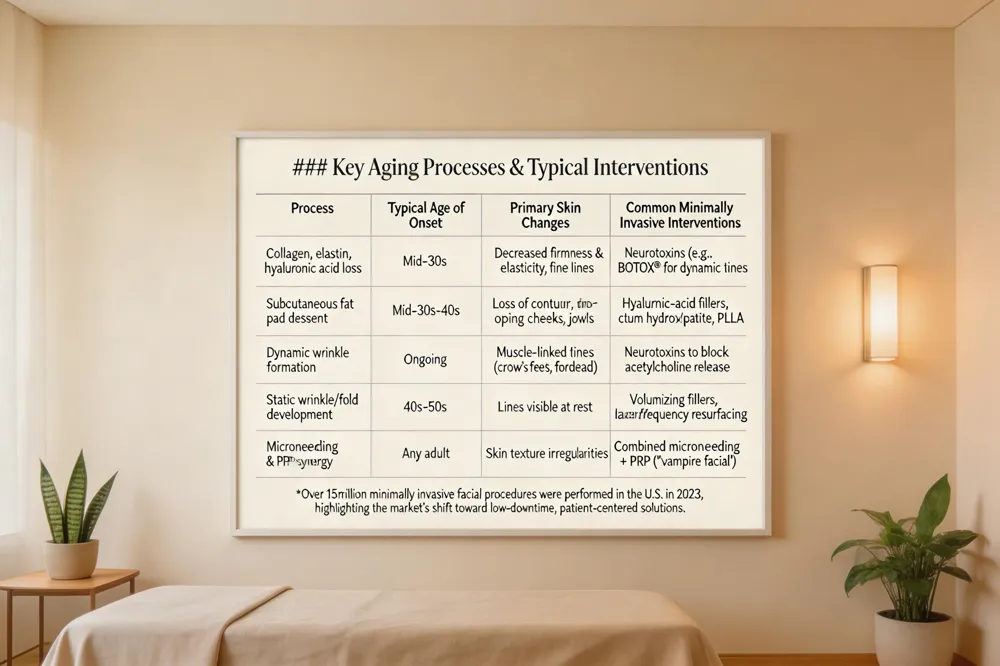 Facial aging begins in the mid‑30s when the dermis loses collagen, elastin, and hyaluronic acid, reducing firmness and elasticity. Simultaneously, subcutaneous fat pads descend, creating loss of contour, drooping cheeks, and jowls. The skin shows fine lines, crow’s feet, and under‑eye hollows. Wrinkles are classified as dynamic—caused by repeated muscle contraction—and static, which persist when the face is at rest. Dynamic lines respond best to neurotoxins such as BOTOX® that temporarily block acetylcholine release, while static folds benefit from volumizing fillers (HA, calcium hydroxylapatite, PLLA) and energy‑based resurfacing. Non‑surgical modalities now dominate the market: neurotoxins, hyaluronic‑acid fillers, laser and radiofrequency resurfacing, chemical peels, microneedling, and platelet‑rich plasma (PRP) therapy. PRP delivers autologous growth factors that stimulate fibroblasts, enhancing collagen and elastin synthesis, especially when combined with microneedling or lasers. Consumer data underscore this trend—over 15 million minimally invasive facial procedures (injectables, fillers, lasers) were performed in the United States in 2023, reflecting a clear preference for low‑downtime, patient‑centered solutions that support the body’s natural healing mechanisms while avoiding surgical incisions. Non‑surgical facial rejuvenation aligns with a conservative, patient‑centered approach that seeks to support the body’s natural healing processes and minimize downtime.
Platelet‑Rich Plasma (PRP) Therapy – Mechanism, Benefits, and Safety
PRP Therapy Overview
| Aspect | Details |
|---|---|
| Preparation | 5‑20 ml blood draw → centrifuge @3,000 rpm for 3‑5 min → 2‑8× baseline platelet concentration |
| Delivery Methods | Intradermal injection or topical application during microneedling / laser resurfacing |
| Growth‑Factor Cascade | PDGF, TGF‑β, VEGF, EGF → fibroblast activation → ↑ collagen I/III, elastin, ECM remodeling |
| Clinical Benefits | Increased dermal thickness, improved elasticity, smoother texture, reduction of fine lines & mild laxity |
| Combination Boost | Microneedling (micro‑channels) + PRP = accelerated remodeling; PRP after laser/peel = reduced erythema & faster healing; PRP + HA fillers = up to 20 % longer filler durability |
| Safety Profile | Autologous → negligible allergy risk; common AEs: transient bruising, swelling, redness; rare: infection, vascular occlusion |
| Contraindications | Active infection, uncontrolled platelet disorders, anticoagulant use, recent systemic steroids, hepatitis C, HIV, active malignancy |
| Pre‑Procedure | Discontinue NSAIDs 48 h prior to minimize bruising |
| Typical Regimen | 3‑4 sessions spaced 4‑6 weeks apart; results last 6‑12 months, maintenance as needed |
PRP’s natural, regenerative approach aligns with conservative, patient‑centered facial rejuvenation.
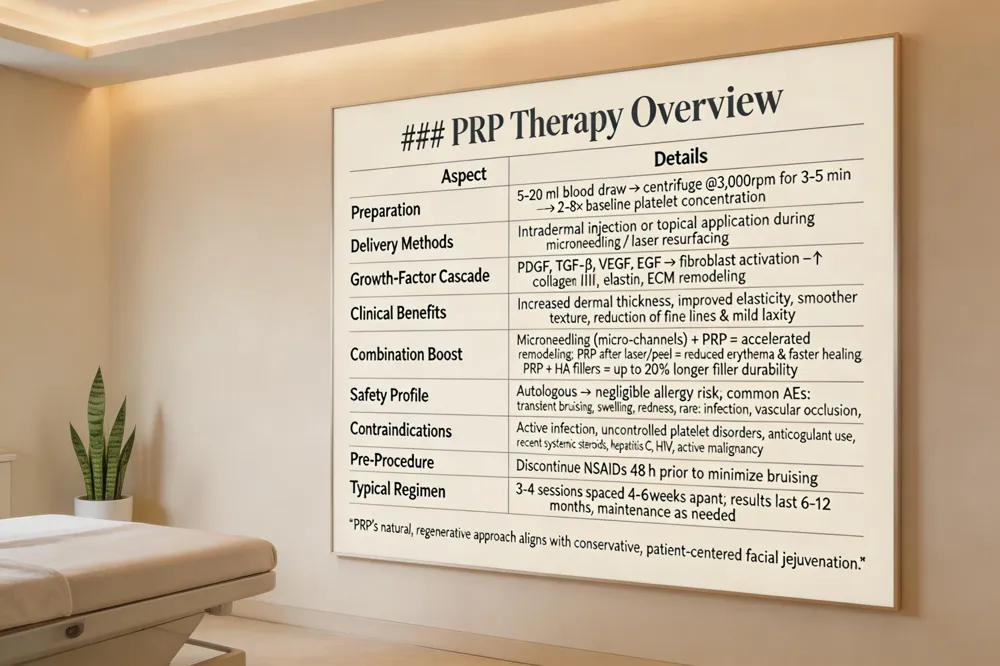 Platelet‑rich plasma (PRP) is an autologous regenerative treatment that concentrates a patient’s own platelets to deliver a high dose of growth‑factor proteins directly to the skin. The preparation begins with a small blood draw (typically 5–20 ml), which is spun in a centrifuge at 3,000 rpm for 3–5 minutes. The process separates the plasma layer, yielding a platelet‑rich suspension that contains 2–8 × the baseline platelet count. This concentrated plasma is then delivered to the face either by intradermal injection or by spreading it on the skin during Microneedling creates controlled micro‑injuries, creating micro‑channels that allow deeper penetration of the growth factors.
Regenerative growth‑factor cascade – When PRP contacts dermal fibroblasts, it releases platelet‑derived growth factor (PDGF), transforming‑growth factor β (TGF‑β), vascular endothelial growth factor (VEGF), and epidermal growth factor (EGF). These molecules activate fibroblasts, stimulate collagen I and III synthesis, promote elastin formation, and enhance extracellular‑matrix remodeling. The result is increased dermal thickness, improved elasticity, and a smoother texture that can reduce fine lines, crow’s feet, and mild skin laxity.
Combination protocols – PRP’s regenerative power is amplified when paired with other non‑surgical modalities. Microneedling creates controlled micro‑injuries; applying PRP during the procedure (the “vampire facial”) delivers growth factors directly into the wound‑healing cascade, accelerating collagen remodeling and shortening recovery. Laser resurfacing or chemical peels can also be followed by PRP to lessen erythema, boost healing, and enhance final outcomes. When used alongside hyaluronic‑acid fillers, PRP supports the newly restored volume by stimulating native collagen, often extending filler longevity by up to 20 %.
Safety profile and contraindications – Because PRP is autologous, allergic reactions and disease transmission are virtually absent. The most common adverse events are mild, transient bruising, swelling, redness, or a brief sensation of warmth that resolve within a few days. Rare but serious complications include infection or vascular occlusion, underscoring the need for strict aseptic technique. Contraindications comprise active infections, uncontrolled platelet disorders, anticoagulant therapy, recent systemic corticosteroid use, and systemic illnesses such as hepatitis C, HIV, or active malignancy. Patients should discontinue NSAIDs 48 hours before treatment to reduce bruising risk.
Patient‑focused outcomes – Clinical series report that PRP improves skin firmness, texture, and tone after 3–4 sessions spaced 4–6 weeks apart, with benefits lasting 6–12 months before maintenance is needed. While results are modest compared with surgical facelifts, the minimal downtime, natural‑looking improvement, and alignment with a conservative, patient‑centered approach make PRP a valuable component of modern facial rejuvenation plans.
Visual Results and Real‑World Pricing of PRP‑Based Skin Rejuvenation
PRP‑Based Rejuvenation: Results & Cost Snapshot
| Procedure | Cost per Session (USD) | Typical Number of Sessions | Primary Outcomes |
|---|---|---|---|
| Standalone PRP Facial | $300‑$800 | 3‑4 (4‑6 wk interval) | Smoother texture, softened fine lines, brighter radiance, tighter pores |
| Microneedling Alone | $500 (per area) | 1‑3 | Collagen induction, texture refinement |
| Microneedling + PRP | $700 (combined) | 3‑4 | Accelerated collagen remodeling, reduced downtime |
| Laser Resurfacing | $500‑$2,500 (avg $697) | 1‑3 | Deep wrinkle reduction, tone improvement |
| Chemical Peel (Superficial → Deep) | $150‑$900 | 1‑3 | Pigmentation evening, texture smoothing |
| HA Fillers | $600‑$800 per syringe | As needed | Volume restoration, contour enhancement |
| Neurotoxins (BOTOX®) | $10‑$15 per unit | 1‑2 per area | Dynamic line relaxation |
Most procedures are cosmetic and not covered by insurance; financing options should be discussed during the consult.
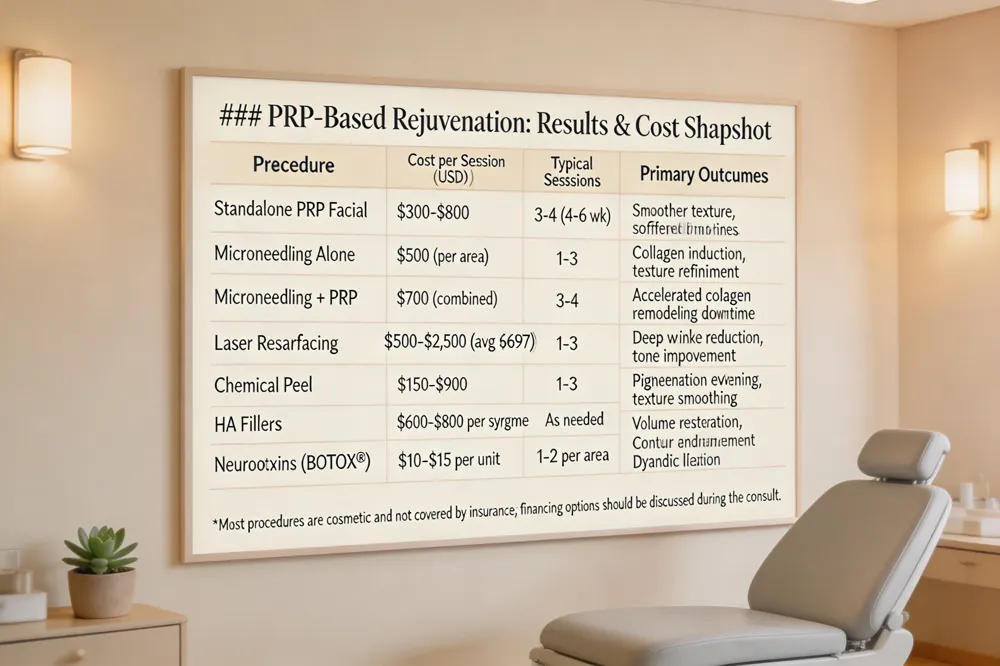 Before a platelet‑rich plasma (PRP) facial, patients typically present with fine lines, uneven texture, mild dullness, and slightly enlarged pores. After a series of three to four PRP sessions spaced four to six weeks apart, the skin shows a smoother surface, softened fine lines, brighter radiance, and tighter pores. The immediate post‑procedure period may involve transient redness and tightness that resolves within a few days, followed by progressive collagen remodeling over the next two to four weeks. By the end of the first month, texture is visibly refined, tone appears more even, and the overall appearance looks more youthful; results can endure for several months, with maintenance treatments every six to twelve months helping to preserve the rejuvenated look.
Cost ranges for common non‑surgical rejuvenation modalities vary widely across the United States. A single PRP facial typically costs $300‑$800 per session, while microneedling alone averages $500 per treatment area; adding PRP to microneedling adds roughly $200, bringing the combined price to about $700. Laser‑based resurfacing spans $500‑$2,500 per session, with the American Society of Plastic Surgeons reporting an average laser‑treatment cost of $697 and an overall average resurfacing expense of $1,829. Chemical peels start at $150 for superficial treatments and can reach $350 for full‑face applications; deeper peels such as the Melanage series range from $400‑$900. These procedures are generally not covered by insurance, so patients should discuss financing, provider fees, and any facility or anesthesia charges during the consultation.
Pre‑Treatment Preparation and Post‑Procedure Care for Optimal Results
Prep & After‑Care Checklist
| Phase | Recommendations |
|---|---|
| 48 h Pre‑Treatment | Stop aspirin, ibuprofen, other NSAIDs; avoid vitamin E, fish‑oil supplements; skip vigorous exercise, sauna, high‑intensity workouts |
| Day of Treatment | Clean skin, no makeup, ensure adequate hydration; confirm no recent skin infections |
| Immediate Post‑Treatment (0‑48 h) | Apply broad‑spectrum SPF 30+ sunscreen liberally; use gentle moisturizer (HA‑based); avoid direct sun, saunas, heat pools |
| First 2‑5 Days | Expect mild swelling, bruising, redness; use cold compresses, elevate head, acetaminophen for discomfort (avoid NSAIDs) |
| Weeks 1‑4 | Continue SPF, antioxidant serums (vit C, niacinamide); maintain hydration (drink water, use hydrating moisturizers) |
| Follow‑Up | Schedule touch‑up at 4‑6 weeks (PRP/fillers) or 3‑4 months (neuromodulators) to assess results and plan maintenance |
Adhering to this protocol maximizes collagen synthesis and minimizes complications.
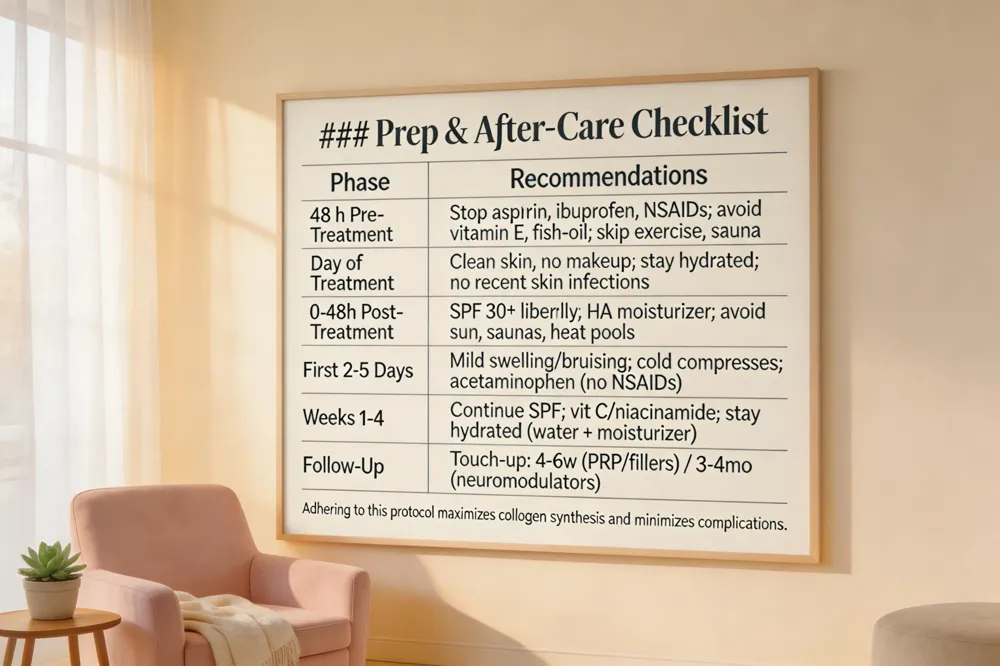 Before any non‑surgical facial rejuvenation—whether injectable fillers, botulinum toxin, microneedling, laser resurfacing, or platelet‑rich plasma (PRP)—patients should pause blood‑thinning medications (including aspirin, ibuprofen, and other NSAIDs) at least 48 hours prior to the procedure to reduce the risk of bruising and excessive swelling. Vigorous exercise, sauna use, and high‑intensity workouts should also be avoided for 24–48 hours before treatment, as increased circulation can exacerbate bruising and post‑procedure edema.
After the session, strict sun protection is essential. Broad‑spectrum SPF 30+ sunscreen should be applied liberally every morning and reapplied throughout the day, especially if [laser], peel, or microneedling has disrupted the skin barrier. Complementary antioxidant serums—such as vitamin C or niacinamide—help neutralize free radicals, support collagen synthesis, and improve the durability of results. Adequate hydration, both topical (moisturizers with hyaluronic acid) and systemic (plenty of water), maintains skin plumpness and facilitates healing.
Mild swelling, bruising, and redness are common and typically resolve within 2–5 days. Cold compresses, gentle elevation of the head, and a short course of over‑the‑counter pain relievers (acetaminophen, not NSAIDs) can comfort comfort. Patients should schedule follow‑up touch‑up appointments—usually 4–6 weeks after the initial treatment for fillers or PRP and every 3–4 months for neuromodulators—to fine‑tune results and plan maintenance sessions that preserve the rejuvenated appearance over time.
Personalized Treatment Planning and Financial Considerations at Advanced Integrative Medicine
Integrated Rejuvenation Roadmap & Cost Overview (AIM)
| Component | Description | Typical Cost (USD) |
|---|---|---|
| High‑Resolution Digital Imaging & AI Diagnostics | Baseline skin analysis (hydration, elasticity, pigmentation) | Included in consult |
| PRP Microneedling Session | Autologous growth factors delivered via micro‑channels | $600 per session |
| Additional Treatment Areas | Each extra facial zone (e.g., periorbital, cheek) | +$200 per area |
| HA Filler Placement | Volume restoration for nasolabial folds, cheeks, tear‑troughs | $600‑$800 per syringe |
| Neurotoxin (BOTOX®) Injection | Dynamic line relaxation | $10‑$15 per unit |
| Package Discounts | 3‑4 session bundle | 10‑15 % off total price |
| Financing Options | Low‑interest medical‑care plans (e.g., 0‑% for 12 months) | Varies by provider |
| Consultation & Consent | Goal setting, realistic outcomes, full cost disclosure | Included |
Transparent pricing and a data‑driven, patient‑centered plan ensure confidence and optimal aesthetic outcomes.
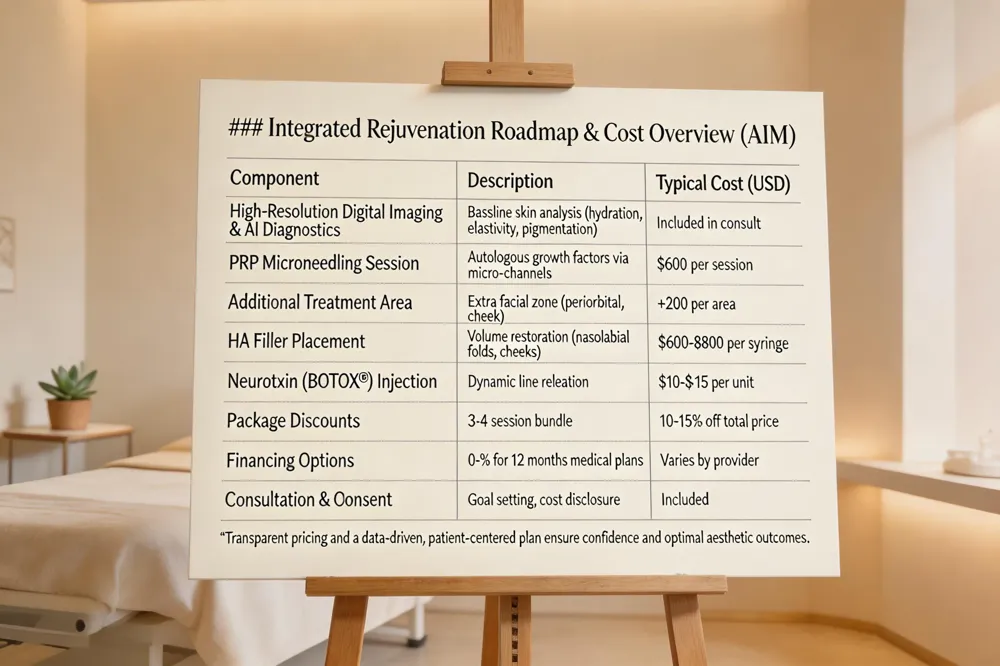 A cornerstone of Advanced Integrative Medicine (AIM)'s approach is a comprehensive skin assessment that combines high‑resolution digital imaging, AI‑driven diagnostics, hydration analysis, pigmentation mapping, and elasticity testing. This data‑rich profile lets the clinician pinpoint subtle volume loss, fine lines, and texture irregularities and then craft a tailored rejuvenation roadmap.
The roadmap often integrates platelet‑rich plasma (PRP) with microneedling, hyaluronic‑acid fillers, and neuromodulators. PRP delivers autologous growth factors that boost collagen, while microneedling creates micro‑channels for deeper PRP penetration. Fillers restore lost volume in cheeks, nasolabial folds, and tear‑troughs; neuromodulators such as BOTOX® relax dynamic muscles to smooth crow’s feet and forehead lines. By sequencing these modalities—usually a PRP‑microneedling session followed weeks later by targeted filler or toxin injections—AIM achieves synergistic, long‑lasting results with minimal downtime.
Financial transparency is emphasized. PRP skin rejuvenation at AIM typically costs $600 per session; a combined microneedling‑PRP or gold‑infusion‑PRP treatment is priced similarly, with $200 added for each additional treatment area. Packages of three to four sessions receive a 10‑15 % discount, and financing options (e.g., low‑interest medical‑care plans) are offered to spread out out‑of‑pocket expense. Because PRP is a cosmetic service, insurance does not cover it.
Before any procedure, patients engage in a consent discussion that reviews goals, realistic outcomes, potential side effects, and the full cost structure. This patient‑centered dialogue ensures expectations align with the personalized treatment plan and that each individual feels confident in the chosen path forward.
Putting It All Together – A Conservative, Regenerative Path to Youthful Skin
Combining platelet‑rich plasma with hyaluronic‑acid fillers, neuromodulators, and energy‑based devices creates a layered, regenerative strategy that addresses volume loss, dynamic lines, and skin texture in a single plan. A thorough, personalized skin assessment—using imaging, elasticity testing, and medical history—sets realistic expectations and guides treatment selection. Long‑term results rely on daily sun protection, antioxidant serums, proper nutrition, and scheduled touch‑up appointments every three to six months to sustain collagen remodeling and youthful appearance. Avoid smoking, limit alcohol, and stay well‑hydrated daily for optimal skin resilience.