Why Combine Laser Resurfacing and Stem Cells?
Laser resurfacing creates controlled micro‑thermal injury (ablative or fractional) that triggers a wound‑healing cascade, stimulating fibroblast activity, neocollagenesis, and dermal remodeling. Adipose‑derived stem cells (ADSCs) and bone‑marrow mesenchymal stem cells (BMSCs) secrete a rich milieu of growth factors (PDGF, TGF‑β, VEGF) and extracellular vesicles that promote angiogenesis, reduce senescence, and further activate fibroblasts. When stem‑cell‑rich preparations (nanofat, SVF, PRP, or exosomes) are delivered within 24‑48 hours after laser‑induced micro‑channels, the damaged matrix provides a receptive scaffold for cell engraftment, while the cells amplify the laser‑driven collagen remodeling. This synergistic interaction yields deeper, more uniform collagen deposition, faster re‑epithelialization, and reduced downtime compared with laser alone, offering a natural, non‑surgical route to sustained facial rejuvenation.
Scientific Rationale for the Combination
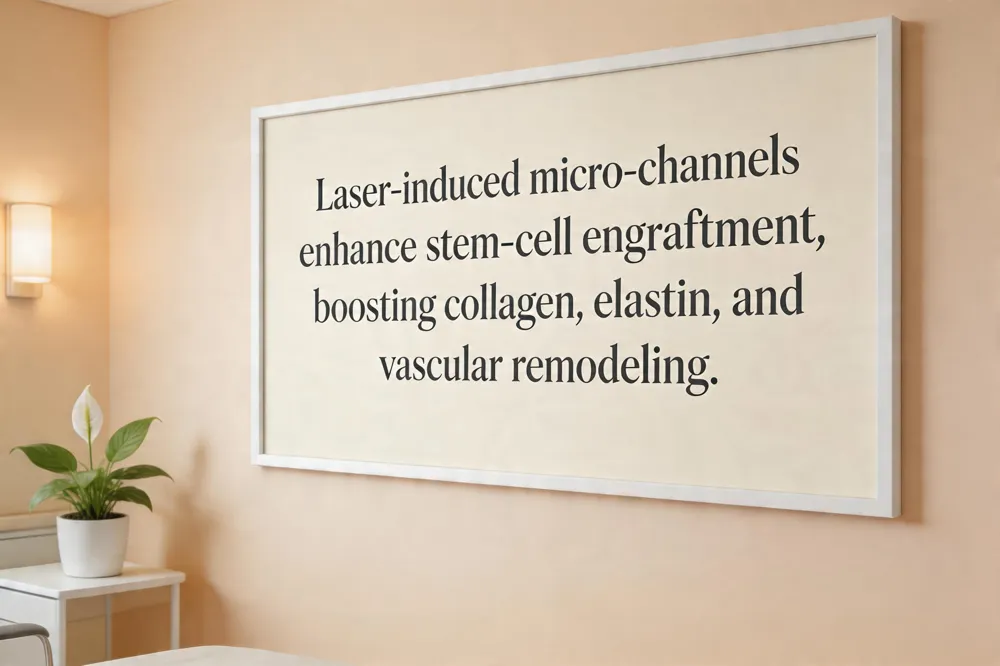 Ablative and non‑ablative fractional lasers create controlled micro‑thermal injury zones that trigger a wound‑healing cascade, stimulating fibroblast activation, neocollagenesis, and elastin remodeling. These micro‑thermal columns also generate transient micro‑channels that increase dermal permeability, allowing deeper penetration of biologics. Autologous adipose‑derived stem cells (ADSCs) and mesenchymal stem cells (MSCs) respond to the laser‑induced niche by secreting a rich cocktail of growth factors—PDGF, TGF‑β, VEGF, IGF‑1—and pro‑angiogenic cytokines that further amplify fibroblast proliferation, extracellular matrix deposition, and neovascularization. The micro‑channels act as conduits, improving uniform distribution and engraftment of the stem‑cell‑rich preparations (nanofat, SVF, or exosome‑laden gels) directly into the injured dermis. This synergistic interplay accelerates collagen remodeling, reduces erythema and edema, and shortens downtime, delivering superior skin texture, elasticity, and pigmentation correction compared with laser alone.
Clinical Evidence Supporting the Approach
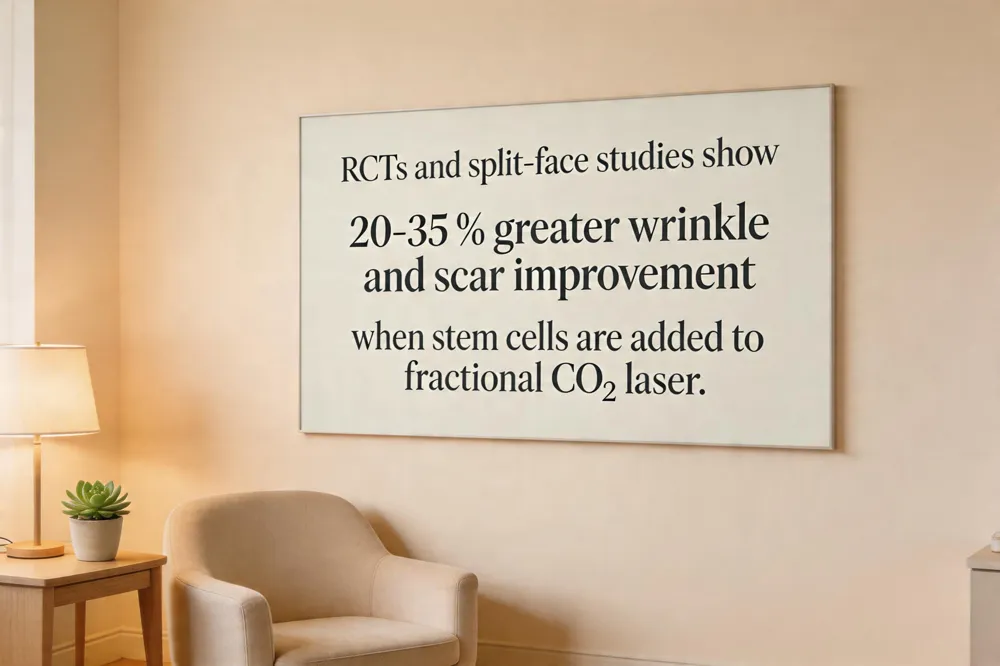 Multiple randomized controlled trials have demonstrated that adding autologous stem‑cell preparations to fractional CO₂ laser resurfacing yields superior aesthetic outcomes. A 2020 RCT reported a 35 % reduction in wrinkle depth versus 20 % with laser alone (p < 0.01). Split‑face studies further confirm the benefit of stem‑cell adjuncts: Kwon et al. (2020) showed a 32.5 % versus in acne‑scar ECCA scores on the side treated with adipose‑derived exosomes after fractional CO₂ laser, compared with 19.9 % on the control side (p < 0.01). Similar trials using nanofat (mechanically emulsified fat rich in ADSCs) demonstrated greater increases in dermal thickness and collagen density—up to 30 % thicker dermis and a 20‑40 % rise in collagen I/III—when injected immediately after laser‑induced micro‑channels. Objective imaging (3‑D Antera, cutometer) and histologic analyses consistently reveal enhanced collagen remodeling, reduced matrix‑metalloproteinase expression, and improved skin elasticity, supporting the synergistic mechanism of laser‑induced micro‑injury combined with stem‑cell‑mediated paracrine regeneration.
Optimizing Treatment Protocols
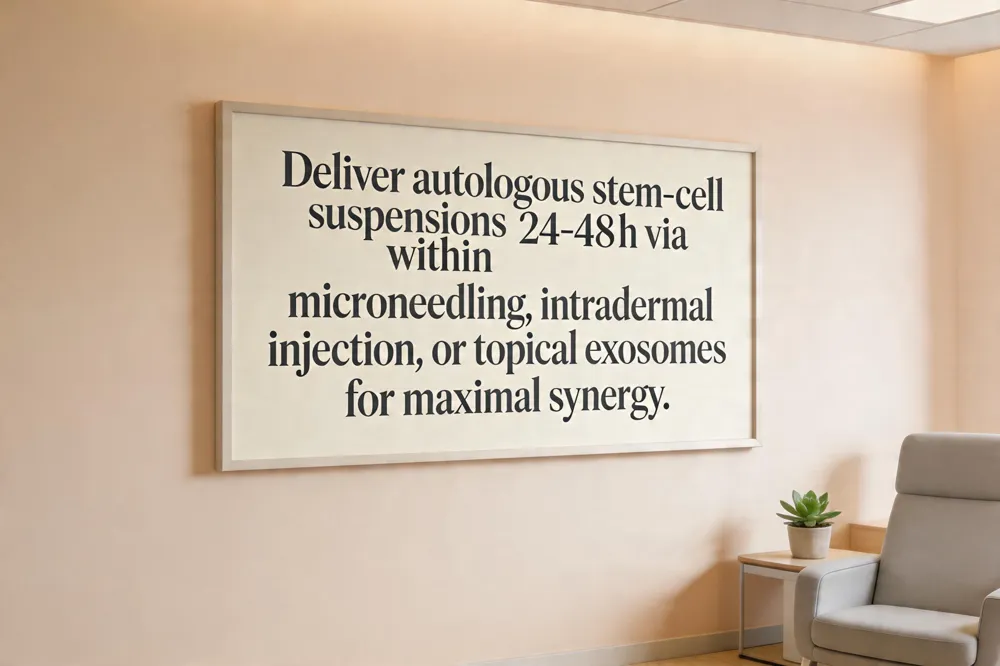 The most effective protocol places the stem‑cell adjunct within 24–48 hours after laser resurfacing, when the micro‑thermal injury has generated a receptive wound‑healing niche but before re‑epithelialization seals the micro‑channels. Delivery can be achieved by several minimally invasive techniques: (1) microneedling or Tixel‑generated micro‑channels, which increase dermal permeability and allow uniform distribution of a cell‑rich suspension; (2) direct intradermal injection of autologous adipose‑derived stem cells (ADSCs) or stromal vascular fraction (SVF) in a nanofat biocreme; and (3) topical application of exosome‑rich secretomes that diffuse through the laser‑created columns. Adjunctive biologics such as platelet‑rich plasma (PRP) are often combined with the stem‑cell preparation because PRP’s PDGF and TGF‑β amplify fibroblast proliferation and collagen synthesis, while SVF adds a broader pool of progenitors that further enhance angiogenesis and reduce senescence. Together, these timing, delivery, and biologic strategies create a synergistic environment that accelerates collagen remodeling, improves skin elasticity, and shortens postoperative downtime.
Patient Selection and Contra‑Indications
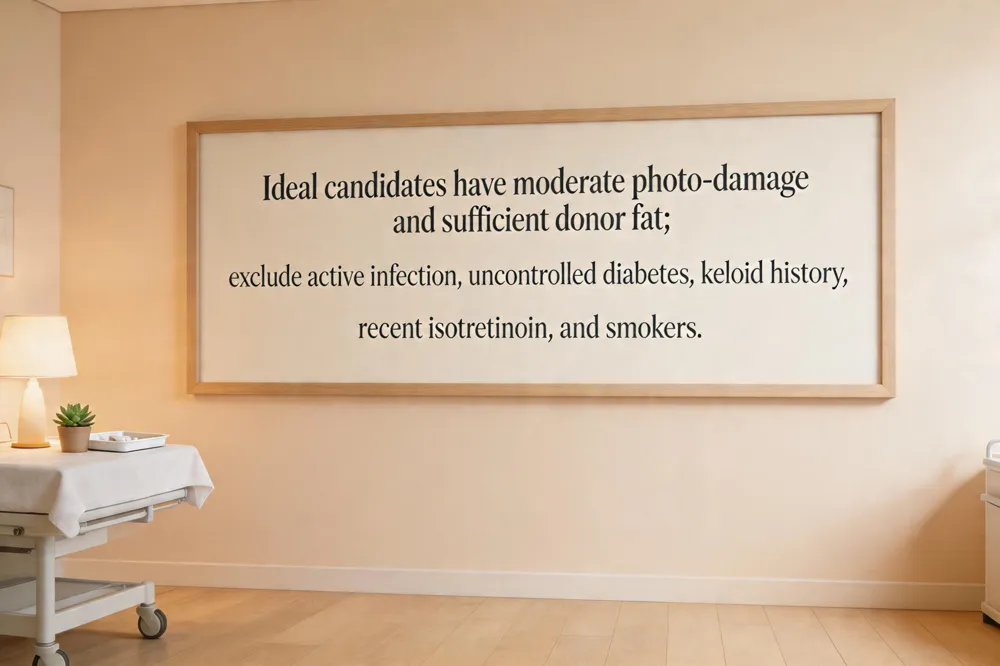 Ideal candidates for combined laser resurfacing and autologous stem‑cell therapy are patients with mild‑to‑moderate facial laxity and photo‑damage, fine lines, or volume loss who have sufficient donor fat for adipose‑derived stem‑cell harvesting. Exclusion criteria include active skin infections, uncontrolled diabetes, recent isotretinoin use (within 6–12 months), a history of keloid or hypertrophic scarring, severe photosensitivity, and smoking, which impairs wound healing. Pre‑procedure preparation should involve sun avoidance for at least four weeks, discontinuation of retinoids and other irritating topicals for five days, smoking cessation, and a brief course of topical antioxidants to support stem‑cell viability. Proper patient selection and preparation optimize safety, enhance graft retention, and maximize the synergistic benefits of the laser‑stem‑cell protocol.
Safety Profile and Potential Side Effects
 Laser resurfacing combined with autologous stem cell therapy is generally well‑tolerated, but patients should be aware of both common mild reactions and rarer complications.
Common mild reactions – Most patients experience transient swelling, bruising, erythema, and a tingling or itching sensation at the injection or laser‑treated sites. These effects usually resolve within a few days and can be mitigated with gentle cooling, topical antioxidants, and sun protection. Some individuals also report mild soreness, tenderness, or a low‑grade fever that subsides quickly.
Rare complications – Although uncommon, serious events have been documented in large retrospective reviews and prospective trials. Infection of the injection area, post‑inflammatory hyper‑ or hypopigmentation, and occasional scarring are the most frequently cited adverse outcomes. Immune‑mediated reactions or unintended tissue growth are exceedingly rare, especially when minimally manipulated autologous cells are used under sterile, GMP‑compliant conditions.
Safety data – Retrospective analyses of facial fat grafting and stem‑cell‑enriched procedures report moderate adverse‑event rates of approximately 4.9 % and serious complications below 5 % when proper technique and patient selection are applied. Prospective split‑face trials involving adipose‑derived stem‑cell exosomes or nanofat injections after fractional CO₂ laser have shown no increase in serious adverse events compared with laser alone, with most side effects limited to mild erythema, edema, or temporary dryness.
Answer to the question – The potential side effects of stem cell therapy for facial rejuvenation are predominantly mild and short‑term, including localized swelling, bruising, redness, and tingling. Rare but more serious complications can involve infection, pigment alterations, or, in very uncommon cases, immune reactions. Overall, the safety profile is favorable, especially when autologous, minimally manipulated cells are administered by qualified clinicians in a sterile environment.
Cost Considerations and Market Landscape
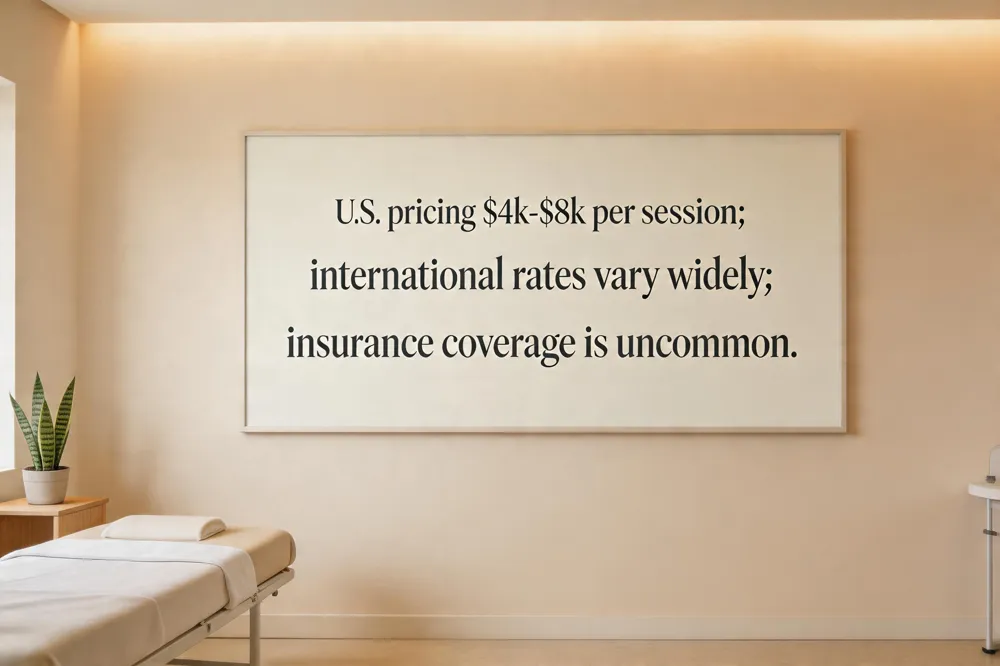 In the United States, stem‑cell facial rejuvenation typically costs between $4,000 and $8,000 per session, though some clinics report a broader range of $3,000 to $7,000 depending on protocol complexity. Factors influencing price include clinic reputation, the source and quantity of stem cells (adipose‑derived versus bone‑marrow‑derived), laboratory processing steps, and whether adjunctive therapies such as PRP or nanofat are added. Internationally, prices can be lower in markets like South Korea ($1,000‑$5,000) and Mexico, but premium European destinations such as Switzerland may charge $30,000‑$60,000 for highly specialized programs.
Insurance coverage is rare because these procedures are classified as cosmetic or experimental; patients should budget the full out‑of‑pocket cost. Practical budgeting tips include requesting a detailed itemized quote, comparing multiple reputable providers, and considering package deals that bundle laser resurfacing, stem‑cell injections, and follow‑up care.
Frequently asked questions
- What is the cost of stem cell therapy for facial rejuvenation? In the U.S. it generally falls between $4,000 and $8,000 per session, with variations based on cell source, processing, and clinic prestige. International rates differ widely, and insurance rarely covers the expense.
- How much does a stem cell facial treatment cost? Typical U.S. pricing ranges from $4,000 to $8,000, but some clinics may offer basic protocols as low as $1,000 or comprehensive programs exceeding $10,000. Geographic location and included services affect the final price.
- Where can I find stem cell facial rejuvenation near me and what are the costs? Reputable U.S. providers include Renew Medical Spa (Scottsdale, AZ), R3 Stem Cell Therapy (Phoenix, AZ), and Dr. Jaimal Sangha’s Advanced Integrative Medicine network. Sessions usually cost $3,000‑$7,000, with free initial consultations to provide personalized quotes.
Patient Experiences and Visual Results
 Before‑and‑after photo documentation is a cornerstone of our practice. A curated gallery shows patients ranging from their 20s to 60s, captured pre‑treatment and at 3‑month, 6‑month, and 1‑year intervals. The images illustrate smoother texture, fading fine lines, increased firmness, and a more radiant complexion—e.g., a 54‑year‑old patient demonstrates marked reduction of crow’s feet and a subtly lifted jawline at the three‑month follow‑up.
Typical timelines for visible improvement align with the biology of laser‑induced micro‑injury and stem‑cell‑driven collagen remodeling. Early erythema and mild edema subside within 1–2 days; subtle hydration and glow appear by week two, with measurable skin elasticity gains at 4–6 weeks and peak collagen density reached between 3 and 6 months.
Patient‑reported satisfaction is high. Clients describe results as natural, gradual, and long‑lasting, emphasizing minimal downtime and a personalized, conservative approach. Most patients would recommend the combined laser‑plus‑stem‑cell protocol as a non‑surgical alternative to traditional facelifts.
Regulatory Landscape and Emerging Directions
 The U.S. FDA treats minimally manipulated autologous adipose‑derived stem cells and platelet‑rich plasma as a practice of medicine rather than a drug, allowing their use with cosmetic lasers under 361 HCT/P regulations as long as they are not cultured or expanded beyond point‑of‑care processing. By contrast, exosome‑rich secretomes from adipose‑derived stem cells are classified as investigational biologics; they must be used under an IND or in clinical trials because they are not yet FDA‑approved for aesthetic indications. Emerging trends point toward precision facial medicine, where AI‑driven imaging quantifies skin texture, wrinkle depth, and vascularity to customize laser fluence and stem‑cell dosing. Parallel research is exploring CRISPR‑based gene editing of autologous MSCs to amplify anti‑aging cytokine expression, while AI algorithms predict optimal combination protocols for individual patients. These innovations aim to enhance efficacy, reduce downtime, and provide truly personalized, non‑surgical rejuvenation.
Integrative Practice Perspective: Dr. Jaimal Sangha’s Approach
 Dr. Jaimal Sangha’s clinic embraces a conservative, patient‑centered philosophy that prioritizes natural, gradual rejuvenation over invasive surgery. The protocol begins with fractionar CO₂ or erbium laser resurfacing to create controlled micro‑thermal zones, which trigger the skin’s intrinsic wound‑healing cascade. Within 24‑48 hours, autologous platelet‑rich plasma (PRP) is applied to supply a burst of growth factors (PDGF, TGF‑β, VEGF) that accelerate fibroblast proliferation and re‑epithelialization. Immediately thereafter, nanofat or stromal vascular fraction (SVF) enriched with adipose‑derived stem cells (ADSCs) is injected into the laser‑generated micro‑channels. This combination delivers living progenitors and exosomes that further stimulate collagen synthesis, angiogenesis, and dermal thickness while mitigating inflammation. By integrating laser, PRP, and stem‑cell‑enriched fat grafts, Dr. Sangha offers a non‑surgical alternative to facelift surgery that aligns with patient goals of subtle, long‑lasting improvement and minimal downtime.
Looking Ahead: Natural Rejuvenation Without Surgery
Combining fractional laser resurfacing with autologous stem‑cell or PRP therapy creates a powerful synergy. The laser’s controlled micro‑injury awakens the skin’s intrinsic wound‑healing cascade, while viable stem cells or platelet‑derived growth factors flood the area with cytokines that boost fibroblast activity, collagen synthesis, and angiogenesis. Clinical data show faster re‑epithelialization, reduced erythema, and greater improvements in texture and elasticity compared with laser alone. Because each patient’s skin type, photo‑damage level, and volume loss pattern differ, protocols must be customized: laser parameters, timing of cell delivery, and choice of adipose‑derived versus bone‑marrow‑derived cells are tailored to individual needs. This personalized approach maximizes safety and efficacy while minimizing downtime. Prospective patients should seek a board‑certified regenerative‑medicine physician who follows FDA‑compliant processing, documents consent, and designs a treatment plan that aligns with their aesthetic goals and health profile for lasting results.