Understanding the Hair Restoration Landscape
By age 35, nearly two‑thirds of U.S. men show visible thinning, and the figure climbs to about 85 % after age 50. Women represent roughly half of all hair‑loss patients in the country, with prevalence rising sharply after menopause. The first step in any restoration plan is a thorough evaluation by a board‑certified dermatologist or hair‑restoration surgeon. This includes a detailed medical and family history, review of diet and hair‑care habits, and a physical scalp examination. Targeted tests—such as blood work, pull tests, scalp biopsy, or light microscopy—help rule out hormonal, nutritional, or inflammatory causes. Early consultation with a qualified specialist improves treatment selection, avoids ineffective products, and maximizes long‑term outcomes. Patients should also discuss any medications that could affect hair growth.
Who Should Consider Non‑Surgical Options?
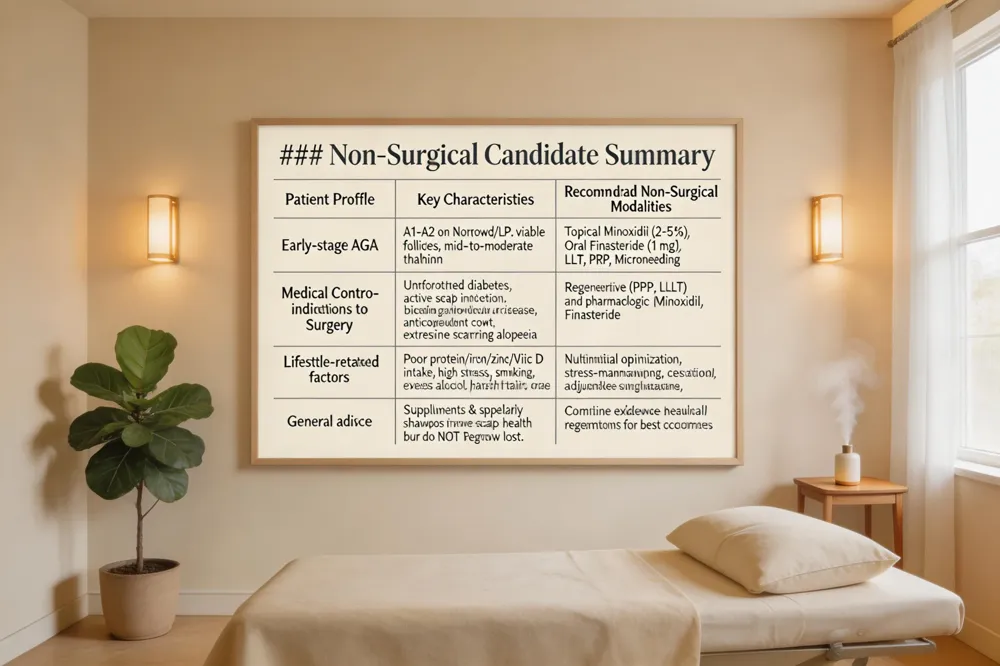
Non‑Surgical Candidate Summary
| Patient Profile | Key Characteristics | Recommended Non‑Surgical Modalities |
|---|---|---|
| Early‑stage AGA | A1‑A2 on Norwood/LP, viable follicles, mild‑to‑moderate thinning | Topical Minoxidil (2‑5 %), Oral Finasteride (1 mg), LLLT, PRP, Microneedling (often combined) |
| Medical Contra‑indications to Surgery | Uncontrolled diabetes, active scalp infection, bleeding disorder, severe cardiovascular disease, anticoagulant use, low platelet count, extensive scarring alopecia | Regenerative (PRP, LLLT) and pharmacologic (Minoxidil, Finasteride) options |
| Lifestyle‑related factors | Poor protein/iron/zinc/Vit D intake, high stress, smoking, excess alcohol, harsh hair care | Nutritional optimization, stress‑management, gentle scalp massage, cessation of smoking/alcohol, adjunctive supplements (strengthen hair) |
| General advice | Supplements & specialty shampoos improve scalp health but do not regrow lost follicles; use as adjuncts to proven therapies | Combine evidence‑based medical/regenerative treatments for best outcomes |
 Early‑stage androgenetic alopecia
Patients with mild‑to‑moderate thinning (A1‑A2 on the Norwood/LP scale) retain viable follicles but have not yet progressed to extensive baldness. Clinical guidelines and multiple studies show that topical Minoxidil (2‑5 % solutions), oral finasteride (1 mg daily for men), low‑level laser therapy (LLLT), platelet‑rich plasma (PRP) injections, and microneedling are the most effective non‑surgical modalities for this stage. Combining minoxidil with finasteride or PRP often produces synergistic gains in density and shaft thickness.
Early‑stage androgenetic alopecia
Patients with mild‑to‑moderate thinning (A1‑A2 on the Norwood/LP scale) retain viable follicles but have not yet progressed to extensive baldness. Clinical guidelines and multiple studies show that topical Minoxidil (2‑5 % solutions), oral finasteride (1 mg daily for men), low‑level laser therapy (LLLT), platelet‑rich plasma (PRP) injections, and microneedling are the most effective non‑surgical modalities for this stage. Combining minoxidil with finasteride or PRP often produces synergistic gains in density and shaft thickness.
Medical contraindications to surgery Individuals with uncontrolled diabetes, active scalp infections, bleeding disorders, or severe cardiovascular disease are poor surgical candidates. Likewise, patients on anticoagulants, with low platelet counts, or with extensive scarring alopecia should avoid follicular unit transplantation and consider regenerative or pharmacologic options instead.
Lifestyle factors that influence treatment success Adequate protein, iron, zinc, vitamin D, and low stress are essential for follicular health. Smoking, excessive alcohol, and harsh hair‑care practices can blunt response to Minoxidil, finasteride, PRP, and LLLT. Optimizing nutrition, managing cortisol, and gentle scalp massage enhance outcomes of any non‑surgical regimen.
What non‑surgical treatments are most effective for early‑stage thinning? Topical minoxidil, oral finasteride, LLLT, PRP, and microneedling—particularly when used together—are supported by robust clinical data.
Do dietary supplements or specialty shampoos restore lost hair? Current evidence shows supplements and shampoos improve hair strength and scalp health but do not reverse follicle miniaturization or regrow lost hair; they should be adjuncts to proven medical or regenerative therapies.
How Do FDA‑Approved Medications Work?
FDA‑Approved Medication Mechanisms & Clinical Profile
| Medication | Primary Mechanism | Typical Onset of Visible Effect | Common Side Effects | Monitoring Notes |
|---|---|---|---|---|
| Minoxidil (topical) | Vasodilation → ↑ blood flow, oxygen, nutrients to dermal papillae; prolongs anagen phase | ~3 months for 40 % of men (noticeable regrowth) | Scalp irritation, unwanted facial/hair growth | Continue twice‑daily use; discontinue → loss of gains |
| Finasteride (oral, 1 mg) | 5α‑reductase inhibition → ↓ DHT conversion, slows follicle miniaturization | 3‑6 months for most men (increased density) | Reduced libido, sexual dysfunction, rare prostate cancer risk; contraindicated in pregnancy | Baseline PSA & liver function; discuss sexual side‑effects with clinician |
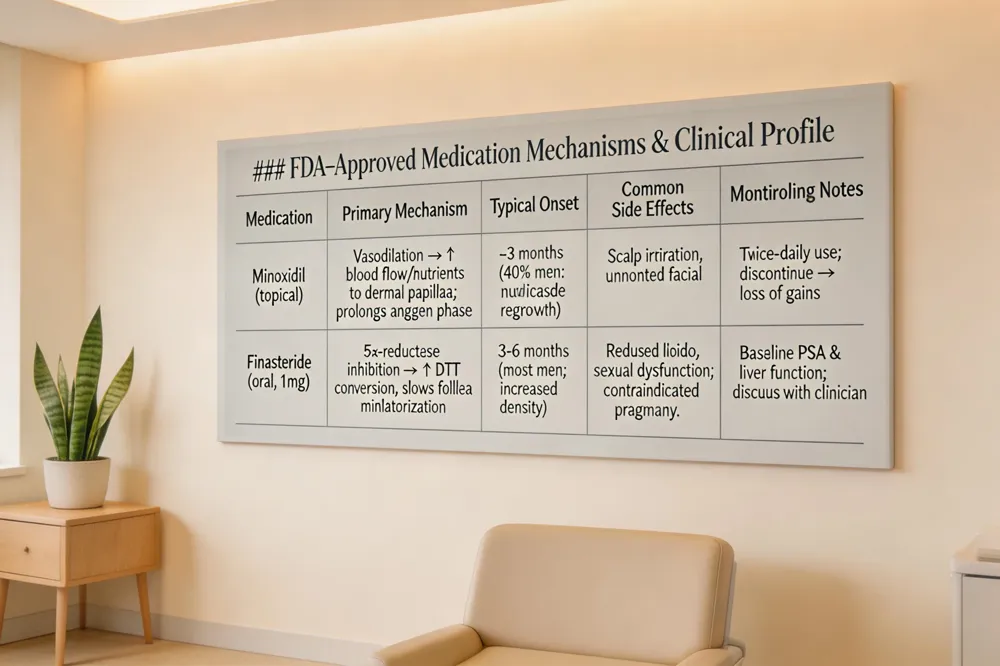 Topical Minoxidil works by dilating small blood vessels; about 40 % of men experience regrowth after three months and boosts blood flow, oxygen, and nutrient delivery to dermal papillae and prolongs the anagen phase of the hair cycle. In roughly 40 % of men, noticeable thickening and regrowth appear after three months of twice‑daily application, though daily use must continue to maintain benefits. Common side effects include scalp irritation, unwanted facial/hair growth.
Finasteride, an oral 5α‑reductase inhibitor, inhibits the conversion of testosterone to dihydrotestosterone and typically shows increased hair growth after about three months of use. Lower DHT levels slow follicle loss and can stimulate new growth, usually evident after three to six months of daily dosing. Rare adverse events are Finasteride rare side effects: reduced libido, sexual dysfunction, possible prostate cancer risk; pregnant women must avoid crushed tablets.
Both agents require lifelong adherence for sustained effect, and patients should monitor the listed side‑effects and discuss any concerns with a board‑certified clinician.
What Is the Role of Platelet‑Rich Plasma (PRP) in Hair Restoration?
PRP Treatment Overview
| Aspect | Details |
|---|---|
| Preparation | Patient’s blood drawn → anticoagulant added → single‑ or double‑spin centrifugation → platelets concentrated 2‑6× baseline |
| Key Growth Factors | PDGF, TGF‑β, VEGF, IGF‑1, FGF |
| Typical Protocol | 3‑4 initial injections spaced 4‑6 weeks apart; maintenance boosters every 4‑12 months |
| Efficacy | 10‑30 % increase in hair density; thicker shafts observed 3‑6 months post‑treatment |
| Contraindications | Active scalp infection, uncontrolled platelet/coagulation disorders, low platelet count, anticoagulant therapy |
| Synergy | Often combined with Minoxidil, Finasteride, or Microneedling for enhanced results |
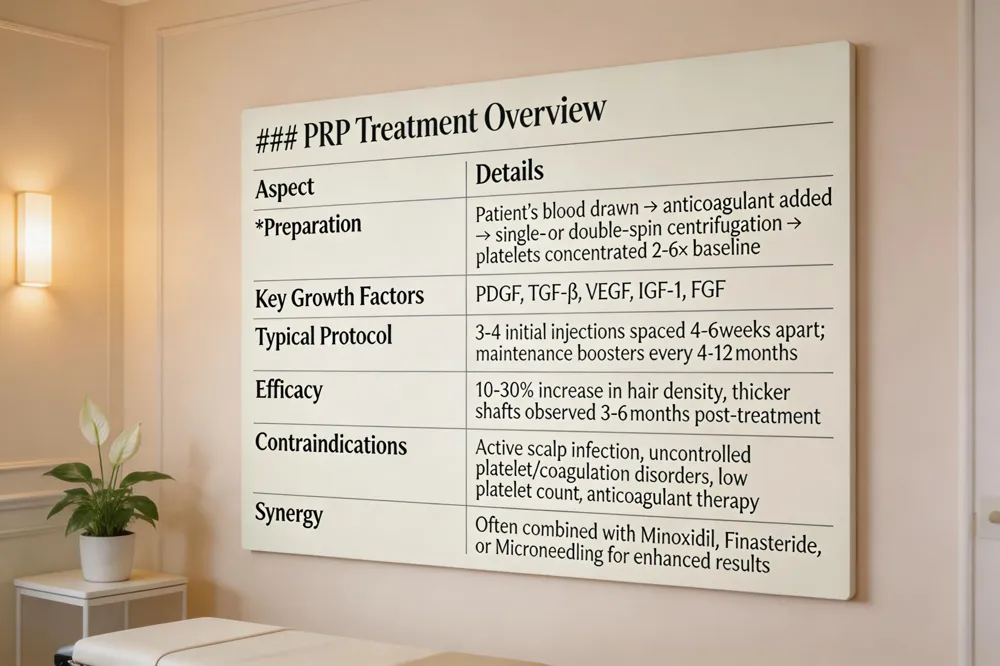 Platelet‑Rich Plasma (PRP) is prepared by drawing a modest amount of the patient’s own blood, adding an anticoagulant, and centrifuging it (single‑ or double‑spin) to concentrate platelets 2‑6 times the baseline level. The resulting platelet‑rich plasma—rich in growth factors such as PDGF, TGF‑β, VEGF, IGF‑1, and FGF—is then injected into thinning scalp zones, often after microneedling to improve penetration. Clinical trials and meta‑analyses consistently show a 10‑30 % increase in hair density and thicker shafts after 3‑6 months of treatment, with visible regrowth typically emerging after the third monthly session. A standard protocol includes three to four initial injections spaced four to six weeks apart, followed by maintenance boosters every four to twelve months to preserve gains. Contraindications include active scalp infections, uncontrolled platelet or coagulation disorders, low platelet counts, and the use of anticoagulant medications, all of which can increase bleeding risk or diminish efficacy. When selected appropriately and combined with FDA‑approved medications such as minoxidil or finasteride, PRP offers a minimally invasive, autologous option that supports follicular health and can enhance outcomes of other hair‑restoration modalities.
When Is Surgical Transplantation the Right Choice?
Surgical Transplantation Options
| Technique | Harvest Method | Graft Yield | Scarring | Recovery Time | Typical Use Cases |
|---|---|---|---|---|---|
| FUT (Follicular Unit Transplant) | Linear strip excision from donor area | High graft count per session | Linear scar | 7‑10 days (longer) | Moderate‑to‑severe AGA, patients tolerant of scar |
| FUE (Follicular Unit Extraction) | Individual follicle extraction using micro‑punch | Lower per‑hour yield | No linear scar (tiny punctures) | 3‑5 days (faster) | Patients desiring scar‑free outcome |
| NeoGraft (Automated FUE) | Computer‑assisted, minimally invasive extraction | Comparable to FUE, improved graft survival | No linear scar | 3‑5 days | Cases needing efficiency, reduced discomfort |
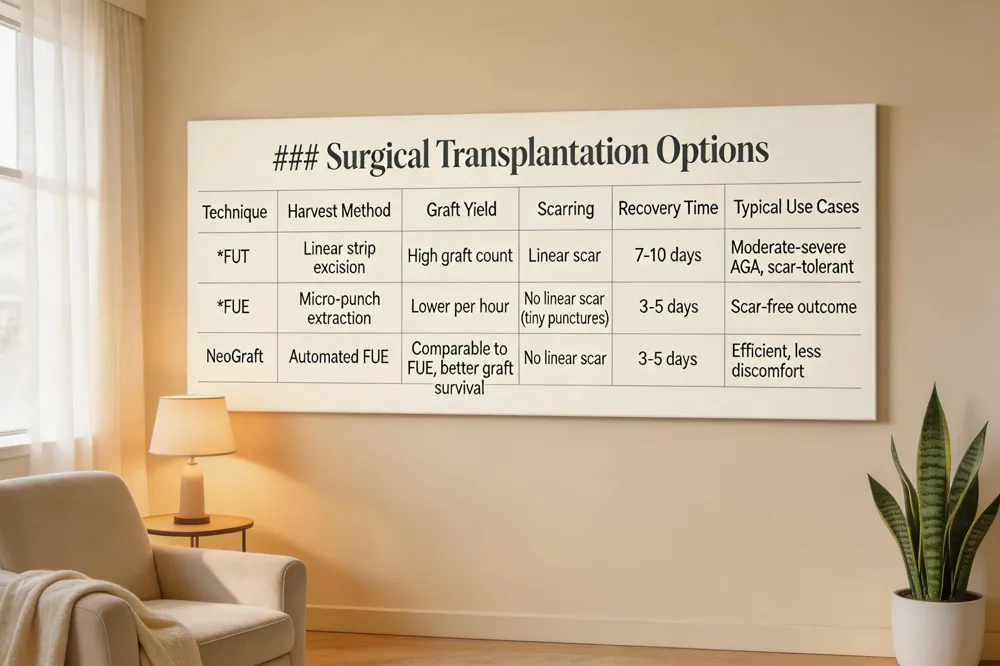 Surgical hair restoration is best suited for patients with moderate‑to‑severe androgenetic alopecia who have exhausted non‑surgical options or need permanent density in balding zones. The two main techniques differ in how donor follicles are harvested. Follicular Unit Transplant (FUT) removes a thin strip of scalp from the back of the head, which is then dissected into individual grafts; this yields a higher number of grafts per session but leaves a linear scar and requires a longer recovery period. Follicular Unit Extraction (FUE) extracts follicles one‑by‑one directly from the donor area, eliminating the linear scar and typically allowing a quicker return to normal activities, although the procedure can be more time‑intensive and may produce a lower graft count per hour. NeoGraft, an automated FUE system, enhances the FUE experience by using computer‑assisted, minimally invasive extraction that shortens operative time, reduces patient discomfort, and improves graft survival rates, all performed under local anesthesia. Transplanted follicles are genetically resistant to dihydrotestosterone, making the results permanent for those grafts. However, the underlying androgen‑driven thinning of native hair can continue, so many clinicians recommend adjunct medical therapy such as Finasteride to preserve existing non‑transplanted follicles.
Integrating Lifestyle and Adjunct Therapies for Optimal Outcomes
Lifestyle & Adjunct Therapy Integration
| Lifestyle Factor | Impact on Hair Health | Recommended Action |
|---|---|---|
| Nutrition (protein, iron, zinc, Vitamin D) | Supports follicle production and density | Balanced diet, consider supplementation if deficient |
| Stress Management | High cortisol can exacerbate shedding | Mindfulness, adequate sleep, regular exercise |
| Smoking & Alcohol | Impairs microcirculation, reduces treatment response | Quit smoking; limit alcohol intake |
| Scalp Care | Harsh chemicals/heat damage shafts | Gentle shampoos, avoid excessive heat, regular scalp massage |
| Adjunct Therapy | Mechanism | Typical Regimen |
|---|---|---|
| Microneedling | Creates micro‑injuries → ↑ permeability for Minoxidil/PRP | 0.5‑1 mm needles, 1‑2 times/week |
| LLLT | Boosts cellular metabolism & blood flow | ≈15 minutes, 3 times/week |
| Scalp Micropigmentation (SMP) | Cosmetic illusion of density | Single or series of tattoo sessions for advanced thinning or transplant scars |
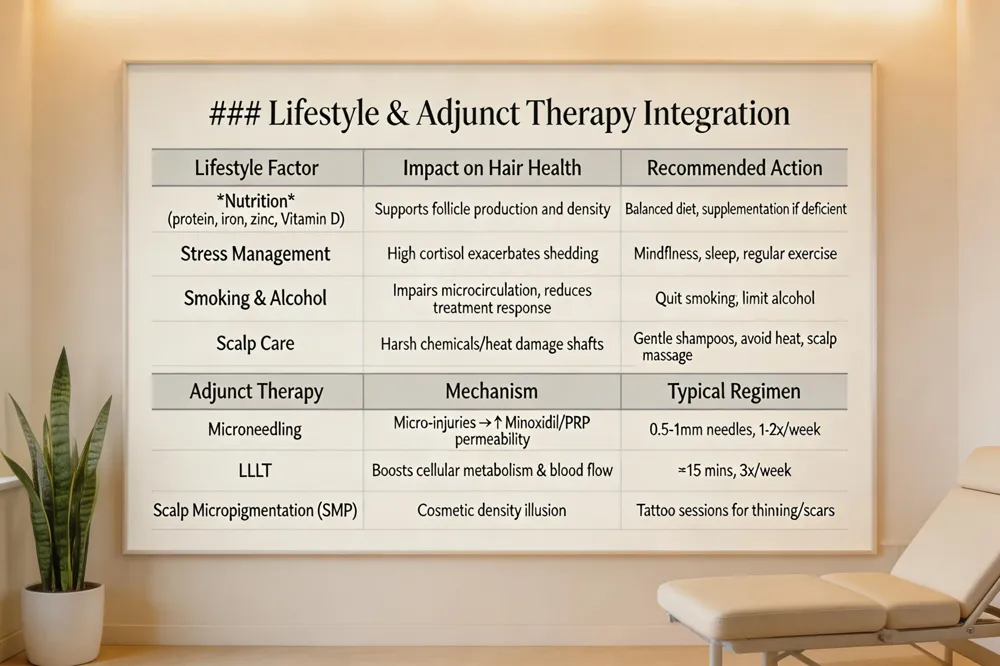 Microneedling and low‑level laser therapy (LLLT) act as powerful adjuncts. Microneedling creates micro‑injuries that increase scalp permeability, allowing topical minoxidil and growth factors from PRP to penetrate more deeply. LLLT boosts cellular metabolism and blood flow; consistent use (≈15 minutes, three times weekly) can add a 10‑20 % increase in hair density, especially when combined with PRP or minoxidil.
Scalp micropigmentation (SMP) is a cosmetic tattoo technique that deposits pigment dots mimicking short hair follicles, creating the illusion of density. It benefits patients with advanced thinning, transplant scars, or those who desire an immediate visual improvement without biological regrowth.
Putting It All Together – A Personalized, Conservative Plan
A board‑certified dermatologist or hair‑restoration surgeon should assess your scalp, medical history, and labs before any therapy is started; early evaluation catches androgenetic thinning while follicles are still viable. An individualized regimen typically blends FDA‑approved medications—topical minoxidil for both sexes and oral finasteride for men—with regenerative options such as platelet‑rich plasma or low‑level laser therapy, all timed to maximize follicle activity. Lifestyle factors—adequate protein, iron, vitamin D, stress‑reduction, and gentle hair care—support scalp health and enhance treatment response. Because non‑surgical modalities lose efficacy when stopped, a maintenance schedule of ongoing medication, periodic PRP or laser sessions, and regular follow‑up is essential to preserve the gains achieved and prevent further miniaturization.