Overview
Chronic diseases remain the world’s leading health threat, accounting for 74% of global deaths (WHO) and up to 75% of U.S. health‑care spending (CDC). Four disease groups—cardiovascular disease, cancer, chronic respiratory disease, and diabetes—cause 80% of premature deaths, and the aging population ensures a growing burden worldwide.
Artificial intelligence is rapidly reshaping chronic‑disease care. Wearable sensors and contact‑less monitors now stream real‑time physiological data (heart rate, glucose, respiratory rate, sleep) to machine‑learning models that predict deterioration, personalize medication dosing, and generate adaptive care plans. AI‑driven chatbots, voice agents, and digital health‑coaching apps improve self‑management, while AI‑augmented decision‑support systems integrate genomic, imaging, and electronic‑health‑record data to recommend precise interventions.
These AI capabilities dovetail with regenerative, non‑surgical therapies such as platelet‑rich plasma (PRP) and stem‑cell‑derived exosomes. Predictive analytics identify patients most likely to respond to PRP, monitor tissue‑healing biomarkers, and adjust protocols in real time, reducing unnecessary surgery and associated costs. By uniting continuous monitoring, predictive modeling, and regenerative treatment selection, AI supports a truly personalized, conservative approach to chronic disease management.
AI Foundations and Data Integration
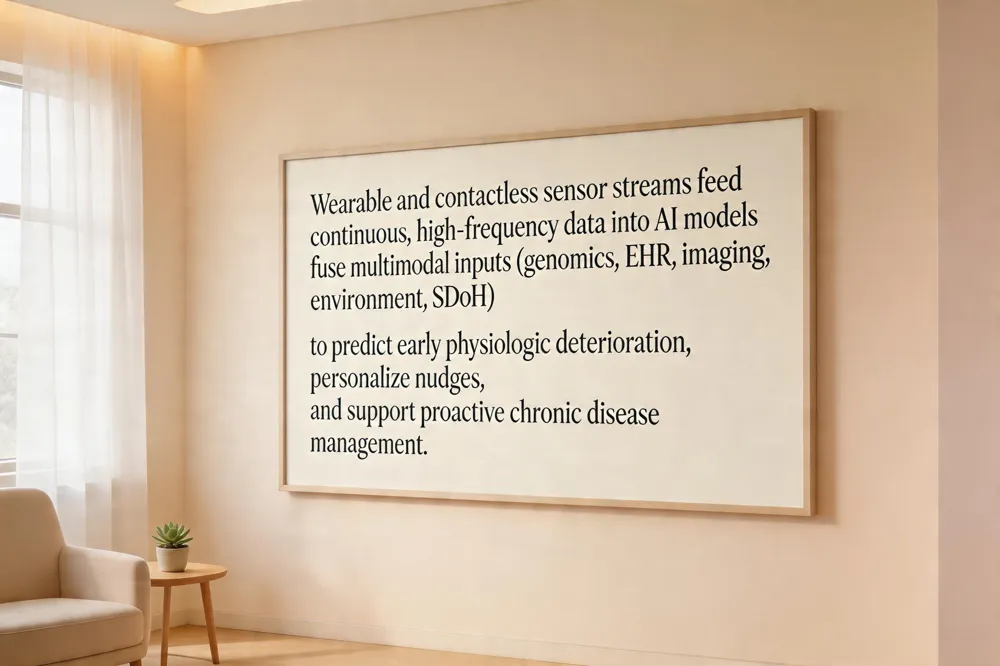 Wearable and Contactless Sensor Streams Modern AI‑enabled chronic disease programs rely on continuous data from wearables (heart rate, SpO2, glucose, activity, sleep) and contactless devices such as radar or facial‑camera sensors that capture respiratory rate and blood pressure without skin contact. These high‑frequency streams feed machine‑learning models that flag early physiologic deviations.
Multimodal Data Fusion AI platforms fuse sensor outputs with genomics, electronic health records, imaging, environmental exposures, and social‑determinant factors. By integrating genetic risk scores, imaging biomarkers, and behavioral data, algorithms generate comprehensive risk profiles that inform individualized treatment pathways.
Predictive Analytics for Early Deterioration Deep‑learning models predict disease trajectories—e.g., hypoglycemia, heart‑failure decompensation, COPD flare‑ups—hours before clinical signs appear. Real‑time alerts trigger personalized nudges, medication reminders, or virtual check‑ins, reducing hospitalizations and supporting proactive care.
How AI Enhances Chronic Disease Management AI improves diagnostic accuracy, delivers early detection across diabetes, hypertension, cardiovascular disease, and cancer, and continuously updates care plans based on longitudinal data. Decision‑support systems streamline clinician workflow while maintaining evidence‑based recommendations, leading to lower complications and costs.
AI and Chronic Disease Machine‑learning models monitor subtle metric changes, identify patients likely to benefit from regenerative therapies such as platelet‑rich plasma (PRP), and personalize non‑surgical interventions. Automation of data analysis frees clinicians to focus on compassionate, hands‑on care.
AI Personalized Medicine By integrating genomic, imaging, and lifestyle information, AI creates truly individualized treatment regimens. In regenerative medicine, AI predicts optimal PRP dosing, timing, and injection sites, enhancing pain relief and tissue healing while preserving a conservative, patient‑centered approach.
These integrated AI capabilities form the backbone of precision chronic disease management, enabling proactive, data‑driven, and patient‑focused care.
Precision Medicine and Regenerative Therapies
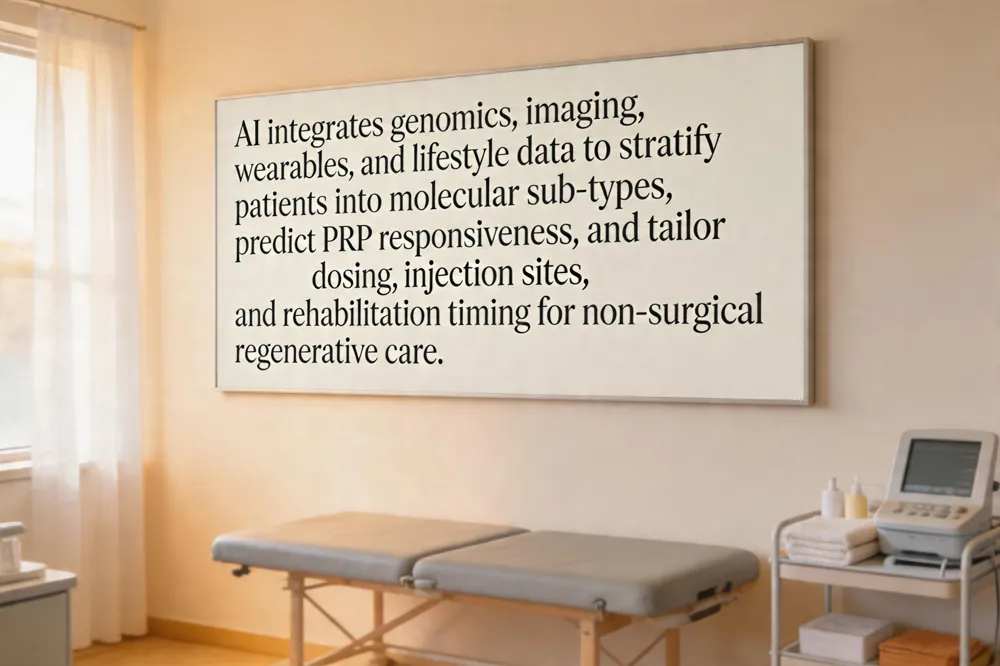 AI‑driven precision medicine merges genomic, imaging, wearable and electronic‑health‑record data to create a multimodal patient profile that guides regenerative care. By analyzing DNA variants, proteomic signatures, and real‑time physiologic streams, AI can stratify patients into molecular sub‑types and predict who will benefit most from non‑surgical options such as platelet‑rich plasma (PRP) injections for back pain, sports injuries, or carpal tunnel syndrome.
Precision medicine, AI and the future of personalized health care – AI rapidly processes large heterogeneous datasets, matching each individual’s genetic, molecular, and lifestyle factors to the optimal PRP protocol. Decision‑support tools provide real‑time monitoring and allow clinicians to adjust dosage, injection sites, and rehabilitation timing, ensuring natural healing while avoiding unnecessary surgery.
AI in precision medicine examples – AI analyzes multi‑omics data to define molecular sub‑types for targeted biologics, uses digital pathology to detect subtle histologic patterns that predict regenerative outcomes, and integrates wearables with EHRs to generate risk scores for chronic back pain. Predictive algorithms also align biomarker profiles with the most effective PRP or stem‑cell therapies and uncover drug‑repurposing opportunities that synergize with tissue‑repair strategies.
Artificial intelligence in precision medicine and patient‑specific drug design – Machine‑learning models mine EHRs, genomics, and sensor data to discover biomarkers and forecast disease trajectories. Deep‑learning enables virtual drug screening and de‑novo molecular design tailored to an individual’s genetic makeup, supporting pharmacogenomic dosing and minimizing adverse effects. These capabilities complement conservative regenerative approaches, but require secure, high‑quality data and bias mitigation to ensure equitable outcomes.
Machine learning in personalized medicine – ML trains predictive models on outcomes from PRP treatments, identifying phenotypes that forecast pain‑relief success and optimal dosing schedules. By integrating imaging, genomics, and activity data, ML personalizes rehabilitation protocols, reducing trial‑and‑error and enhancing non‑surgical pain‑management efficacy.
AI personalized medicine – AI integrates genetic, imaging, clinical, and lifestyle information to generate individualized treatment plans. In regenerative medicine, it predicts PRP responsiveness, optimizes injection parameters, and continuously learns from outcomes to refine conservative, patient‑centered protocols, aligning with Dr. Jaimal Sangha’s emphasis on natural healing and reduced surgical dependence.
Clinical Workflow, Decision Support and Evidence
 Electronic Health Record Integration
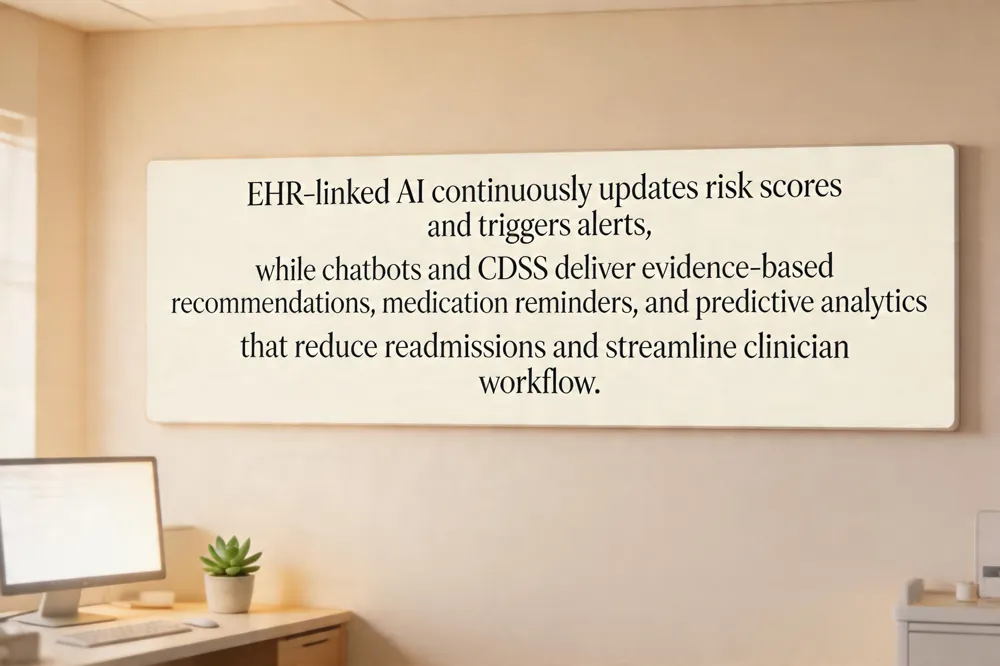
AI systems ingest data from EHRs, wearables, and genomics to create unified patient profiles. Machine‑learning models continuously update risk scores for chronic conditions (e.g., diabetes, heart failure) and trigger alerts when physiological trends—such as rising glucose or deteriorating respiratory rate—signal imminent exacerbation. This real‑time synthesis enables clinicians to intervene before complications arise, reducing hospital readmissions and supporting a conservative, non‑surgical care philosophy.
Electronic Health Record Integration
AI systems ingest data from EHRs, wearables, and genomics to create unified patient profiles. Machine‑learning models continuously update risk scores for chronic conditions (e.g., diabetes, heart failure) and trigger alerts when physiological trends—such as rising glucose or deteriorating respiratory rate—signal imminent exacerbation. This real‑time synthesis enables clinicians to intervene before complications arise, reducing hospital readmissions and supporting a conservative, non‑surgical care philosophy.
AI‑Driven Chatbots and Voice Agents Conversational AI (chatbots, voice assistants) delivers medication reminders, personalized meal plans, and education in plain language, improving self‑management adherence. Natural‑language processing extracts symptom narratives from telehealth visits, feeding decision‑support tools while freeing clinicians from routine documentation. Studies show AI‑powered coaching apps increase patient engagement and can lower medication errors by ~20% in polypharmacy populations.
Clinical Decision‑Support Systems (CDSS) AI‑augmented CDSS combine imaging analytics, laboratory results, and social‑determinant data to recommend evidence‑based therapies tailored to each patient’s genetics and lifestyle. In regenerative medicine, AI predicts optimal timing and dosing for platelet‑rich plasma (PRP) injections, enhancing tissue‑healing outcomes while avoiding unnecessary surgery. Predictive analytics identify high‑risk patients for proactive outreach, achieving up to a 20% reduction in readmission rates.
How does artificial intelligence (AI) contribute to improving healthcare outcomes? AI boosts diagnostic accuracy, automates documentation, and delivers predictive insights that enable early, personalized interventions, ultimately lowering costs and improving patient‑centered care.
AI in precision medicine journal The Artificial Intelligence in Precision Medicine journal publishes open‑access research on AI‑driven diagnostics, genomics, and ethical frameworks, supporting rapid dissemination of precision‑care innovations.
Chronic disease management research paper A study of rural vs. urban GP practices reveals older, higher‑visit rural patients and pandemic‑driven demographic shifts, underscoring the need for location‑specific AI‑enabled care pathways.
AI chronic disease management Continuous monitoring, predictive modeling, and AI‑guided regenerative protocols transform chronic disease care by delivering timely, individualized, while preserving the essential human clinician‑patient relationship.
Patient Empowerment, Self‑Management and Lifestyle
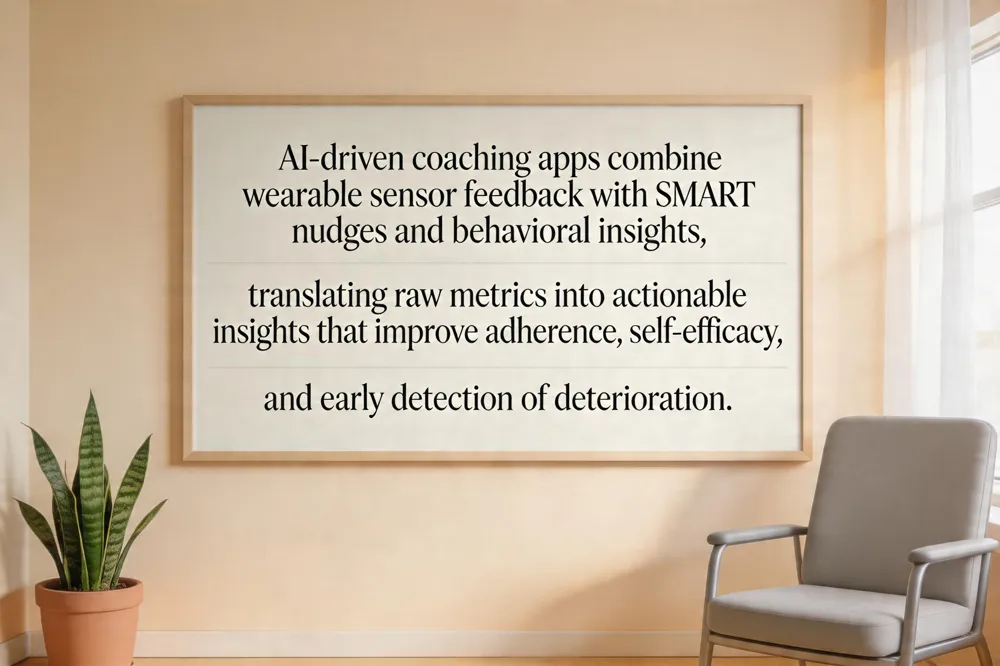 digital health coaching apps now serve as daily companions for chronic disease patients. Platforms such as the Alme Health Coach and Lark Heart Health combine wearable sensor streams (heart rate, glucose, sleep, activity) with machine‑learning algorithms to generate real‑time, personalized recommendations for nutrition, medication timing, and physical activity. By presenting actionable insights in a conversational UI, they reinforce self‑efficacy and keep patients engaged.
Wearable sensor feedback closes the loop between data collection and behavior change. Continuous monitoring of physiological parameters—blood‑oxygen saturation, respiratory rate, glucose levels, and blood pressure—allows AI models to detect early deteriorations and trigger alerts before symptoms worsen. Contactless technologies (radar, facial‑camera pulse‑wave detection) further reduce burden, while AI‑driven dashboards translate raw metrics into understandable trends for patients and clinicians alike.
Behavioral nudges and goal‑setting are embedded in these platforms through SMART (Specific, Measurable, Attainable, Relevant, Time‑bound) objectives. AI analyzes past adherence patterns and social determinants of health to deliver timely reminders, motivational messages, and adaptive nudges that align with each user’s lifestyle. This dynamic personalization improves medication compliance, promotes regular exercise, and supports stress‑reduction practices.
Chronic disease management PDF – The PDF offers a whole‑person, integrated‑care roadmap, detailing behavioral‑health strategies (Stages of Change, Readiness Ruler), prevention focus, and coordinated primary‑care interventions to lower hospital admissions.
Chronic disease management examples – Effective programs combine daily metric monitoring (e.g., blood‑sugar checks, weekly blood‑pressure readings), structured medication reminders, lifestyle changes (heart‑healthy diet, low‑impact exercise), multidisciplinary support, and routine clinician check‑ups.
How to reframe chronic illness? – Shift the narrative from “I’m broken” to “I’m a resilient body navigating a new balance,” embracing gentle movement, nutrition, restorative sleep, pacing, supportive allies, and joy as essential to recovery.
AI applications for chronic condition self‑management: scoping review – Among 66 studies, AI tools primarily target medical (45%) and behavioral (41%) self‑management, with conversational agents (32%) and ML ensembles (24%) leading; most remain in early development stages.
Personalized care planning for adults with chronic or long‑term health conditions – Collaborative goal‑setting, shared decision‑making, and regular review improve physical health, reduce depression, and boost self‑management confidence, with modest effect sizes and no reported harms.
Individualized care plan example – John Doe, 45, with lumbar disc degeneration receives three PRP injections, a tailored home‑exercise regimen, and ergonomic counseling, aiming to reduce VAS pain ≤3/10 in 6 weeks, with periodic reassessment.
Chronic disease management in primary care – Integrated, patient‑centered models use remote monitoring, EHR analytics, and telehealth for risk stratification, early complication detection, and lifestyle support, ultimately lowering costs and enhancing quality of life.
Research Resources, Knowledge Bases and Future Directions
 PubMed
 is a free, publicly accessible database maintained by the U.S. National Library of Medicine that indexes more than 40 million citations from biomedical literature, including MEDLINE, life‑science journals, and online books. It provides links to abstracts, full‑text articles (via PubMed Central or publisher sites), and tools for advanced searching, citation matching, and clinical queries. Researchers and clinicians use PubMed to locate peer‑reviewed studies on topics such as regenerative medicine, platelet‑rich plasma therapy, and pain‑management outcomes. The platform also offers APIs and bulk‑download options for systematic reviews and data mining. Because it is a government‑run resource, PubMed’s content is reliable, regularly updated, and freely available to the public.
PubMed
PubMed is a free, publicly accessible database maintained by the U.S. National Library of Medicine that indexes more than 40 million citations from biomedical literature, including MEDLINE, life‑science journals, and online books. It provides links to abstracts, full‑text articles (via PubMed Central or publisher sites), and tools for advanced searching, citation matching, and clinical queries. Researchers and clinicians use PubMed to locate peer‑reviewed studies on topics such as regenerative medicine, platelet‑rich plasma therapy, and pain‑management outcomes. The platform also offers APIs and bulk‑download options for systematic reviews and data mining. Because it is a government‑run resource, PubMed’s content is reliable, regularly updated, and freely available to the public.
Google Scholar Google Scholar is a free search engine that indexes scholarly literature across many disciplines, including biomedical and clinical research. It allows users to locate peer‑reviewed articles, theses, books, and conference papers, and provides links to full‑text versions when available through institutional libraries. For a regenerative‑medicine practice, Google Scholar can be used to stay up‑to‑date on the latest evidence for platelet‑rich plasma, stem‑cell therapies, and other minimally invasive treatments for back pain, sports injuries, and carpal tunnel. The platform also offers citation tools and the ability to save articles to a personal library, simplifying literature reviews and reference management. By integrating Google Scholar into daily workflow, clinicians can base their patient‑centered protocols on current scientific findings rather than anecdotal information.
What are the long‑term conditions? Long‑term conditions, also called chronic diseases, are health problems that persist for months or years and usually cannot be cured completely. They include common illnesses such as diabetes, cardiovascular disease and high blood pressure, arthritis, respiratory disorders like asthma, neurological disorders such as epilepsy, and a range of mental‑health conditions. When a person has two or more of these conditions simultaneously, it is referred to as multi‑morbidity, which can compound the impact on daily living. These conditions often affect a person's ability to work, family responsibilities, and financial stability, requiring ongoing medical care and lifestyle adjustments.
What is the potential impact of AI on clinical trials and drug development? AI can dramatically shorten drug‑development timelines by quickly identifying promising molecular targets, optimizing compound design, and predicting toxicity before costly laboratory work. In clinical trials, machine‑learning models can stratify patients, forecast responders, and simulate outcomes, reducing enrollment sizes and trial duration while improving safety monitoring. Real‑world data analytics and digital health tools powered by AI enable adaptive trial designs that adjust dosing or endpoints on the fly, increasing efficiency and success rates. Regulatory agencies, such as the FDA, are creating guidance to ensure AI‑derived insights are transparent and reproducible, fostering wider adoption.
Chronic disease management articles Recent chronic‑disease‑management articles highlight the need for personalized, patient‑focused care that integrates medical, social and lifestyle interventions. Studies from both rural and urban primary‑care settings show that tailored treatment plans—considering demographics, comorbidities and resource availability—significantly improve outcomes for conditions such as diabetes and hypertension. Research also underscores the pivotal role of community health workers and coordinated care teams in reaching low‑income populations and ensuring consistent follow‑up. A recurring theme is the partnership model, where patients are educated and empowered to self‑monitor, while clinicians provide coaching and timely adjustments to therapy.
AI in chronic disease management Artificial intelligence (AI) can transform chronic disease management by continuously monitoring patient data, predicting flare‑ups, and personalizing treatment plans without invasive procedures. Machine‑learning algorithms analyze trends from wearable sensors, electronic health records, and imaging to detect early signs of worsening conditions, allowing clinicians to intervene promptly. In a regenerative‑medicine setting, AI can help determine the optimal timing and dosage of therapies such as platelet‑rich plasma, tailoring interventions to each patient’s biological response. While AI enhances efficiency and precision, it must complement—not replace—the human connection and clinical judgment that underpin compassionate, patient‑centered care. Proper data governance, privacy safeguards, and interdisciplinary collaboration are essential to integrate AI responsibly into chronic disease management.
Strategic Recommendations and Future Outlook
 Chronic‑disease management will only improve when health systems move from reactive, episodic visits to a proactive, continuously monitored model. Integrated, patient‑centered teams—physicians, regenerative‑medicine specialists, nurses, data scientists, community‑health workers, and social‑service staff—must share a unified electronic health record and coordinate plans that address medical, socioeconomic, and behavioral barriers. Empowering patients with AI‑driven coaching apps, wearable sensor streams, and digital health‑literacy resources enables early recognition of symptom changes and adherence to regenerative therapies such as platelet‑rich‑ (PRP) injections, which can reduce reliance on surgery.
AI transforms chronic‑disease care by ingesting real‑time data from wearables, cloud analytics, imaging, and genomic sources. Machine‑learning models predict flare‑ups, generate individualized risk scores, and recommend precise timing and dosing of PRP or stem‑cell treatments. Adaptive AI platforms continuously update care recommendations, automatically adjust virtual check‑ins, and flag high‑risk patients for timely clinician outreach. These tools augment, not replace, human judgment; transparent algorithms, privacy safeguards, and interdisciplinary oversight remain essential.
Precision‑medicine examples illustrate AI’s breadth: genomic‑driven sub‑type classification guides targeted biologics; AI‑powered digital pathology detects subtle histologic patterns that predict response to regenerative protocols; and predictive analytics match biomarker profiles to optimal PRP regimens. Moreover, AI‑driven drug‑repurposing engines identify existing compounds that synergize with tissue‑repair therapies, expanding options without costly new drug development.
Value‑based care and reimbursement must align incentives with outcomes. CMS’s chronic‑care‑management (CCM) and remote‑patient‑monitoring (RPM) codes already reward data‑driven, patient‑centered interventions. Scaling AI‑enabled regenerative protocols will require robust data integration, multidisciplinary collaboration, and transparent, HIPAA‑compliant platforms that demonstrate cost‑effectiveness and equitable access.
Closing Perspective
Artificial intelligence, personalized medicine, and regenerative therapies together form a new care paradigm for chronic disease. AI continuously ingests wearable, electronic‑record, and genomic data, turning raw signals into actionable risk scores and treatment suggestions. These insights enable clinicians to match each patient with the most appropriate regenerative option—such as platelet‑rich plasma or stem‑cell‑based interventions—while tailoring lifestyle, medication, and monitoring plans to individual needs. To realize this promise, clinicians must embrace interdisciplinary collaboration, adopt transparent AI tools, and educate patients on data sharing benefits. Patients, in turn, should engage with wearable devices, follow AI‑guided coaching, and communicate openly with care teams. Together, this synergistic approach can reduce complications, lower costs, and empower sustainable, patient‑centered healing. Clinicians should also track outcomes, refine algorithms, and share findings to accelerate evidence‑based practice across healthcare.