Why Sleep Matters
Sleep quality refers to how efficiently a person progresses through the restorative stages of sleep—quick onset, minimal awakenings, and sufficient time in deep (slow‑wave) and REM sleep—whereas quantity is simply the total hours spent in bed. High‑quality sleep, even if slightly shorter, can be more restorative than longer, fragmented sleep.
Physiologically, adequate sleep supports immune competence, hormone balance (growth hormone, leptin, ghrelin, cortisol), blood‑pressure regulation, and metabolic homeostasis. At the cellular level, deep sleep expands extracellular spaces, enabling the glymphatic system to clear neurotoxic waste such as β‑amyloid, while growth‑hormone peaks promote protein synthesis, collagen formation, and tissue repair. Mentally, sleep consolidates memory, stabilizes mood, and reduces anxiety, thereby enhancing cognitive function and emotional resilience.
For regenerative medicine and pain management, these mechanisms are critical. Restorative sleep amplifies the body’s natural healing cascade, improving the efficacy of therapies like platelet‑rich plasma by boosting growth‑factor release and reducing systemic inflammation. Consistent, high‑quality sleep also lowers pain perception, supports muscle recovery, and enhances patient adherence to rehabilitation protocols, making it a cornerstone of non‑surgical, patient‑centered treatment plans.
Sleep Duration and Lifespan
 A landmark cohort of 172,321 adults demonstrated a clear, dose‑response relationship between nightly sleep duration and longevity. Participants who consistently achieved the recommended 7–9 hours of sleep lived markedly longer than short sleepers. Men who met the sleep target enjoyed a five‑year extension of life expectancy, while women accrued roughly two additional years. These benefits stem from the restorative functions that occur during adequate sleep, including immune system rejuvenation, muscle repair, and the nightly surge of growth hormone and testosterone. Deep (slow‑wave) sleep also expands inter‑cellular spaces, allowing cerebrospinal fluid to flush metabolic waste, thereby protecting the brain from neurodegenerative damage. Although a minority of individuals are natural short sleepers, they are rare and often do not experience the same longevity advantage. Age‑related declines in melatonin production and modest shifts in circadian timing do not eliminate the need for roughly seven hours of sleep; instead, they underscore the importance of a consistent bedtime routine and a dark sleep environment to preserve sleep quality across the lifespan.
Hormonal Harmony: Growth Hormone, Leptin, Ghrelin, Testosterone
 During slow‑wave (deep) sleep the pituitary releases a surge of growth hormone, the master regulator of tissue repair, collagen synthesis, and muscle regeneration. This hormonal wave dovetails with a nocturnal rise in testosterone, which further fuels muscle protein synthesis and supports bone and connective‑tissue healing—key processes leveraged by regenerative therapies such as platelet‑rich plasma. At the same time, sleep fine‑tunes the appetite hormones leptin and ghrelin. Adequate sleep keeps leptin levels high (promoting satiety) and ghrelin low (dampening hunger), helping maintain a healthy body‑fat distribution. When sleep is curtailed, this balance collapses: leptin drops while ghrelin spikes, driving increased caloric intake, visceral (inflammatory) fat accumulation, and insulin resistance. Beyond metabolism, these hormonal shifts ripple into the brain. Lower growth hormone and testosterone output, combined with elevated cortisol from fragmented sleep, impair mood stability, reduce stress resilience, and heighten anxiety. Thus, preserving a consistent, restorative sleep schedule safeguards hormonal harmony, supporting both physical regeneration and psychological well‑being.
Cardiovascular Health and Blood Pressure
 Short sleep consistently raises blood pressure both during the day and at night, accelerating vascular aging and promoting coronary artery calcification. Epidemiological data from large cohorts (e.g., 172,321 adults) show that individuals who obtain less than the recommended 7‑9 hours have higher systolic and diastolic pressures, increasing the risk of hypertension, heart attack, and stroke. Fragmented sleep diminishes parasympathetic tone, leading to reduced heart‑rate variability and a sympathetic dominance that further elevates cardiovascular strain. Regular sleep patterns restore circadian rhythm, improve autonomic balance, and enhance heart‑rate variability, thereby protecting against myocardial injury and arterial stiffening. Maintaining a consistent bedtime, ensuring a dark, cool environment, and avoid alcohol or caffeine near sleep can mitigate these risks. By stabilizing sleep duration and quality, the body supports endothelial function, lowers inflammatory markers, and reduces the progression of atherosclerotic, ultimately extending both health‑span and lifespan.
Metabolic Regulation and Diabetes Risk
 Chronic sleep loss (less than seven hours per night) triggers a cascade of metabolic disturbances that elevate the risk of type‑2 diabetes. Repeated short sleep impairs insulin sensitivity, leading to higher fasting glucose levels and a greater incidence of diabetes across large cohort studies. The hormonal imbalance caused by sleep deprivation further fuels this risk: leptin, the satiety hormone, drops while ghrelin, the hunger‑stimulating hormone, rises, prompting increased caloric intake and visceral fat accumulation. Sleep‑related disruption of lipid metabolism is also evident; irregular or insufficient sleep is linked to lower high‑density lipoprotein (HDL) cholesterol and higher triglyceride concentrations, both of which accelerate atherosclerotic disease and insulin resistance. Conversely, restoring adequate, high‑quality sleep (seven to nine hours per night) normalizes glucose tolerance and improves lipid profiles. Behavioral sleep‑hygiene interventions—consistent bedtime, dark cool bedroom, regular aerobic exercise, and avoidance of late‑evening alcohol or caffeine have been shown to reduce insulin resistance, lower fasting glucose, and support healthier HDL‑to‑triglyceride ratios. By stabilizing appetite hormones and enhancing the body’s glymphatic clearance of metabolic waste, sufficient sleep becomes a cornerstone of metabolic health and a non‑pharmacologic strategy to prevent diabetes and its complications.
Neurocognitive Protection and Glymphatic Clearance
 During deep (slow‑wave) sleep the brain’s interstitial spaces expand, allowing cerebrospinal fluid to flow more freely through the glymphatic system. This surge in fluid movement flushes metabolic waste—including amyloid‑β, tau fragments, and other neurotoxic by‑products—out of the brain parenchyma and toward peripheral clearance pathways. By efficiently removing these toxins, restorative sleep markedly reduces the risk of Alzheimer’s disease and other neurodegenerative disorders. In addition to waste clearance, REM and N3 stages support memory consolidation and synaptic plasticity; REM stabilizes newly encoded memories while N3 promotes the strengthening of neural connections essential for learning and emotional regulation. Conversely, sleep fragmentation disrupts the glymphatic flow, diminishing waste removal and contributing to the accumulation of toxic proteins that accelerate cognitive decline. Studies show that individuals who achieve uninterrupted, high‑quality sleep exhibit lower levels of amyloid‑β and better performance on neurocognitive tests, whereas fragmented or short sleep is linked to poorer glymphatic efficiency, heightened neuroinflammation, and accelerated brain aging. Prioritizing regular, deep sleep through consistent bedtime routines, a dark‑cool bedroom, and avoidance of alcohol or late‑night caffeine can therefore protect neurocognitive health and support long‑term brain resilience.
Immune Function and Inflammation
 Adequate sleep is a cornerstone of a robust immune system. During restorative nights the body boosts cytokine production and natural‑killer cell activity, enhancing the ability to fight infections and supporting vaccine responses. In contrast, chronic sleep deficiency triggers a rise in inflammatory markers such as C‑reactive protein (CRP) and interleukin‑6 (IL‑6), creating a systemic inflammatory load that accelerates cellular aging and shortens telomeres. This heightened inflammation makes individuals more susceptible to common colds, flu, and other infections, while also slowing wound healing and tissue repair. By normalizing hormone balance, lowering cortisol, and reducing oxidative stress, high‑quality sleep dampens inflammation, promotes faster recovery from injuries, and helps preserve the cellular integrity essential for longevity.
Sleep Hygiene and Lifestyle Interventions
 Consistently going to bed and waking at the same times each day stabilizes the circadian clock, which improves hormone release (growth hormone, melatonin and reduces blood‑pressure spikes that accelerate cardiovascular aging. A dark, quiet bedroom kept at 65‑68 °F (18‑20 °C) promotes the physiological drop in core temperature needed for rapid sleep onset and maintenance of uninterrupted slow‑wave sleep, the stage in which the glymphatic system clears neurotoxic waste and growth hormone peaks. Caffeine should be avoided after early afternoon and alcohol limited to at least 4‑6 hours before bedtime; both disrupt REM and deep‑sleep architecture and increase nighttime awakenings. Regular moderate aerobic exercise earlier in the day (30‑60 minutes) enhances sleep efficiency by reducing evening cortisol and increasing slow‑wave sleep, while also improving insulin insulin sensitivity and cardiovascular health. Behavioral therapies such as Cognitive‑Behavioral Therapy for Insomnia (CBT‑I), mindfulness meditation, and progressive‑muscle relaxation have strong evidence for shortening sleep latency and reducing wake‑after‑sleep‑onset without drug side‑effects. Nutraceuticals that support GABAergic pathways—valerian root, ashwagandha, and melatonin‑rich foods like tart cherries or nuts—can further improve sleep quality when used alongside these lifestyle measures, offering a patient‑centered, non‑pharmacologic strategy that aligns with integrative medicine and enhances tissue repair, immune function, and overall longevity.
Integrating Sleep with Regenerative Medicine
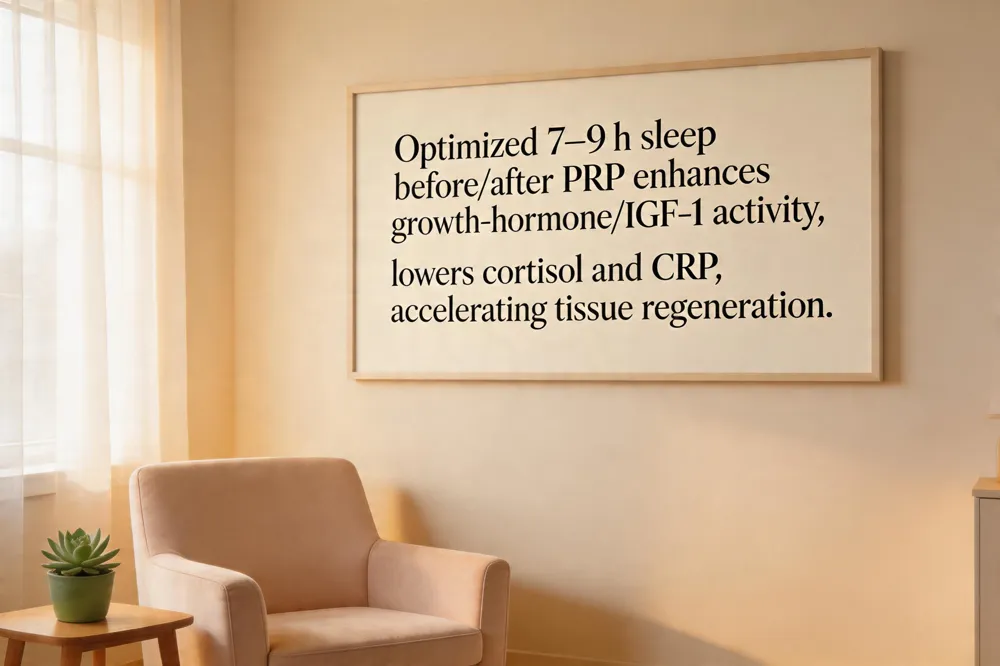 A restorative night of sleep is a cornerstone of any patient‑centered regenerative protocol. During slow‑wave (deep) sleep the pituitary releases growth hormone and circulating IGF‑1, both of which drive collagen synthesis, muscle regeneration, and the cellular proliferation that underlie the benefits of platelet‑rich plasma (PRP) injections. At the same time, cortisol levels fall and systemic inflammation markers such as CRP and IL‑6 decline, lowering pain perception and creating a more receptive tissue environment for the growth factors delivered by PRP. Sleep also amplifies immune competence: supports immune system function, muscle repair, and hormone secretion such as growth hormone and testosterone. Because these processes are time‑sensitive, a patient‑centered approach recommends optimizing sleep both before and after each injection—aiming for 7–9 hours of uninterrupted, high‑quality sleep. Clinicians can track sleep patterns with simple diaries or wearable devices, allowing individualized adjustments to bedtime routines, light exposure, caffeine timing, and stress‑reduction techniques. By aligning sleep hygiene with regenerative therapies, patients experience faster recovery, reduced reliance on analgesics, and a measurable extension of health‑span.
Putting It All Together
Sleep is a universal regulator of immune, endocrine, metabolic and neural systems. During deep (slow‑wave) sleep growth hormone and testosterone surge, muscle and tissue repair accelerates, and the glymphatic system flushes neurotoxic waste, protecting against Alzheimer’s and other neurodegenerative disease. Adequate sleep (7‑9 hours) balances leptin and ghrelin, stabilizes blood pressure, improves insulin sensitivity, and reduces systemic inflammation—key determinants of cardiovascular health, diabetes risk, and chronic pain. Regular, high‑quality sleep also supports mood, cognition and pain thresholds, making it a cornerstone of non‑surgical longevity and recovery strategies.
Actionable checklist for patients at Dr. Sangha’s clinic
- Set a consistent schedule – go to bed and rise at the same time daily, even on weekends.
- Create a sleep‑friendly environment – cool (65‑68 °F), dark, quiet, and screen‑free at least 30 minutes before bed.
- Limit stimulants – avoid caffeine after noon, alcohol within 4‑6 hours of bedtime, and heavy meals late at night.
- Incorporate daytime aerobic exercise – 30 minutes of moderate activity, preferably earlier in the day.
- Practice relaxation – mindfulness, progressive muscle relaxation, or gentle yoga before sleep to lower cortisol.
- Review medications and pain management – adjust timing to minimize nighttime awakenings.
- Track sleep – use a diary or wearable to identify patterns and guide adjustments.
By treating sleep as a non‑surgical pillar, patients can extend health span, lower mortality risk, and enhance the efficacy of regenerative therapies such as PRP, ultimately achieving faster pain recovery and longer, healthier lives.