Why One Size Doesn’t Fit All in Chronic Pain
Chronic non‑specific low back pain affects over 500 million people globally and is projected to surpass 800 million by 2050, making it a leading cause of disability. Research has identified four pain phenotypes— inflammation, muscle spasm, central sensitization, and disinhibition—each linked to distinct drivers such as biomechanics, anxiety, obesity, and gut dysbiosis. Modern clinics use artificial‑intelligence platforms and pre‑visit electronic questionnaires (e.g., HADS, PHQ‑9, PCS) to rapidly map phenotypes and drivers, reducing burden and improving precision. This enables patient‑centered, mechanism‑driven plans that match NSAIDs, muscle relaxants, gabapentinoids, SNRIs, or regenerative options like PRP to the individual’s underlying pathology and supports functional recovery.
Mapping Pain Phenotypes and Individual Drivers
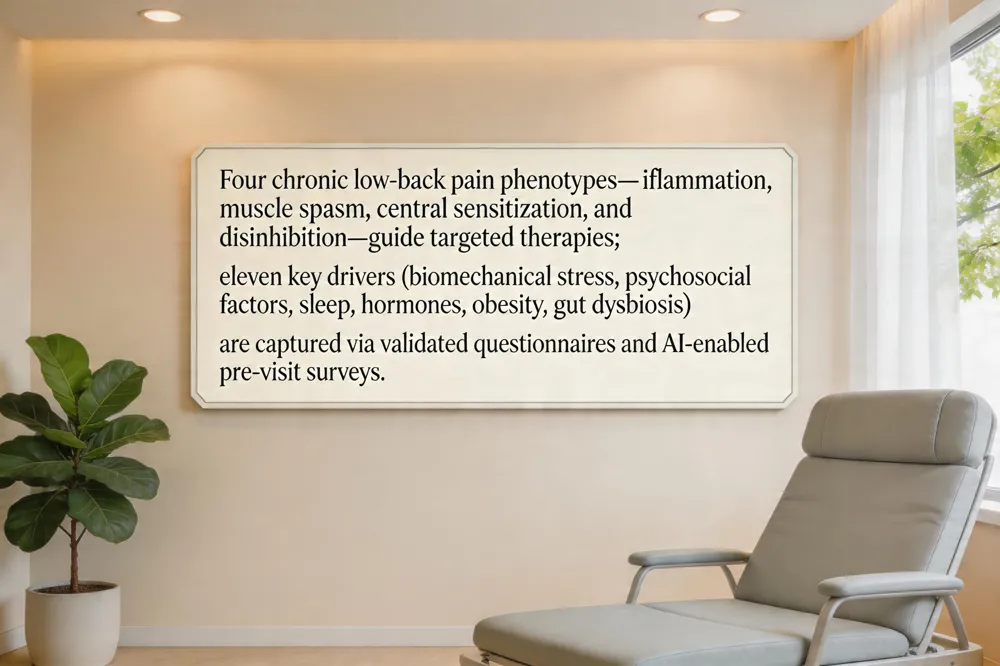 Chronic non‑specific low back pain (CNSLBP) can be classified into four distinct phenotypes— inflammation, muscle spasm, central sensitization, and disinhibition—each pointing to a different therapeutic focus. Inflammatory pain responds best to COX‑2‑targeted NSAIDs, muscle‑spasm pain benefits from relaxants plus manual and kinesiotherapy, central‑sensitization pain is mitigated with gabapentinoids and lifestyle interventions, and disinhibition pain, marked by widespread symptoms, anxiety, and depression, improves with SNRIs such as duloxetine. Pain perception is further shaped by eleven key drivers: biomechanical stress, social determinants, cognitive impairment, anxiety, depression, catastrophizing, activity level, insomnia, hormonal imbalance, obesity, and gut‑microbiota dysbiosis. Systematic evaluation of these drivers uses validated tools like the Hospital Anxiety and Depression Scale (HADS), PHQ‑9, Pain Catastrophizing Scale (PCS), and Pittsburgh Sleep Quality Index (PSQI). To streamline this comprehensive assessment, artificial‑intelligence‑driven pre‑visit electronic questionnaires can rapidly capture phenotype and driver data, reducing patient burden and enabling clinicians to construct precise, mechanism‑driven, multimodal treatment plans.
Regenerative Medicine: Options, Costs, and Evidence
 Platelet‑Rich Plasma (PRP) Preparation and Mechanisms
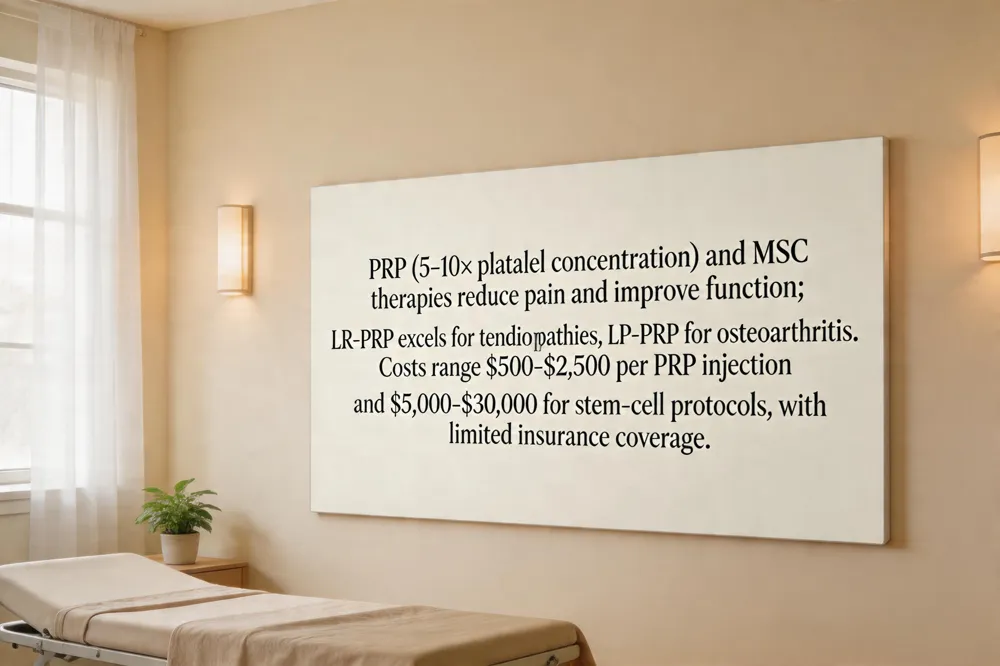
PRP is produced by centrifuging a patient’s own blood to concentrate platelets 5‑10‑fold, delivering growth factors (PDGF, TGF‑β, VEGF) that promote cell proliferation, collagen synthesis, angiogenesis, and anti‑inflammatory effects at the injury site.
Platelet‑Rich Plasma (PRP) Preparation and Mechanisms
PRP is produced by centrifuging a patient’s own blood to concentrate platelets 5‑10‑fold, delivering growth factors (PDGF, TGF‑β, VEGF) that promote cell proliferation, collagen synthesis, angiogenesis, and anti‑inflammatory effects at the injury site.
Leukocyte‑Rich vs Leukocyte‑Poor PRP Leukocyte‑rich PRP (LR‑PRP) is more effective for tendinopathies, while leukocyte‑poor PRP (LP‑PRP) shows superior outcomes in osteoarthritis by reducing inflammatory leukocyte activity.
Stem‑Cell and Prolotherapy Adjuncts Stem‑cell injections (autologous MSCs) and prolotherapy (hypertonic dextrose) can be combined with PRP to enhance tissue regeneration and collagen production, especially in disc degeneration and ligament injuries.
Clinical Outcomes and Safety Profile Systematic reviews report PRP achieving greater pain reduction than corticosteroids (SMD ≈ ‑0.53) and hyaluronic acid (SMD ≈ ‑0.55) with mild, transient side effects; serious complications occur in <0.1 % of cases.
Regenerative Therapy Reviews Patients consistently note rapid, lasting relief and functional gains, often surpassing steroid injections by months to years, with high satisfaction when imaging‑guided, patient‑centered care is used.
Regenerative Therapy Near Me Advanced Integrative Medicine, led by Dr. Jaimal Sangha, offers PRP and stem‑cell treatments across U.S. locations; free initial consultations determine candidacy.
Platelet‑Rich Plasma Therapy Cost PRP injections range $500‑$2,500 each; a typical 3‑injection series costs $2,000‑$2,500, with maintenance $600‑$800. Insurance usually does not cover the procedure.
PRP Treatment for Knee Cost Knee PRP costs $400‑$2,500 per injection; many clinics charge a flat $600 for ultrasound‑guided delivery, often requiring 2‑3 injections.
Regenerative Therapy Cost Stem‑cell therapies $5,000‑$8,000; BMAC $3,000‑$5,000; complex protocols may exceed $15,000‑$30,000.
Does PRP Work for Chronic Pain? PRP reduces pain and improves function in chronic tendinopathies and mild‑to‑moderate osteoarthritis, though effectiveness varies and is limited in severe disease.
Post‑Surgical Pain, Recovery, and Insurance Realities
 Non‑opioid strategies after surgery
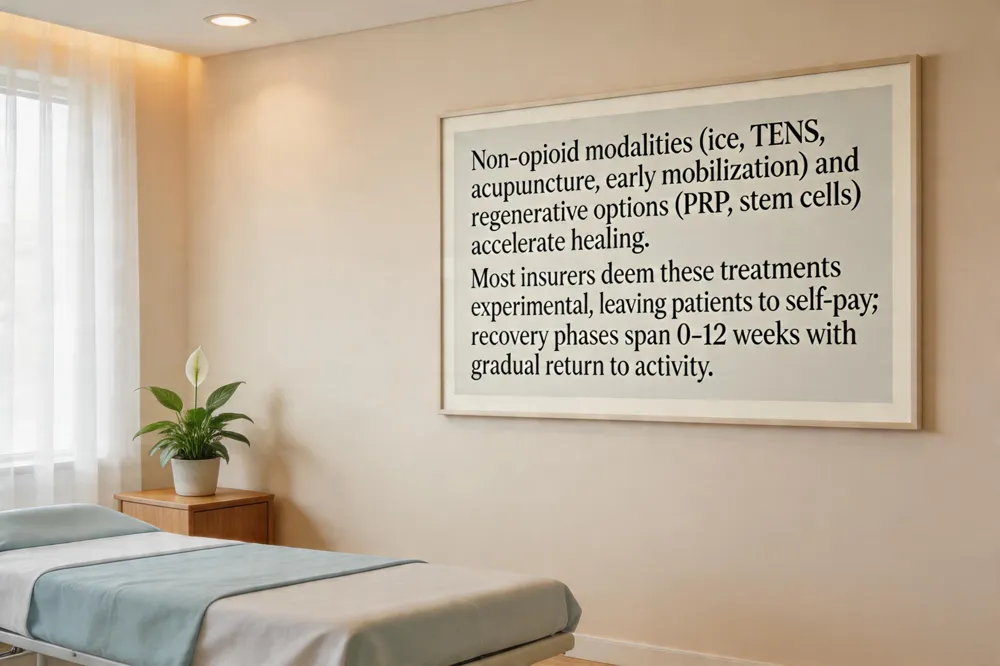
Patients can use ice, TENS, acupuncture, guided breathing, and early low‑impact movement to control pain while avoiding opioids. A protein‑rich diet and adequate hydration support tissue repair.
Non‑opioid strategies after surgery
Patients can use ice, TENS, acupuncture, guided breathing, and early low‑impact movement to control pain while avoiding opioids. A protein‑rich diet and adequate hydration support tissue repair.
Regenerative options for postoperative healing Platelet‑rich plasma (PRP) and stem‑cell injections deliver autologous growth factors that reduce inflammation and accelerate healing of surgical sites, tendons, and discs. These minimally invasive therapies fit a patient‑centered, conservative plan such as Dr. Jaimal Sangha promotes.
Insurance coverage landscape Most major insurers label PRP and stem‑cell treatments as experimental, so routine reimbursement is rare. Private plans (Aetna, Cigna, UnitedHealthcare, Blue Cross) typically deny claims; Medicare covers only FDA‑cleared hematopoietic stem‑cell transplants for blood disorders. A few exceptions exist (e.g., Tricare for certain knee/elbow cases). Patients usually pay out‑of‑pocket ($500‑$2,000 per PRP injections) and may use HSA/FSA funds or financing.
Recovery timelines for PRP injections Phase 1 (0‑7 days): mild swelling and soreness. Phase 2 (1‑4 weeks): pain diminishes, gentle PT begins. Phase 3 (4‑12 weeks): remodeling and functional gain; many feel relief by 6‑8 weeks. Normal daily activities resume within a week; high‑impact work waits 4 weeks.
Alternative pain management after surgery Combine PRP injections with physical therapy, nutrition counseling, and mind‑body techniques to reduce opioid reliance and promote natural healing.
Is regenerative therapy covered by insurance? Generally no; insurers consider it experimental. Private plans and Medicare usually deny coverage, leaving patients to self‑pay or seek limited employer/self‑insured benefits.
Is regenerative therapy covered by Medicare? Only FDA‑cleared hematopoietic stem‑cell transplants for blood diseases are covered. PRP and most orthopedic stem‑cell therapies are not reimbursed.
PRP injection recovery time Most patients return to light activities within 24‑48 hours; full benefit appears 4‑12 weeks post‑injection.
How to reduce pain after bone surgery Use elevation, intermittent ice, then heat; start gentle motion; consider PRP injection to boost healing; add TENS or acupuncture for additional relief.
How to relieve pain after surgery naturally Alternate ice and heat, follow an anti‑inflammatory diet, employ TENS or acupuncture, practice relaxation techniques, and use short‑term acetaminophen as needed with surgeon approval.
Holistic, Mind‑Body, and Psychological Strategies
 A holistic pain‑management technique blends lifestyle changes, mind‑body practices, and complementary therapies to support natural healing without surgery. Integrated lifestyle modifications include low‑impact aerobic exercise, yoga or tai‑chi for strength and flexibility, a nutrient‑dense whole‑food diet, adequate sleep, and stress‑reduction strategies such as deep‑breathing and guided imagery. Evidence‑based natural analgesics such as topical capsaicin and oral curcumin (turmeric) provide strong anti‑inflammatory and analgesic effects, while essential‑oil blends and willow‑bark extracts offer modest adjunct relief. Psychological therapies—particularly cognitive‑behavioral therapy, mindfulness‑based stress reduction—teach coping skills that reframe pain‑related thoughts, lower catastrophizing, and enhance adherence to conservative care plans. Holistic care models coordinate physical therapy, regenerative injections (e.g., ultrasound‑guided PRP for tissue repair), nutrition counseling, and mental‑health support within a multidisciplinary team, delivering patient‑centered, mechanism‑driven treatment. By integrating these evidence‑based approaches, clinicians empower patients to manage chronic pain effectively while minimizing reliance on opioids or invasive surgery.
Targeted Regenerative Solutions for Knees and Spine
Regenerative Therapy for Knees
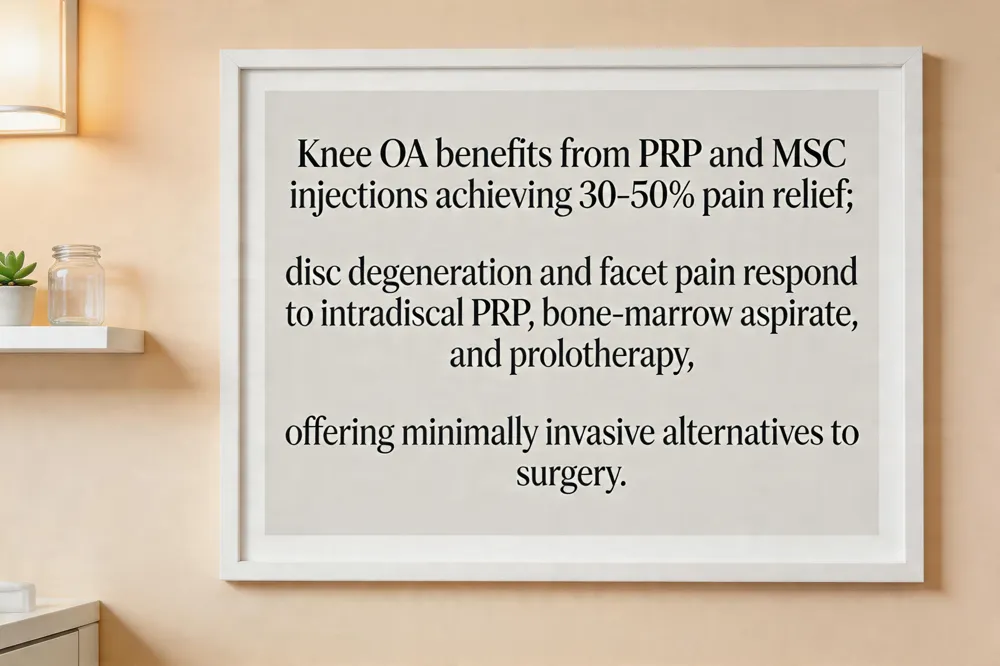
Platelet‑rich plasma (PRP) and mesenchymal stem‑cell (MSC) therapies have become cornerstone options for knee osteoarthritis. PRP delivers autologous growth factors (PDGF, TGF‑β, IGF‑1) that dampen inflammation and promote collagen synthesis, often yielding 30‑50% pain reduction within weeks. MSCs harvested from bone‑marrow, adipose tissue, or umbilical cord can differentiate into cartilage‑forming cells; multiple high‑concentration injections have shown safety and functional improvement in knee‑replacement‑averse patients. Prolotherapy with dextrose or bone‑marrow aspirate can augment ligament and tendon healing when combined with PRP or MSCs, offering a minimally invasive, patient‑centered alternative to surgery.
Regenerative Therapy for Back Pain
Chronic low‑back pain linked to disc degeneration and facet‑joint pathology benefits from PRP and stem‑cell approaches. Intradiscal PRP supplies PDGF, TGF‑β, and VEGF to stimulate extracellular‑matrix repair and reduce disc inflammation. Autologous bone‑marrow aspirate concentrate and MSCs can repopulate disc tissue and modulate immune responses, translating into lower VAS scores and improved Oswestry Disability Index values. Prolotherapy provokes a controlled inflammatory cascade that strengthens supporting structures, complementing PRP-mediated healing. These modalities collectively reduce reliance on surgery while supporting the spine’s innate regenerative capacity.
Chronic Pain Relief – Emerging Treatments
Beyond pharmacotherapy, regenerative medicine now offers a suite of non‑surgical options: PRP injections for back pain, sports injuries, and carpal‑tunnel syndrome; MSC‑based cartilage regeneration; hyaluronic‑acid viscosupplementation for joint lubrication; and Prolotherapy to trigger tissue repair. Integrated with physical therapy, nutrition counseling, and mental‑health support, these patient‑centered interventions address the biopsychosocial drivers of chronic pain, lowering opioid use and improving functional outcomes.
A New Era of Patient‑Driven Pain Relief
Modern chronic‑pain care now blends phenotype‑based medicine, regenerative biologics, and holistic interventions into one patient‑centered plan. By first identifying a pain driver—whether inflammation, muscle spasm, central sensitization, or disinhibition—clinicians can match the most effective pharmacologic or non‑pharmacologic therapy and then layer targeted PRP or stem‑cell injections to repair the underlying tissue. This conservative, surgery‑avoiding model reduces opioid exposure, shortens recovery, and improves functional outcomes. Looking ahead, artificial‑intelligence platforms will analyze questionnaires, wearables, and outcome scores in real time, automatically adjusting phenotypic classification and therapeutic intensity, ensuring each patient receives the right treatment at the right moment.