A New Era for Non‑Surgical Rejuvenation
Regenerative medicine in aesthetics harnesses the patient’s own cells, growth factors and signaling molecules to repair and revitalize skin without incisions. This patient‑centered, conservative philosophy prioritizes natural healing pathways, minimal downtime, and personalized treatment plans that respect each individual’s tissue quality and aesthetic goals. Core autologous biologics include platelet‑rich plasma (PRP), which delivers concentrated PDGF, TGF‑β, VEGF and other growth factors to stimulate fibroblast activity and collagen synthesis; stem‑cell‑derived therapies such as mesenchymal stem cells or adipose‑derived stem cells that secrete cytokines and exosomes to modulate inflammation and promote neocollagenesis; and extracellular vesicles (exosomes) that act as cell‑free carriers of micro‑RNA and proteins, amplifying tissue regeneration. Together, these modalities provide a minimally invasive alternative to surgical facelifts, offering measurable improvements in skin texture, elasticity, and volume while preserving the body’s intrinsic regenerative capacity.
Platelet‑Rich Plasma: The Science Behind the ‘Vampire Facial’
Platelet‑Rich Plasma – Quick Facts
| Aspect | Details |
|---|---|
| Preparation | 10‑20 mL blood → anticoagulated → centrifuged → 5‑7× platelet concentration |
| Key Growth Factors | PDGF, TGF‑β, VEGF, IGF‑1, EGF |
| Mechanisms | ↑ fibroblast activity → ↑ type I/III collagen, elastin; VEGF → angiogenesis; TGF‑β/IGF‑1 → MMP modulation |
| Clinical Outcomes | ~30 % ↓ wrinkle depth (VISIA); ~15 % ↓ pore count; ↑ collagen density; synergistic benefit when combined with microneedling |
| Cost (musculoskeletal indication) | $500‑$2,000 per injection; typical series (3) ≈ $2,000 total |
| Safety | Mild transient erythema, bruising, swelling; low infection risk |
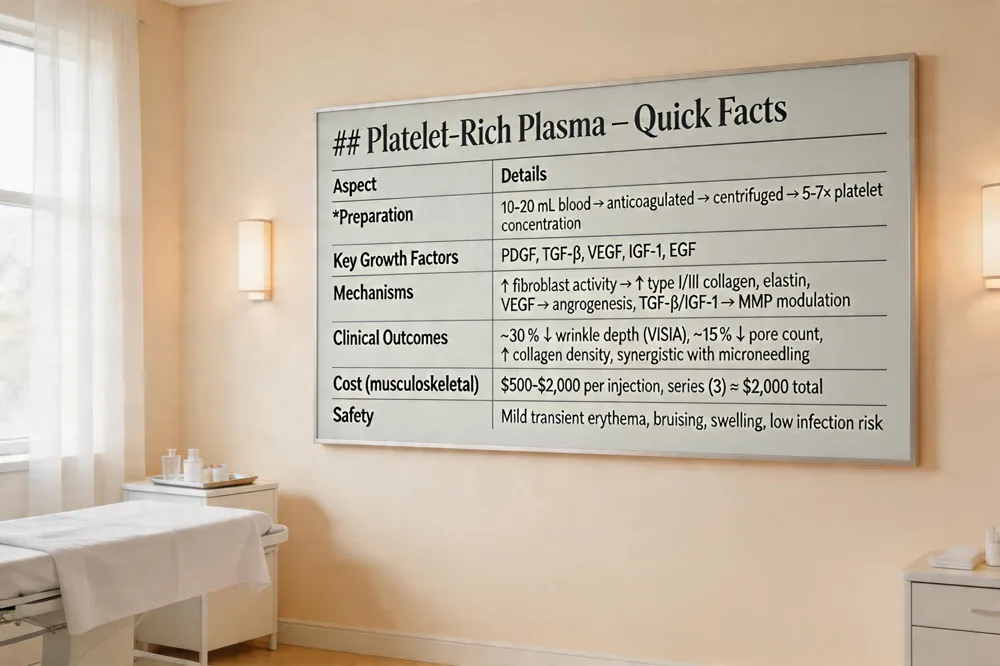 PRP preparation and key growth factors
A small volume of the patient’s blood (10‑20 mL) is drawn, anticoagulated, and centrifuged to separate the platelet‑rich layer. The concentrate contains 5‑7 times the platelet count of whole blood and releases growth factors such as PDGF, TGF‑β, VEGF, IGF‑1, and EGF. These molecules drive cell proliferation, angiogenesis, and extracellular‑matrix synthesis.
Mechanisms of collagen synthesis, angiogenesis, and dermal remodeling
Once injected intradermally or applied after microneedling, PRP’s growth factors activate fibroblasts, up‑regulating type I and III collagen and elastin production. VEGF promotes new micro‑vascular networks, improving nutrient delivery and tissue oxygenation. TGF‑β and IGF‑1 modulate matrix metalloproteinases, preserving existing collagen while encouraging remodeling. The combined effect is thicker, more elastic dermis with reduced fine lines and smoother texture.
Clinical evidence of texture, wrinkle, and pore improvements
Prospective studies report significant reductions in wrinkle depth (VISIA scores ≈ 30 % lower) and skin texture scores after three PRP sessions spaced 4‑6 weeks apart. Pore counts have decreased by ~15 % and collagen density increased on imaging. Microneedling plus PRP yields greater dermal thickness than microneedling alone, confirming a synergistic benefit.
Cost of a PRP injection for musculoskeletal pain
A single PRP injection for musculoskeletal pain typically costs $500‑$2,000, depending on the treated area, volume of PRP, and clinic overhead. Most patients receive a series of three injections, bringing total out‑of‑pocket expenses to roughly $2,000. Insurance coverage is rare, so patients often pay via cash, HSA/FSA, or financing plans.
Microneedling + PRP: Synergy for Skin Tightening
Microneedling + PRP – Synergistic Effects
| Parameter | Value/Observation |
|---|---|
| Mechanism | Microneedling creates micro‑channels → fibroblast migration; PRP delivered into channels amplifies growth‑factor signal |
| Growth Factors Delivered | PDGF, TGF‑β, VEGF, IGF‑1, EGF |
| Clinical Results | Up to 30 % increase in dermal thickness; 31 % ↓ VISIA wrinkle scores; 26 % ↓ texture scores (30‑woman trial) |
| Recovery | Shortened downtime vs. microneedling alone; minimal erythema/swelling |
| Frequency | Typically 3 sessions, 15‑day intervals |
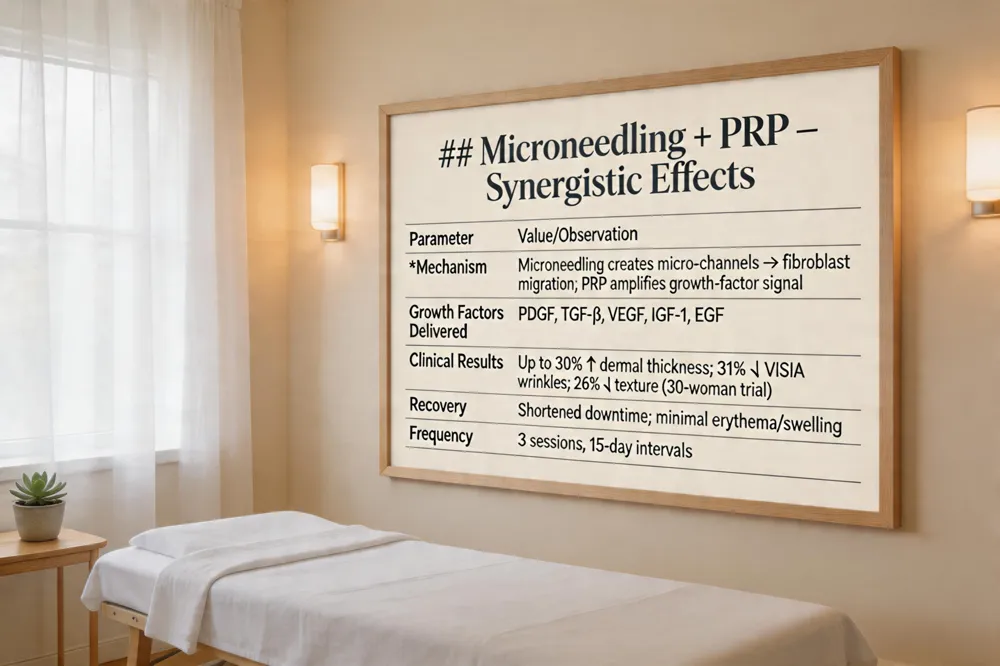 Microneedling works by forming precise micro‑injuries in the epidermis and papis, which trigger a natural wound‑healing cascade. These micro‑channels stimulate fibroblast migration, release of endogenous growth factors, and neocollagenesis. When autologous platelet‑rich plasma (PRP) is applied immediately after microneedling, the growth‑factor‑rich plasma—containing PDGF, TGF‑β, VEGF, IGF‑1 and EGF—penetrates directly into the channels, amplifying the biological signal. This combined approach dramatically increases collagen and elastin synthesis, angiogenesis, and extracellular‑matrix remodeling. Clinical studies consistently show that PRP‑enhanced microneedling yields greater dermal thickening (up to 30 % increase) and deeper wrinkle reduction than microneedling alone. In a trial of 30 women, three PRP sessions spaced 15 days apart reduced VISIA® wrinkle scores by 31 % and skin texture values by 26 %. The synergistic effect also shortens recovery time and minimizes downtime, making it a patient‑centered and minimally invasive alternative to surgical skin‑tightening procedures.
Stem‑Cell‑Derived Exosomes: A Cell‑Free Frontier
Stem‑Cell‑Derived Exosomes – Overview
| Feature | Details |
|---|---|
| Nature | Nano‑sized vesicles from MSCs; carry miRNA, proteins, lipids |
| Biological Action | Modulate gene expression; stimulate fibroblasts → collagen synthesis; promote angiogenesis |
| Clinical Uses | Scar remodeling, hyperpigmentation reduction, modest facial volume enhancement |
| Regulatory Status (US) | Off‑label aesthetic use; devices have FDA 510(k) clearance; exosome products not formally approved |
| Safety | Generally well‑tolerated; mild localized irritation possible |
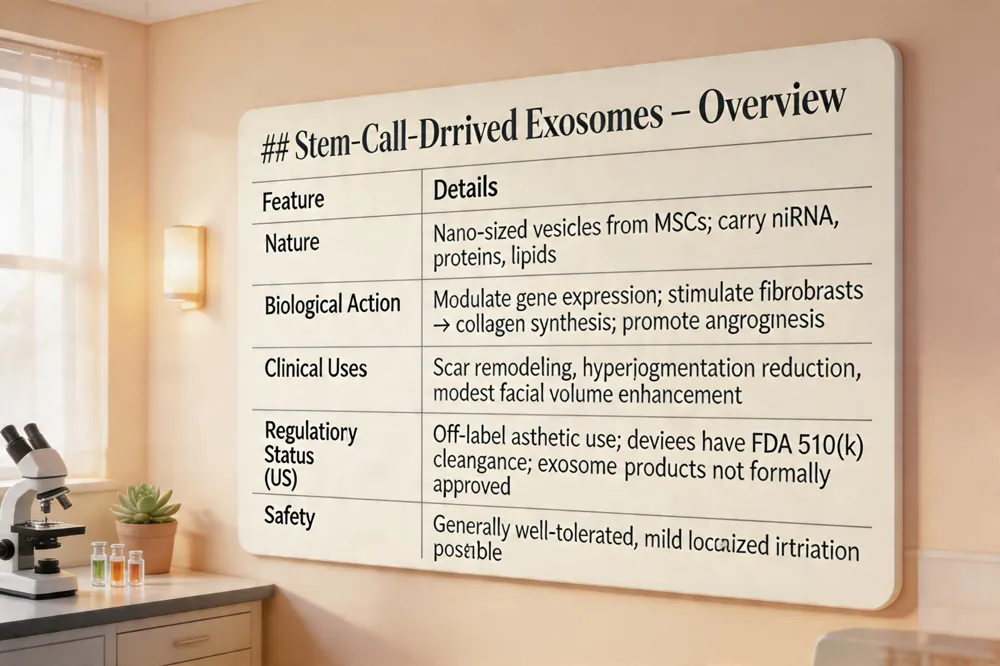 Exosomes are nano‑sized extracellular vesicles released by mesenchymal stem cells that shuttle micro‑RNA, proteins, and lipids to recipient skin cells, modulating gene expression and stimulating collagen synthesis. Clinical investigations have shown that exosome‑rich formulations can remodel scar tissue, reduce hyperpigmentation, and modestly enhance facial volume by activating resident fibroblasts and promoting angiogenesis. In the United States these therapies are considered off‑label; only the devices used to prepare autologous exosomes have FDA 510(k) clearance, while the exosome products themselves are not formally approved for aesthetic use.
Question: What are the potential side effects of stem cell therapy for pain management?
Answer: Common side effects are mild and localized, such as temporary soreness, bruising, and swelling at the injection site, with a low infection risk. Rarely, nerve irritation or allergic reactions to processing agents may occur. Systemic delivery can transiently lower blood cell counts, causing fatigue or a brief increase in bleeding tendency. Serious complications like graft‑versus‑host disease are limited to allogeneic donor cells and are not a concern with autologous therapy.
Hair Restoration: PRP and Stem‑Cell Strategies
Hair Restoration – PRP & Stem‑Cell Strategies
| Metric | Reported Outcome |
|---|---|
| PRP Action | Activates dormant dermal papilla cells; prolongs anagen phase |
| MSC/Exosome Adjunct | Secretome & vesicles → anti‑inflammatory, angiogenic, collagen‑boosting effects |
| Follicular Density Gains | 10‑30 % increase after 3‑4 sessions |
| Patient Satisfaction | >80 % report noticeable improvement |
| Protocol | 3‑4 PRP injections spaced 4‑6 weeks; optional MSC/exosome supplementation |
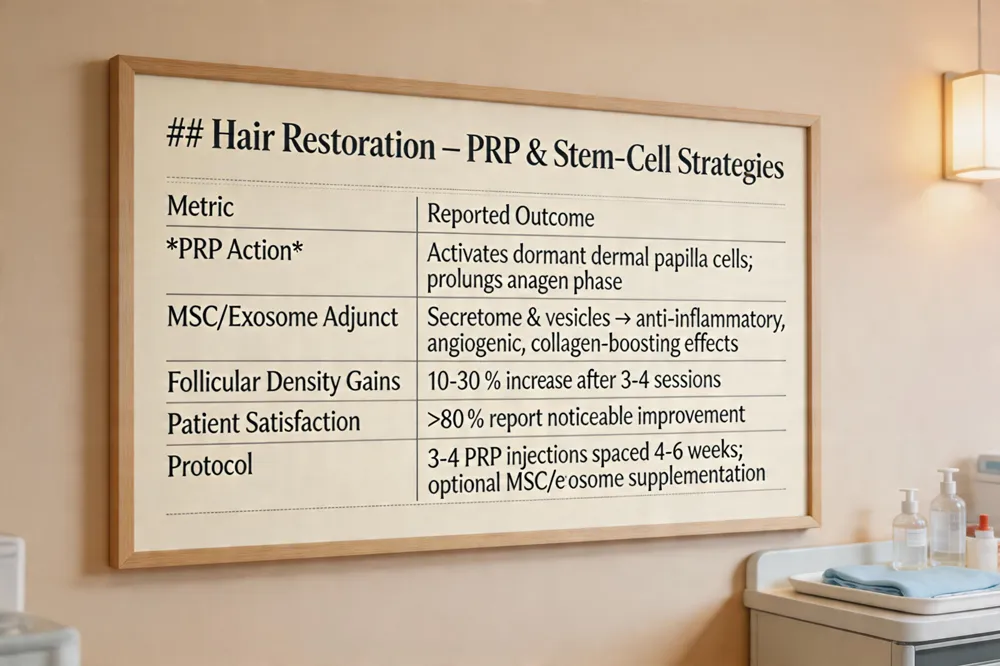 Platelet‑rich plasma (PRP) rejuven is a cornerstone of modern regenerative hair restoration. Autologous PRP delivers a high concentration of growth factors—PDGF, TGF‑β, VEGF, IGF‑1, and EGF—that activate dormant dermal papilla cells and prolong the anagen (growth) phase of the hair cycle. Clinical studies consistently show a statistically significant increase in follicular density after a series of three to four PRP injections spaced four to six weeks apart.
Adjunctive mesenchymal stem‑cell (MSC) therapies and stem‑cell‑derived exosomes further amplify these results. MSCs secrete a secretome rich in cytokines and extracellular vesicles that modulate inflammation, promote angiogenesis, and stimulate fibroblast activity, supporting a healthier follicular micro‑environment. Exosomes deliver micro‑RNA and proteins that up‑regulate collagen I/III synthesis and protect follicles from oxidative stress, leading to additional gains in hair thickness and growth quality.
Outcome metrics from peer‑reviewed trials include follicular density increases of 10‑30 % and high patient‑satisfaction scores (often >80 % reporting noticeable improvement). The combined PRP‑MSC/exosome protocol offers a minimally invasive, autologous alternative to surgical hair transplantation, aligning with a patient‑centered, conservative aesthetic philosophy.
Polynucleotides and Bio‑Stimulating Fillers: Hydration Meets Collagen
Polynucleotides & Bio‑Stimulating Fillers
| Component | Primary Effect |
|---|---|
| Polynucleotides (PN) | Bind water → tissue hydration; stimulate fibroblasts → ↑ type I/III collagen, elastin, HA |
| Sculptra® (PLLA) | Gradual volumization; controlled inflammation → neocollagenesis over months |
| Radiesse® (CaHA) | Immediate lift + scaffold for fibroblast infiltration; calcium release → collagen/elastin production |
| Safety | Mild redness/swelling; low allergic risk; minimal downtime |
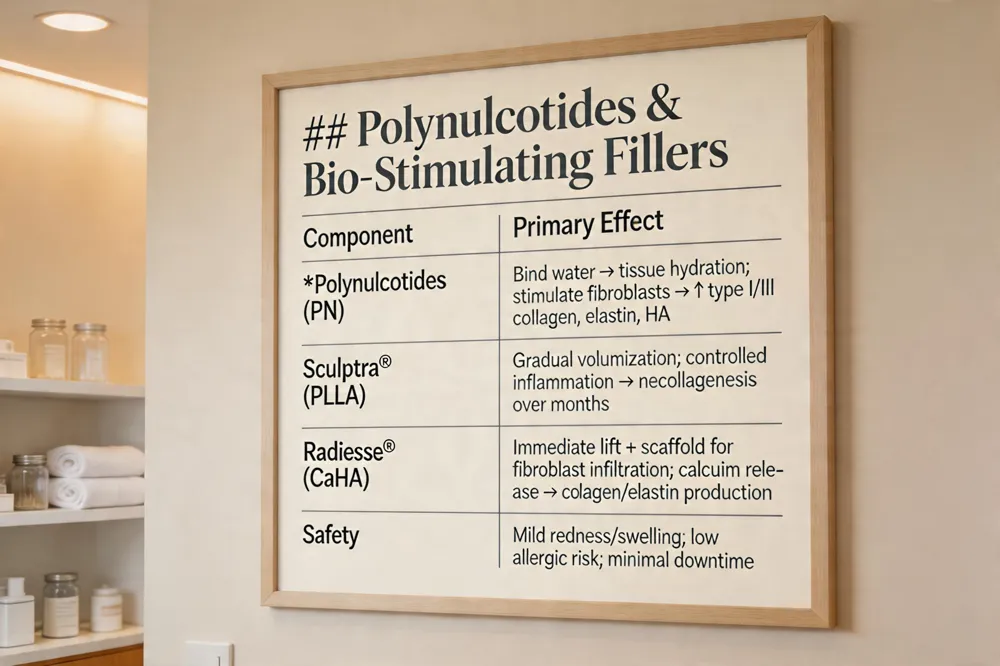 Polynucleotides (PN) are DNA fragments that act as biostimulators, binding water molecules to enhance tissue hydration while activating fibroblasts to increase collagen and elastin production When applied to the dermis, PN‑derived nucleotides trigger fibroblasts to increase synthesis of type I and III collagen, elastin, and hyaluronic acid, leading to improved skin hydration and firmness.
Bio‑stimulating fillers such as Sculptra® (poly‑L‑lactic acid, PLLA) and Radiesse® (calcium hydroxyl‑apatite, CaHA) provide a gradual volum i boost while simultaneously stimulating endogenous collagen. PLLA particles are resorbed over months, prompting a controlled inflammatory response that yields neocollagenesis without immediate volume. CaHA microspheres act as a scaffold for fibroblast infiltration and release calcium ions that enhance collagen and elastin production, offering both instant lift and long‑term biostimulation.
Both PN treatments and bio‑stimulating fillers have a favorable safety profile. Compared with traditional hyaluronic acid fillers, they involve minimal downtime—typically only mild redness or swelling—while reducing risks of allergic reaction and providing more durable, natural‑looking results.
Safety, Contraindications, and Patient Selection
Safety & Contraindications – PRP
| Contraindication | Reason |
|---|---|
| Active skin/systemic infection | Risk of spreading infection |
| Uncontrolled diabetes, cardiovascular disease | Impaired wound healing |
| Bleeding disorders or anticoagulant use | Altered clot formation |
| Platelet dysfunction, severe autoimmune disease, active cancer | Potential adverse response |
| Common Side Effects | Transient erythema, bruising, swelling, mild stinging (resolves within days) |
| Patient Selection | Autologous blood source, clear aesthetic goals, no contraindications, realistic expectations |
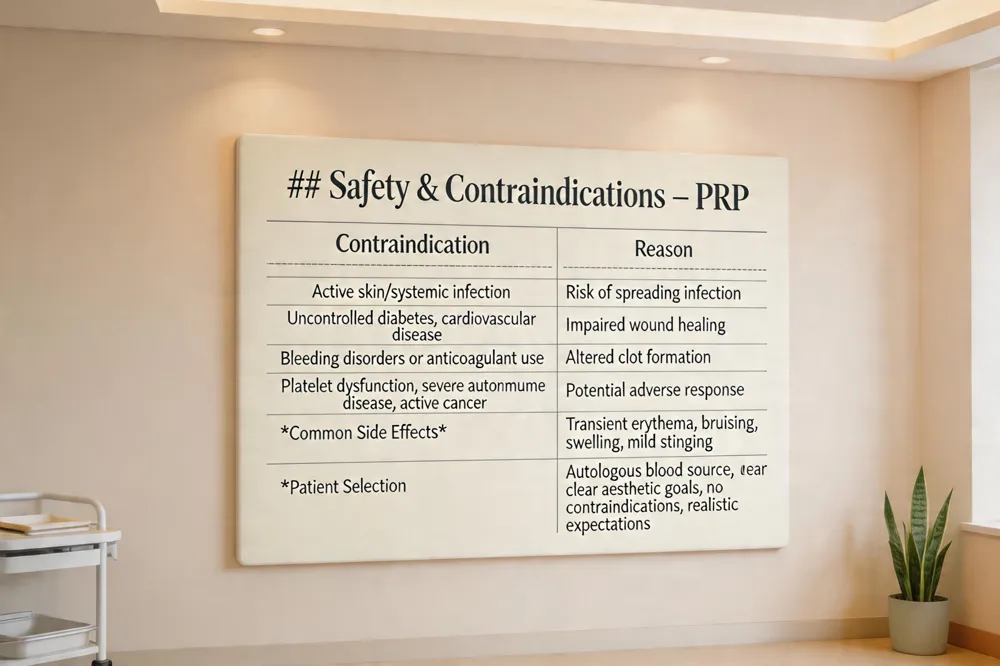 Autologous platelet‑rich plasma (PRP) enjoys a low adverse‑event profile because the product is derived from the patient’s own blood, minimizing immunologic reactions. The most common side effects are mild and transient, including erythema, bruising, swelling, or a brief stinging sensation at the injection site, typically resolving within a few dayshttps://www.aad.org/public/cosmetic/younger-looking/platelet-rich-plasma-secret-to-younger-skin. Nonetheless, careful screening is essential to avoid complications. Contraindications include active skin infections, systemic infections (e.g., hepatitis C, HIV), uncontrolled diabetes or cardiovascular disease, bleeding disorders, and current use of anticoagulants or antiplatelet agents that could impair clot formationhttps://www.aad.org/public/cosmetic/younger-looking/platelet-rich-plasma-secret-to-younger-skin. Patients with platelet dysfunction, severe autoimmune disease, or active cancer in the treatment area should also be excludedhttps://www.aad.org/public/cosmetic/younger-look/platelet-rich-plasma-secret-to-younger-skin. A patient‑centered, conservative approach mandates individualized assessment of medical history, skin type, and aesthetic goals, ensuring that PRP is offered only to those who meet safety criteria and are likely to benefit from the regenerative effects.
Regenerative Medicine vs. Surgical Facelift: Clinical and Economic Perspectives
Regenerative Medicine vs. Surgical Facelift
| Aspect | Regenerative (PRP) | Surgical Facelift |
|---|---|---|
| Invasiveness | Non‑incisional, outpatient | Incisions, anesthesia required |
| Downtime | 24‑48 hrs | 1‑2 weeks |
| Cost (full protocol) | $750‑$9,000 (3‑6 sessions) | Higher upfront; may have partial insurance for reconstruction |
| Outcome Duration | 12‑18 months with maintenance every 6‑12 months | Longer lasting but more dramatic; potential for scar/nerve complications |
| Complication Rate | Low (minor bruising) | Higher (infection, scarring, nerve injury) |
| Patient Satisfaction | High for natural‑looking, modest rejuvenation | High for dramatic lift but higher risk |
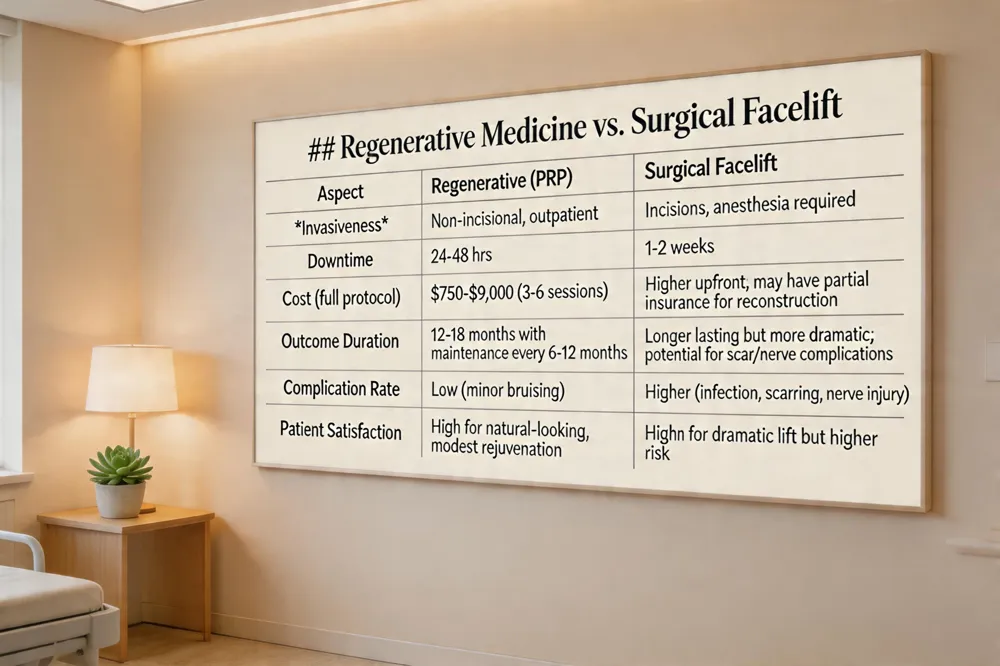 Regenerative aesthetic treatments such as autologous platelet‑rich plasma (PRP) offer a conservative alternative to traditional surgical facelifts. Because PRP uses the patient’s own blood, the risk of infection is minimal and the natural facial anatomy is preserved—there are no incisions, implants, or tissue excision. Compared with a surgical lift, the downtime for a PRP series is typically 24‑48 hours, allowing patients to resume daily activities immediately, whereas facelifts may require 1‑2 weeks of recovery.
From a cost standpoint, a full PRP protocol (three to six sessions spaced 4‑6 weeks apart) averages $250‑$1,500 per visit, totaling roughly $750‑$9,000, and it is not covered by insurance because it is cosmetic. A surgical facelift, while often billed at a higher upfront price, may be partially reimbursable for medically indicated reconstructions, but most patients pay out‑of‑pocket as well. Long‑term outcomes differ: PRP stimulates collagen remodeling that continues for 4‑12 weeks after the final session, with maintenance treatments every 6‑12 months sustaining improvements for 12‑18 months. Patient satisfaction surveys consistently report high satisfaction with PRP’s natural‑looking results and low complication rates, whereas surgical lifts deliver more dramatic but invasive changes with higher risk of scarring and nerve injury. Overall, regenerative medicine provides a patient‑centered, cost‑effective option for modest facial rejuvenation, while surgical facelifts remain the gold standard for extensive laxity and volume loss.
Looking Ahead: A Conservative Path to Natural Youthfulness
The future of regenerative aesthetics will hinge on integrating autologous PRP, stem‑cell‑derived exosomes, and emerging biologics such as polynucleotides into a single, step‑wise protocol. A typical regimen might begin with a PRP‑microneedling session to prime the dermis, followed by a targeted exosome application to amplify collagen‑I/III synthesis, and conclude with a low‑dose stem‑cell‑derived growth‑factor gel for sustained matrix remodeling. Achieving reproducible outcomes requires rigorous research: standardized preparation methods, dose‑response studies, and long‑term randomized trials that track skin elasticity, wrinkle depth, and patient satisfaction over 12‑24 months. Dr. Jaimal Sangha’s practice exemplifies this patient‑centered, minimally invasive philosophy—offering personalized treatment plans, thorough medical screening, and transparent cost discussions while avoiding surgery, implants, and extensive tissue excision. By continually refining protocols and embracing evidence‑based innovation, the clinic aims to deliver natural‑looking rejuvenation with minimal downtime and maximal safety.