A New Era in Non‑Surgical Healing
Regenerative medicine delivers cells or cell‑derived products—such as mesenchymal stem cells and platelet‑rich plasma—to injured tissues, aiming to restore function rather than replace it with hardware. By harnessing the body’s innate healing capacity, these biologics promote inflammation reduction, tissue regeneration, and pain relief. A patient‑centered philosophy places the individual’s goals, lifestyle, and preferences at the core of treatment planning, integrating physical therapy, nutrition, and minimally invasive injections to maximize outcomes while avoiding surgery. Dr. Jaimal Sangha’s clinic embodies this approach: it offers ultrasound‑guided MSC and PRP injections, tailors protocols to each patient’s condition, and combines regenerative care with comprehensive rehabilitation, delivering personalized, conservative solutions for musculoskeletal pain and long‑term relief.
Stem Cell Therapy for Neurological and Musculoskeletal Degeneration
| Cell Type | Source | Main Benefits | Clinical Indications | Cost Range |
|---|---|---|---|---|
| MSCs | Bone‑marrow, adipose, umbilical cord | Low immunogenicity, neurotrophic factor secretion, immunomodulation | Parkinson’s, MS, stroke, ALS (intrathecal/IV) | $3,000‑$100,000 per series |
| NSCs | Fetal/embryonic tissue | Direct neuronal differentiation, potential to replace lost neurons | Neurodegenerative diseases (research) | Variable, often >$50,000 |
| iPSCs | Reprogrammed somatic cells | Unlimited pluripotency, can generate dopaminergic neurons | Parkinson’s (experimental) | High, >$100,000 |
| ESCs | Embryonic blastocyst | Unlimited pluripotency, broad differentiation | Research/clinical trials | Very high, >$100,000 |
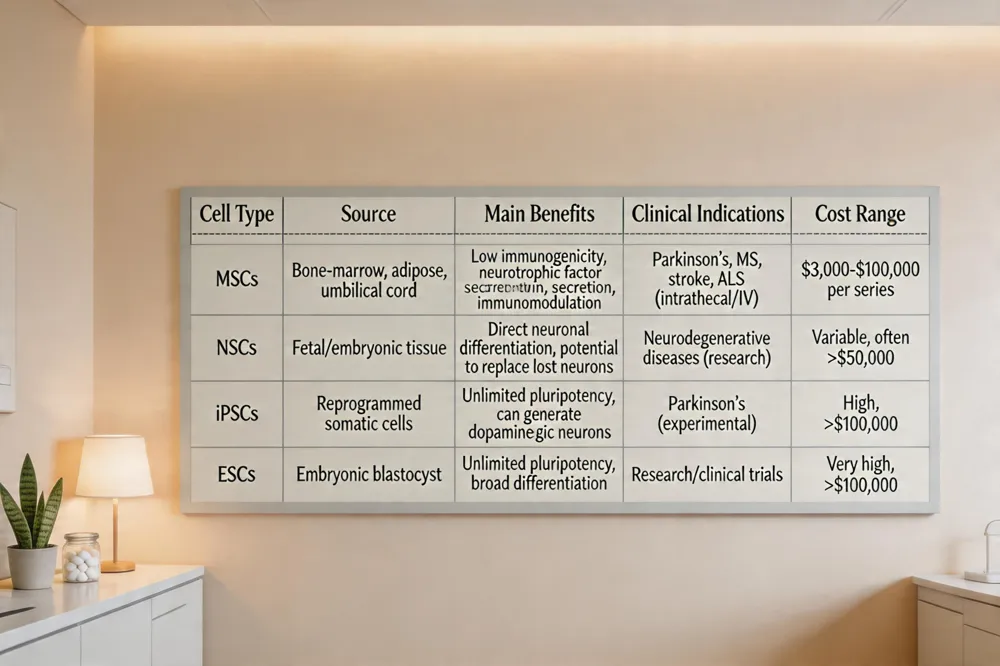 Mesenchymal stem cells (MSCs) secrete neurotrophic factors such as BDNF, GDNF, IGF‑1 and VEGF, which enhance neuronal survival, suppress apoptosis and dampen neuroinflammation. Their immunomodulatory profile—up‑regulating IL‑10/TGF‑β and inhibiting pro‑inflammatory T cells and macrophages—further protects CNS tissue. Four principal stem‑cell classes are used in regenerative neurology: adult MSCs (bone‑marrow, adipose, umbilical cord), neural stem cells (NSCs) that can differentiate into neurons, astrocytes and oligodendrocytes, induced pluripotent stem cells (iPSCs) reprogrammed from somatic cells, and embryonic stem cells (ESCs) with unlimited pluripotency. MSCs are low‑immunogenic and lack tumor‑forming potential, making them attractive for autologous infusion; iPSCs and ESCs can generate dopaminergic neurons for Parkinson’s disease but carry higher ethical and oncogenic concerns. Trials show that intravenous or intrathecal MSCs improve motor scores in Parkinson’s, reduce demyelination in multiple sclerosis, and decrease infarct size and promote angiogenesis after stroke; a Phase 2 ALS trial of MSC‑NTF cells reported slowing of functional decline. Treatment costs range from $3 000 to $100 000 per series, reflecting cell source, processing (GMP, ISO) and site. Regulatory oversight requires cGMP‑compliant manufacturing and FDA 361/1271 exemption for manipulated autologous products, while allogeneic or manipulated products must undergo IND review. Because many insurers consider these interventions, patients often pay out‑of‑pocket or seek enrollment, underscoring the need for cost discussions within a care model.
Regenerative Solutions for Back Pain and Spinal Health
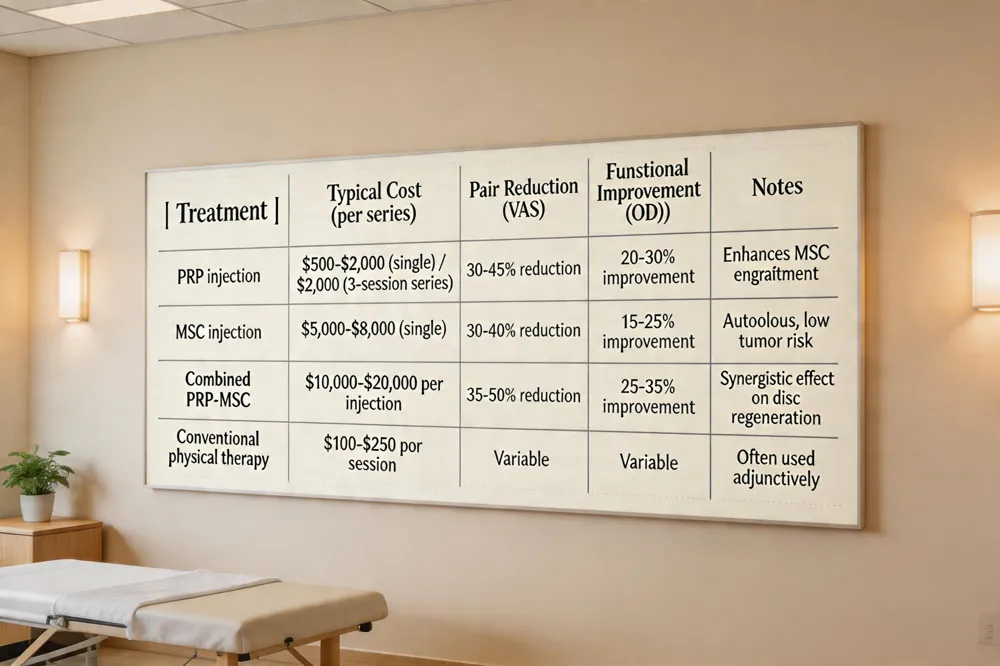
| Treatment | Typical Cost (per series) | Pain Reduction (VAS) | Functional Improvement (ODI) | Notes |
|---|---|---|---|---|
| PRP injection | $500‑$2,000 (single) / $2,000 (3‑session series) | 30‑45 % reduction | 20‑30 % improvement | Enhances MSC engraftment |
| MSC injection | $5,000‑$8,000 (single) | 30‑40 % reduction | 15‑25 % improvement | Autologous, low tumor risk |
| Combined PRP‑MSC | $10,000‑$20,000 per injection | 35‑50 % reduction | 25‑35 % improvement | Synergistic effect on disc regeneration |
| Conventional physical therapy | $100‑$250 per session | Variable | Variable | Often used adjunctively |
 Regenerative therapy for back pain
Autologous biologics—primarily platelet‑rich plasma (PRP) and mesenchymal stem cells (MSCs)—are injected under ultrasound or fluoroscopic guidance into degenerated discs, facet joints, or surrounding ligaments. MSCs secrete neurotrophic and anti‑inflammatory factors (BDNF, GDNF, IL‑10) that reduce catabolic cytokines, promote nucleus‑pulposus‑like matrix production, and improve disc height. PRP supplies a growth‑factor milieu (PDGF, TGF‑β, VEGF) that enhances MSC survival and engraftment. Randomized trials report 30‑45 % reductions in VAS pain scores and 20‑30 % improvements in Oswestry Disability Index (ODI) within 6‑12 months, offering a minimally invasive alternative to fusion or disc replacement.
Regenerative therapy for back pain
Autologous biologics—primarily platelet‑rich plasma (PRP) and mesenchymal stem cells (MSCs)—are injected under ultrasound or fluoroscopic guidance into degenerated discs, facet joints, or surrounding ligaments. MSCs secrete neurotrophic and anti‑inflammatory factors (BDNF, GDNF, IL‑10) that reduce catabolic cytokines, promote nucleus‑pulposus‑like matrix production, and improve disc height. PRP supplies a growth‑factor milieu (PDGF, TGF‑β, VEGF) that enhances MSC survival and engraftment. Randomized trials report 30‑45 % reductions in VAS pain scores and 20‑30 % improvements in Oswestry Disability Index (ODI) within 6‑12 months, offering a minimally invasive alternative to fusion or disc replacement.
How to relieve back pain fast at home Begin with brief, gentle movement—short walks or light stretching—to sustain circulation. Apply ice for 15‑20 minutes during the first 48‑72 hours, then switch to a warm compress. Perform knee‑to‑chest, lower‑back rotation, and cat‑cow stretches (5‑10 seconds, 2‑3 times twice daily). Maintain neutral posture, place a small pillow under the knees when lying supine, and consider an OTC NSAID for short‑term relief.
How to relieve severe lower back pain Use alternating cold packs (15‑20 minutes) for the first 48 hours, followed by gentle heat. Engage in low‑impact core‑strengthening (bridges, cat‑cow) under therapist guidance. A PRP injection, as offered by Dr. Jaimal Sangha, can promote natural disc and ligament repair without surgery. Complement with ergonomic adjustments, calcium‑rich diet, and adequate vitamin D.
Regenerative therapy cost A PRP injection costs $500‑$2,000; a three‑injection series averages $2,000. MSC injections range $5,000‑$8,000, while expanded‑cell protocols reach $15,000‑$30,000. For degenerative disc disease, stem‑cell therapy typically $10,000‑$20,000 per injection, often requiring multiple sessions and total expenses >$30,000. Insurers usually label these procedures experimental, so patients pay out‑of‑pocket or use financing.
Non‑surgical back‑pain treatment near me Dr. Jaimal Sangha’s Advanced Integrative Medicine clinic (Ohio) offers PRP and MSC injections, spinal decompression, therapeutic ultrasound, and customized rehab. The practice follows a conservative, patient‑centered model avoiding opioids and surgery. Initial consultations are free, and financing options are available.
Platelet‑Rich Plasma (PRP): Versatile, Low‑Risk Regeneration
| Indication | Cost per Session | Sessions Recommended | Success Rate (clinical) | Key Growth Factors |
|---|---|---|---|---|
| Hair restoration | $500‑$1,500 | 3‑4 monthly | 30‑40 % increase in density; 70‑80 % notice regrowth | PDGF, VEGF, EGF, TGF‑β |
| Facial rejuvenation | $500‑$2,500 (avg $1,800) | 3‑4 (6‑8 wk) | Collagen remodeling visible 3‑4 wk, lasts 12‑18 mo | FGF, VEGF, PDGF |
| Knee osteoarthritis | $500‑$2,500 (avg $800‑$1,000) | 1‑3 (6‑12 wk) | Significant VAS pain reduction | PDGF, TGF‑β, VEGF |
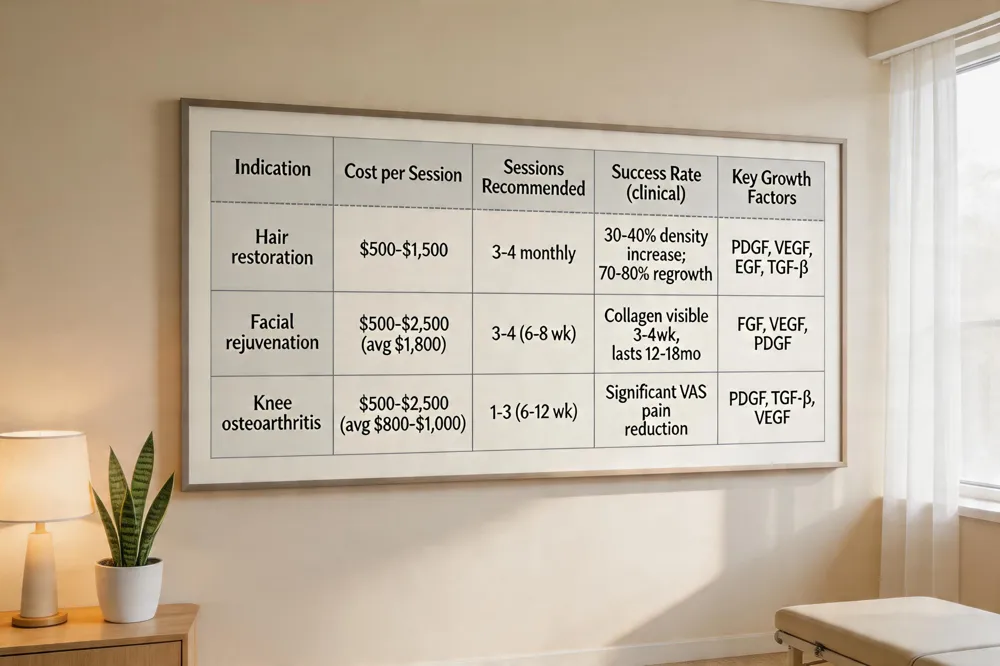 Platelet‑rich plasma (PRP) is prepared by drawing a small amount of autologous blood, centrifuging it, and concentrating platelets that release growth factors such as FGF, VEGF, EGF, PDGF, and TGF‑β. These factors stimulate fibroblast proliferation, collagen synthesis, angiogenesis, and the transition of dormant hair follicles into the anagen growth phase, providing a biologic boost for skin rejuvenation, joint repair, and hair restoration.
Cost and success rates – For hair, a typical series of three to four monthly sessions costs $500‑$1,500 per injection; many clinics price a four‑session package around $2,400, with maintenance at $600 every 6‑12 months. Clinical studies report a 30‑40 % increase in hair density and 70‑80 % of patients notice visible regrowth, with 64 % reporting improved density in a 2022 trial of 56 subjects. Facial PRP injections run $500‑$2,500 per treatment (average $1,800) and are performed in 45‑minute sessions; three to four sessions spaced 6‑8 weeks apart yield collagen remodeling visible within 3‑4 weeks and lasting 12‑18 months. Knee PRP injections range $500‑$2,500, most often $800‑$1,000 per visit, and have shown statistically significant VAS pain reductions in early‑stage osteoarthritis.
Combination with stem cells – PRP’s growth‑factor milieu enhances mesenchymal stem‑cell (MSC) survival, proliferation, and engraftment, making combined PRP‑MSC protocols a promising strategy for intervertebral disc regeneration and tendon healing.
Safety profile – Because PRP is autologous, allergic reactions are rare; adverse events are limited to mild injection‑site soreness, transient bruising, or temporary swelling. No serious infections or tumor formation have been reported in peer‑reviewed trials, supporting its status as a low‑risk, minimally invasive regenerative option.
Financial Realities and Insurance Landscape
| Payer | Coverage Status | Typical Out‑of‑Pocket Cost | Notes |
|---|---|---|---|
| Private insurers (Aetna, Cigna, UnitedHealthcare, BCBS) | Generally denied (experimental) | $500‑$2,000 per PRP; $2,000‑$5,000+ per MSC | Patients use HSA/FSA or financing |
| Medicare | No coverage for pain‑relief stem‑cell therapies | Full cost to patient | Covers FDA‑approved hematologic stem‑cell transplants only |
| Employer self‑insured plans | Partial support (varies) | Reduced but still significant | Verify individual plan details |
| Financing companies | Available for most procedures | Payments spread over 6‑24 months | Interest rates vary |
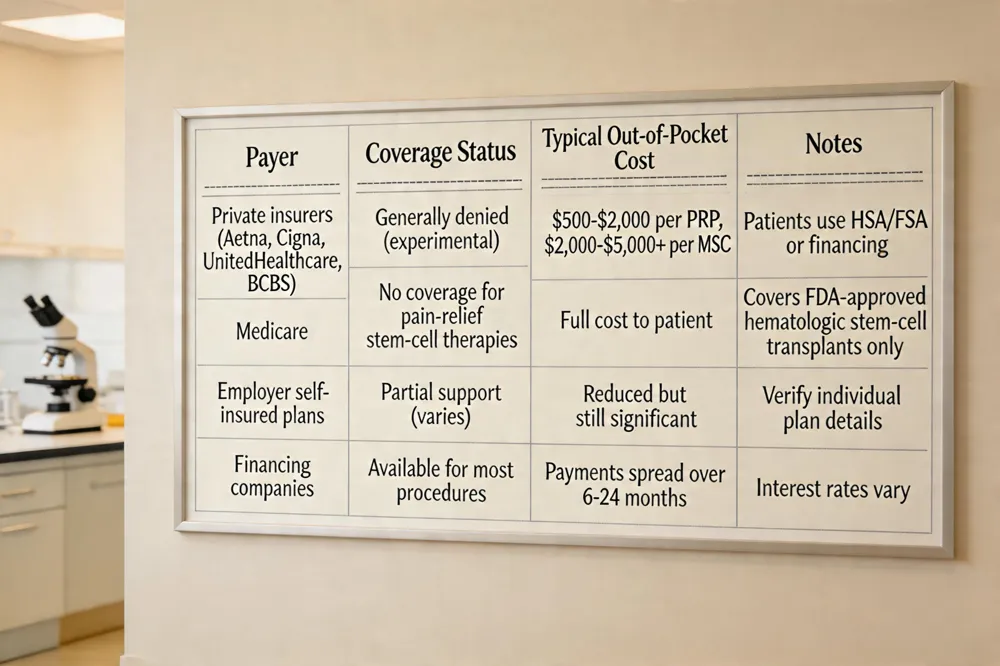 Regenerative therapies such as platelet‑rich plasma (PRP) and mesenchymal stem‑cell (MSC) injections are largely considered experimental by major insurers. Private carriers—including Aetna, Cigna, UnitedHealthcare and BCBS—typically deny reimbursement, leaving patients to pay out‑of‑pocket, often $500‑$2,000 per PRP session and $2,000‑$5,000+ for MSC treatments. Medicare coverage is even more limited; it only funds FDA‑approved stem‑cell transplants for hematologic disorders, not pain‑relief applications. Some Medicare Advantage plans may offer modest benefits, but beneficiaries must verify coverage individually. A few self‑insured employer plans provide partial support, and patients can use HSA/FSA accounts or financing to offset costs.
Patient reviews are mixed but generally positive for pain reduction and functional gain when combined with physical therapy, activity modification, and core‑strengthening exercise. Expectations should remain realistic, as these procedures are adjuncts rather than cures.
Natural adjuncts that complement regenerative care include anti‑inflammatory foods (turmeric milk, ginger‑green tea, tart‑cherry juice), regular low‑impact activity (walking, swimming, yoga), weight management, ergonomic posture breaks, intermittent ice/heat therapy, and sleep‑supportive supplements (melatonin, L‑theanine). These lifestyle measures help lower systemic inflammation and support the body’s innate healing pathways.
Patient‑Centered Care: Signs of Success and Lifestyle Integration
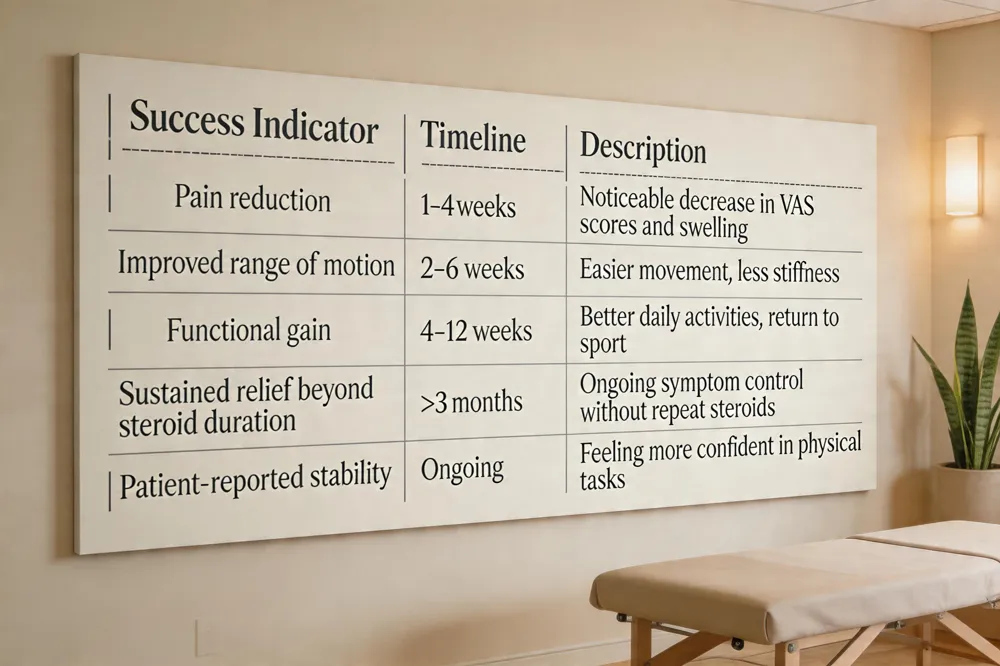
| Success Indicator | Timeline | Description |
|---|---|---|
| Pain reduction | 1‑4 weeks | Noticeable decrease in VAS scores and swelling |
| Improved range of motion | 2‑6 weeks | Easier movement, less stiffness |
| Functional gain | 4‑12 weeks | Better performance of daily activities, return to sport |
| Sustained relief beyond steroid duration | >3 months | Ongoing symptom control without repeat steroids |
| Patient‑reported stability | Ongoing | Feeling more confident in physical tasks |
 What are the signs that PRP is working?
Typical signs include a noticeable reduction in pain within the first few weeks, less swelling or warmth at the treated site, and improved range of motion. Patients often report feeling more stable and functional during daily activities. Over time, the repaired tissue becomes stronger, allowing a return to normal or athletic activities with confidence. Sustained symptom relief beyond the expected duration of a steroid injection is another indicator of successful tissue regeneration.
What are the signs that PRP is working?
Typical signs include a noticeable reduction in pain within the first few weeks, less swelling or warmth at the treated site, and improved range of motion. Patients often report feeling more stable and functional during daily activities. Over time, the repaired tissue becomes stronger, allowing a return to normal or athletic activities with confidence. Sustained symptom relief beyond the expected duration of a steroid injection is another indicator of successful tissue regeneration.
How to relieve back pain instantly at home Apply a cold pack for 15‑20 minutes to reduce inflammation, then switch to a heating pad for another 15‑20 minutes to relax tight muscles. Perform a gentle stretch such as the knee‑to‑chest or lower‑back rotational stretch, holding each side for 5‑10 seconds and repeating 2‑3 times. Adjust posture immediately—sit upright with shoulders back and use a small pillow under the knees when lying on the back. Deep breathing while lightly engaging core muscles can reset nervous‑system signaling and lessen pain perception within minutes.
How I cured my lower back pain at home I began a daily 15‑minute routine of gentle stretches—knee‑to‑chest, lower‑back rotation, bridge, and cat‑cow—gradually increasing repetitions as the pain eased. I paired the exercises with low‑impact activities such as walking and yoga, which strengthened my core and aligned my spine. Throughout the day I practiced proper posture, used a rolled‑towel under my pelvis when seated, and took short walks every hour to avoid stiffness. Alternating ice packs for inflammation and a warm heating pad for muscle relaxation helped manage acute episodes. Maintaining a healthy weight, staying hydrated, and avoiding prolonged sitting further supported my spine’s natural healing.
Female lower back pain treatment Female patients can start with core‑strengthening exercises, posture correction, and heat/ice therapy to reduce muscle strain and inflammation. When pain persists, a physician‑guided evaluation may lead to NSAIDs or targeted physical therapy. For a non‑surgical, regenerative option, platelet‑rich plasma (PRP) injections delivered to lumbar tissues promote natural healing and may lessen pain without surgery. PRP is performed in a sterile office setting under local anesthesia, allowing a quick return to daily activities.
How to reduce back pain for Female Focus on gentle core‑strengthening moves such as bridges, pelvic tilts, and modified planks. Daily stretching—knee‑to‑chest, lower‑back rotational, and cat stretch—improves flexibility and releases tension. Maintaining good posture while sitting, using ergonomic chairs, and taking brief walks or standing breaks every 30 minutes helps keep disc pressure low. Regenerative options like platelet‑rich plasma (PRP) injections accelerate tissue healing and reduce inflammation without surgery. A healthy weight, proper hydration, and smoking cessation further protect spinal structures.
A Future Shaped by Regeneration, Not Resection
Stem‑cell and PRP therapies offer a biologically driven alternative to surgery by promoting tissue repair, reducing inflammation, and restoring function. Clinical data show meaningful pain relief, improved mobility, and delayed progression of degenerative conditions such as osteoarthritis, disc disease, and Parkinson’s disease. All treatments are performed under strict cGMP and ISO guidelines, with cell products screened for purity, potency, and sterility, and patients monitored for infection, bleeding, or rare adverse events. Our practice follows evidence‑based protocols, integrates imaging‑guided delivery, and combines regenerative injections with physical therapy and lifestyle counseling. We invite you to discuss a personalized, minimally invasive plan that prioritizes healing over resection today.